
Effort to document native bees includes Tri-City specimens
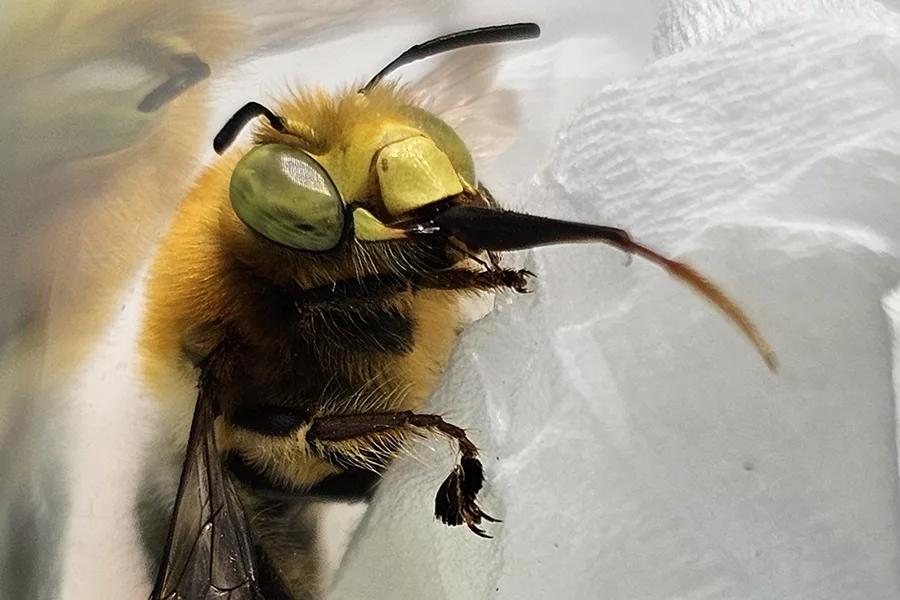
Digger bee species Anthrophora crotchii, recently found in Kittitas and Grant counties and previously only known from the Tri-Cities, was among the discoveries of the Washington Bee Atlas of the state Department of Agriculture.
Photo by Karla Salp for Washington Bee AtlasHighlights from the state’s first year of documenting native pollinators include a record-size carpenter bee found in Benton County and the discovery of a bee species in central Washington that was previously known only from colonies in the Tri-Cities area.
Twenty-five rare or new bee species have so far been identified from specimens collected by volunteers in the state Department of Agriculture’s Washington Bee Atlas, according to a release. However, more are expected to be found as researchers still have the bulk of the 17,000 specimens already collected to examine.
“We’re already learning fascinating things about our native bees, and we’re only getting started,” said Karen Wright, WSDA pollinator taxonomist, in a statement.
The bee atlas was launched to better understand what bees are in the state, which are doing well, and which bees may need conservation support.
Most of the identified new or rare species come from east of the Cascades, likely because most native bees have adapted to thrive in dry areas like the region’s microclimates.
The record size eastern carpenter bee, or Xylocopa virginica, found in the Tri-Cities does not form massive colonies but instead builds solitary nests or social nests with only as many as two to five other female bees in wood they bore into.
Anthrophora crotchii, a rare digger bee that was thought to only have a small population near the Tri-Cities, was recently found in Grant and Kittitas counties. Also a solitary species, it builds nests in the ground or soil.