Residential market
Demand keeps driving Tri-Cities housing
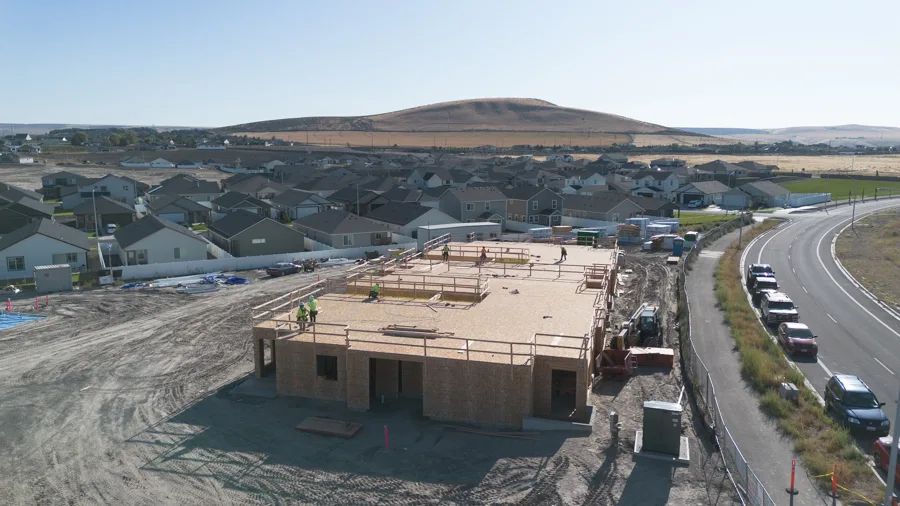
The number of homes listed for sale at a 13-year high.
Building permits for single-family homes and townhomes on the upswing.
Home remodeling projects taking place at triple the pace compared to the prior year.
All point to a dynamic residential housing market in the Tri-Cities, which construction and real estate industry experts say is par for the course in the region.
However, inflation and relatively high mortgage interest rates are driving some reticence among potential homebuyers. For builders, the pressures come on multiple fronts, from high labor and materials costs to heightened regulation.
“The market is a little volatile right now,” said Jason Wilkinson, owner of homebuilding firm Prodigy Homes.
He noted “there are costs associated with building today that simply weren’t there years ago, so anything our industry can do to help make homeownership more attainable is important.”
But neither Wilkinson nor others think those pressures will halt the growth the Tri-Cities has experienced over the past 20 years. Rather, it will inspire builders to get creative in how they make homes affordable and lead buyers to be pragmatic when it comes to house hunting.
“I think we will continue to see people being more thoughtful about when and why they move,” said Realtor Alessandra Dearing. “They are going to look closely at the payment, their equity, what they can sell for and what the next home is going to give them.”
Demand is there
There is still plenty of demand for homes based on the growth of the Tri-Cities population.
Kennewick, Pasco, Richland and West Richland, which combined have a population of just under 260,000, added more than 5,700 people, or about 2% year over year in 2026. That figure doesn’t include outlying areas such as Finley, Burbank and Benton City.
The combined population of Tri-Cities metropolitan statistical area was 329,100, according to 2026 estimates released by the state. That’s 6,225 more people than the 2025 estimate, representing nearly 2% growth.
Homebuilding permits for the first eight months of 2026 show builders seeking to meet the demand for new homes.
The Home Builders Association of Tri-Cities reported that 1,126 permits for single-family homes were issued through August 2026, an increase of more than 200, or 25% over last yer during the same period. Those homes are planned across the region, from Badger Mountain and Southridge to west Pasco and West Richland.
Townhouse construction was also up year over year, with 83 permits issued through August 2026, up from 55 in 2025 and 27 in 2024. Multifamily projects recorded 29 permits during the same period, seven times as many as were issued during the same period in the previous year.
However, not all residential construction is up. Duplexes are down slightly with 39 permits issued so far in 2026. Accessory dwelling units, or ADUs, have only 5 permits issued, a fraction of the number in each of the prior two years. And while multifamily projects are up compared to 2025, it’s still lower than the 66 permits issued in 2024.
“We’re seeing some slowing as we move toward the end of 2026, although some of that is seasonal and isn’t unusual as we head into winter,” Wilkinson said.
Part of that could be from the increase in the number of existing homes that have come onto the market.
“New construction still has a place, especially for buyers who want fewer immediate projects,” Dearing said. “But older homes and established neighborhoods absolutely still compete when the location, lot and layout are right. It is much less about ‘new versus old’ for my buyers and much more about whether the house solves the problem they are trying to solve.”
Builders also are under increasing pressure as the costs of construction materials skyrocket at the same time they are having to pay top dollar to attract and retain workers.
Construction firms added 22,000 jobs nationwide in August 2026 and the industry’s unemployment rate hit a record low of 3.1%, according to the Associated General Contractors of America. Average hourly earnings for many onsite or office employees in construction increased to $39.36 per hour that month. That’s a 5% gain over the past year and 21% higher than the $32.53 average for all private-sector production employees.
At the same time, the producer price index for inputs was up 8.9% in August 2026 with the largest price increases in petroleum products. The cost of diesel is up nearly 78%. Metal prices have also increased by 20% or more depending on the metal.
“Construction firms are being squeezed by tariff- and war-induced materials cost increases, even as they boost wages to attract personnel,” said Ken Simonson, the association’s chief economist, in a statement.
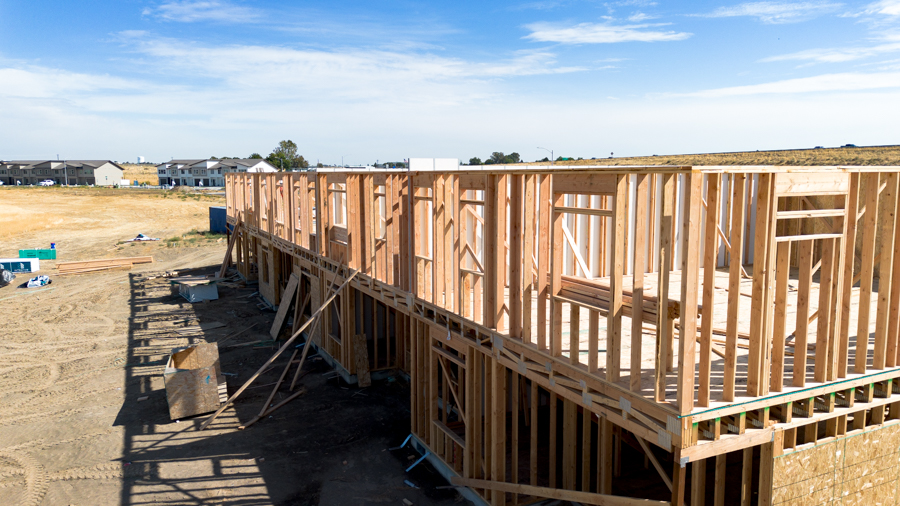
Framing is underway on townhomes in the Columbia Shores development on Road 114 in Pasco.
| Photo by Nathan FinkeMarket balance
After years of being undersupplied, most real estate professionals are asserting the Mid-Columbia has become a balanced market. More than 1,300 homes were listed for sale in August 2026, according to data from the Tri-City Association of Realtors. That’s the most since 2013 and is giving buyers plenty of choices and some leverage.
At the same time, homes haven’t sold quite as quickly throughout much of 2026 compared to the past five years. After starting out the year hot, sales have leveled off or dipped slightly below prior year levels. Median prices also appear to have stabilized just below the record high $445,900 set in April 2026 and are comparable to what they’ve been the last few years.
Dearing said the conversations she hears around homebuying and selling have shifted. For buyers, “I’m hearing fewer conversations that are simply, ‘We need three bedrooms and two bathrooms,’ and more conversations like, ‘My mom may live with us in a few years,’ ‘Our adult child is staying home longer,’ ‘We need a second living space,’ or ‘We really need room for an RV, a shop or everyone’s cars,’” Dearing said.
First-time and established homebuyers alike are wrestling with financial pressures.
“There are still first-time buyers entering the Tri-Cities market, but many are having to be thoughtful about location, home age or updates to keep the numbers where they need them,” Dearing said.
She added, “With homeowners who have bought before, the conversation is often more complicated. They may have equity, but they also have a house to sell, a low interest rate they are reluctant to give up, kids to move, or a very specific timeline they are trying to make work.”
Meanwhile, for sellers, “usually there is something else driving the sale,” she said. “They need to be somewhere else by a certain date. They are downsizing. They need the proceeds for their next purchase. They are moving closer to their kids. They need to buy and sell at the same time.”
That’s led to a bit more negotiating on sales than in recent years, Dearing said, though some homes are continuing to go for premiums.
“I had a Burbank listing this summer that received four offers within five days and ultimately closed for $430,000 after being listed at $415,000,” she said. “That happened in the same broader market where other homes were taking weeks to sell.”
Remodels
For those homeowners who are staying put, more are working to improve their homes, though not necessarily at the same scale as seen in the past.
The homebuilders association showed that 189 residential remodel/repair permits were issued through August 2026, more than triple the number in 2025 and more than double issued in 2024 during the same period. Residential additions are on pace compared to last year, with 62 permits issued through August 2026, the same amount as the previous year.
However, those projects are smaller than in past years, said Brad Rew of Gale-Rew Construction.
“It seems that money is tighter or harder to access with interest rates so high,” he said. “People don’t want to refinance into higher interest rates or take seconds at high interest rates so it comes down to how much disposable cash they have or want to spend in an economy that is costing a lot to live.”
But those projects could become more substantial if conditions are right.
“From our discussions with people, they are wanting to do projects but waiting. Therefore if inflation cools off, we will probably see a large number of projects take off,” Rew said.
Wilkinson has that same sense of guarded optimism. His company’s Harmony Heights development has four completed homes and four more under construction. He’s watching the growth in west Pasco as well as in West Richland with interest.
“The Tri-Cities has been a growth market for a long time, and I don’t see the fundamental reasons for that growth going away,” he said. “There may be some bumps along the way, but I’m very optimistic about the long-term future of residential construction here.”