CPCCo primed for championship run in year ahead
With the Seahawks fresh off their Super Bowl victory and the Mariners hoping to build on the success of last season, it’s an exciting time to be a sports fan in the Pacific Northwest!
What does that have to do with Hanford site cleanup? Well, much like our local teams, the Central Plateau Cleanup Company (CPCCo) carries a championship mindset into our environmental remediation mission to ensure the protection of the Columbia River corridor and Central Plateau on behalf of the U.S. Department of Energy (DOE).
Our team has made tremendous progress since I shared an update in this edition a year ago. Last season we knocked it out of the park with an astonishing .960 (96%) batting average. That’s the score we received from DOE on our annual contract evaluation for meeting every project objective outlined in our fiscal year 2025 plan.
Among the accomplishments noted on the Department’s performance scorecard included our completion of:
- Readiness at the Integrated Disposal Facility to receive containers of low-activity tank waste solidified in glass.
- Readiness to move radioactive capsules from the Waste Encapsulation and Storage Facility (WESF) to dry storage casks for safer long-term storage.
- Removal of all mixed waste containers from two outside storage areas at the Central Waste Complex.
- Intrusive characterization at the 324 Building, where we are working to remove radioactive contamination below the facility.
While we took time to celebrate our achievements, much work remained on these and other key risk-reduction projects as we moved into 2026.
Swinging for success
The year is still young, but we have already notched several cleanup “wins.” In January, our crews hit a grand slam for safety, moving the first of 18 concrete casks loaded with radioactive cesium capsules out of the WESF pool to a nearby dry storage pad, a historic achievement that was years in the making.
The 1,936 stainless steel double-walled capsules have been stored for decades under 13 feet of water in WESF to protect workers from radiation exposure. The cesium and strontium were removed from Hanford’s underground waste storage tanks in the 1970s to reduce the temperature in the tanks. Moving the capsules out of WESF eliminates a significant risk on the site and will allow for the eventual deactivation of the aging facility.
In another victory for environmental protection, the recent installation of key equipment at the largest of Hanford’s six groundwater treatment plants is a game changer. The upgrades allow CPCCo to ramp up the flow rate of the 200 West Pump & Treat Facility to 3,800 gallons per minute, an increase of more than 50% over the original design. Increased flow enables the plant to treat an additional 475 million gallons of groundwater annually and more effectively remove contaminants on the Central Plateau.
This will mark the 12th consecutive year that Hanford’s facilities have collectively treated more than 2 billion gallons of contaminated groundwater, an achievement that highlights the consistency of our robust program.
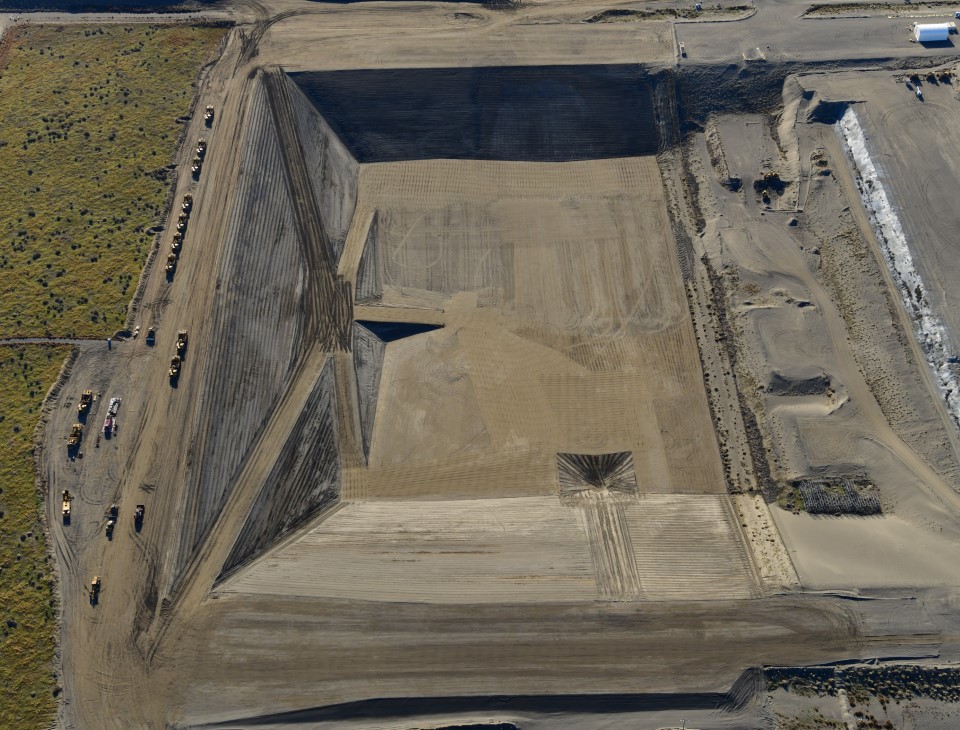
Workers recently completed excavation for Super Cell 11 at the Hanford site’s Environmental Restoration Disposal Facility. The expansion will add about 2.8 million cubic yards of disposal capacity to support Hanford cleanup efforts through 2040.
| Courtesy CPCCoAlso on the Central Plateau, workers are entering the bottom of the ninth on a project to expand the Environmental Restoration Disposal Facility, Hanford’s engineered landfill for low-level radioactive and hazardous waste generated from cleanup operations. This spring our team is installing the environmental liner for the facility’s 11th disposal cell, following excavation of the cell late last year. The liner is designed to collect potentially contaminated water from rain and dust-suppression activities to ensure the protection of groundwater.
When the liner construction is complete, the new cell will add about 2.8 million cubic yards of disposal capacity to support Hanford’s cleanup mission through at least 2040.
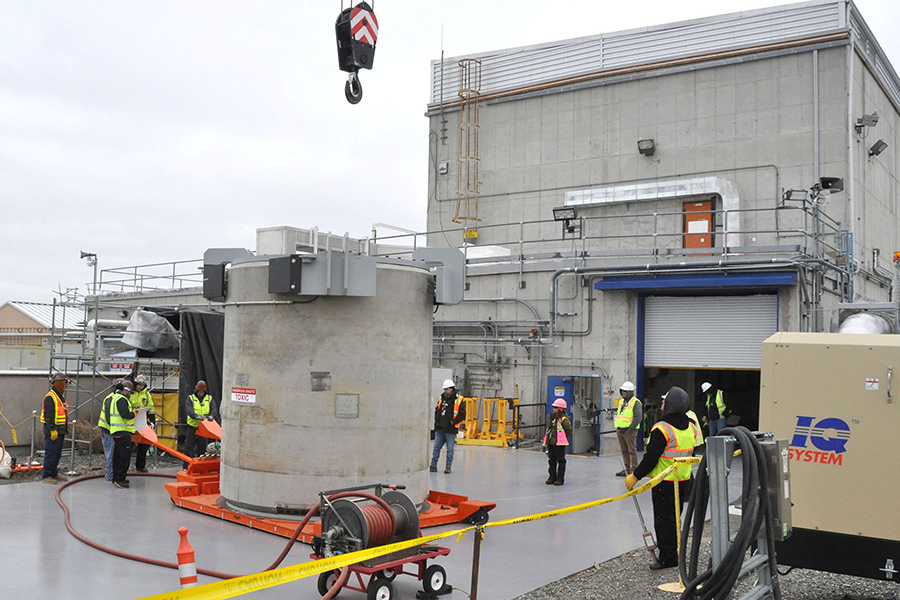
The first engineered concrete cask filled with radioactive capsules – weighing about 160,000 pounds – is moved out of the Hanford site’s Waste Encapsulation and Storage Facility and on to the truck port pad, where it is loaded on a transporter for the quarter-mile journey to the Capsule Storage Area.
| Courtesy U.S. Department of EnergyMany players, one team
While most Hanford projects are led by individual contractors, at its core Hanford cleanup is a team sport. And no project better illustrates this collective effort than the Direct-Feed Low-Activity Waste (DFLAW) program to vitrify, or immobilize in glass, a portion of Hanford’s 56 million gallons of underground tank waste.
The startup of vitrification last fall was a monumental milestone for the cleanup mission. CPCCo’s role in this historic effort is management of the Integrated Disposal Facility, an engineered landfill that provides permanent, environmentally-safe disposal for the containers of treated low-activity tank waste. We are extremely proud to contribute to this incredible team effort.
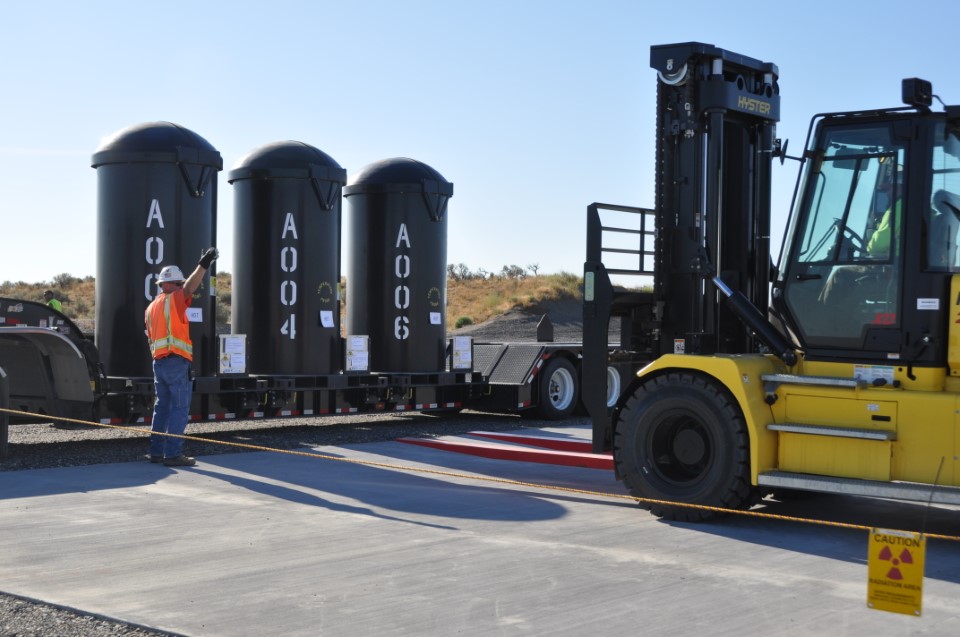
CPCCo manages the Integrated Disposal Facility, an engineered landfill that provides permanent, environmentally-safe disposal for containers of vitrified, or immobilized in glass, low-activity waste from Hanford’s underground tanks.
| Courtesy CPCCoOutside the cleanup arena
While our key mission is advancing cleanup on the Hanford Site, CPCCo also steps up to the plate for our community outside the fences. We are committed to giving back to the Tri-Cities and support many agencies and organizations with financial donations and volunteer efforts.
Our team aims to nurture long-term partnerships with strategic organizations that make bold decisions, offer creative solutions and focus on a better Tri-Cities future. Together we are making the Tri-Cities area a safer, more enjoyable place to live, work and play.
Unlike our beloved sports teams, our mission doesn’t have an offseason. But our team is in excellent shape and ready to tackle the challenges ahead as we build on our past achievements for future success in 2026 and beyond.
To learn more about our mission, go to: cpcco.hanford.gov.
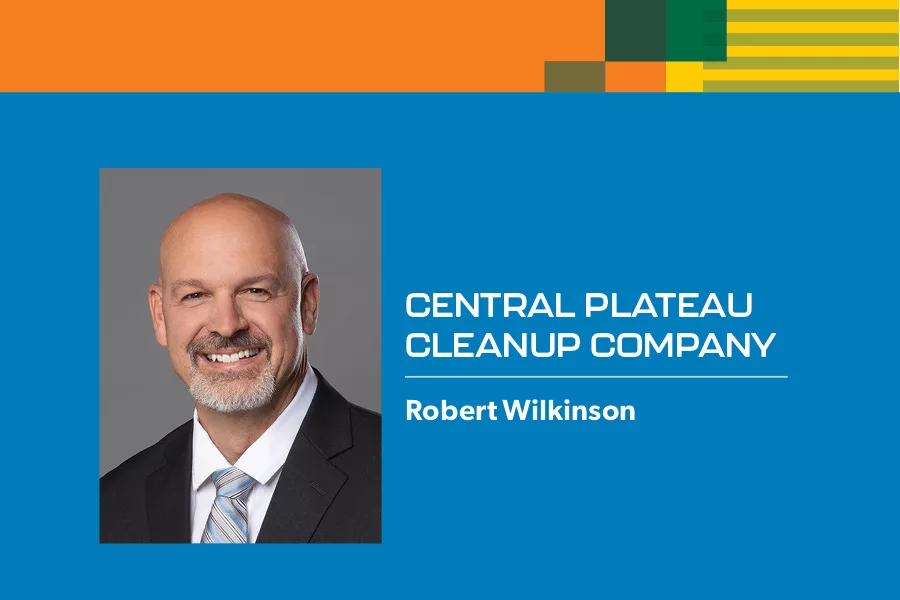
Bob Wilkinson is president of Central Plateau Cleanup Company.