Japanese beetle infestation worsens in Yakima Valley, Tri-Cities
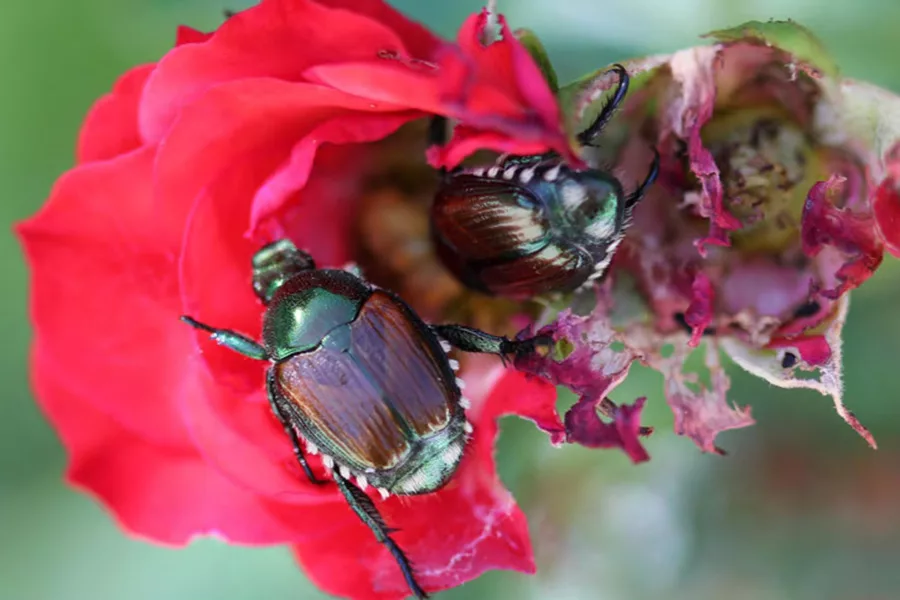
Adult Japanese beetles are mainly seen in the summer, often first emerging in June. However, they have been reported from mid-May through mid-October. They range from 1/3 to 1/2 inches long with metallic green head and thorax, and copper wing covers.
Courtesy Washington State Department of AgricultureState agriculture officials say they need more property owners to allow their land to be treated for an invasive and destructive beetle species if they are going to reverse its rise in Eastern Washington.
More than 72,000 Japanese beetles were caught by Washington State Department of Agriculture trappers as part of the agency’s annual survey of pests. The tally was a threefold increase from 2024 and the area where the beetles were detected also has grown.
Japanese beetles feed on more than 300 plants, including roses, grapes, apples, hops and grass, stripping their foliage but also feeding on plant buds, flowers and fruit.
More than 90% of the beetles were trapped in Grandview, Sunnyside, Outlook, Mabton and Prosser. However, the Tri-Cities recorded 2,407 trapped specimens, nearly all found in Pasco, up from the 410 found last year.
On the west side, hundreds more of the beetles were found in the city of SeaTac in 2025, up from just a couple dozen last year.
Officials attribute part of the increase in trapped beetles to improvements in how traps are managed. However, lack of consent from property owners to treat their land for the invasive species likely also contributed to the rise in numbers.
In 2024, 44% of property owners gave consent to have their property treated. In 2025, that number fell to 38%.
“If we are going to protect Washington from this invasive beetle, more properties must be treated. That starts with those in the treatment area giving consent for these free treatments. We can't do it without you,” said Sven Spichiger, WSDA Pest Program manager, in a statement.