Area manufacturing remains robust but clouds are on horizon

Most people don’t think of the greater Tri-Cities as an industrial hub. While it doesn’t loom as large as sectors such as health care and government, manufacturing nonetheless accounted for about 9,300 workers in 2024, or the ninth largest sector – out of 20 – in Benton and Franklin counties.
Its dynamics make it a force to be reckoned with. It’s been one of the fastest growing of the large industry sectors. Cumulatively, the local manufacturing workforce grew by the third highest rate over the past decade, increasing head count by 20%. Only the construction and health care sectors expanded their workforce at a faster cumulative rate.
In the latter half of the decade, manufacturing here grew its head count second fastest among all the large sectors, trailing only health care.
It isn’t the highest-paying sector, for sure. In 2024, annual average earnings amounted to about $65,000. This places the sector in about the middle of the largest employing sectors and a little less than overall average annual earnings in the two counties. Increases in the industry’s average annual earnings have matched the overall average of the large sectors, except for health care.
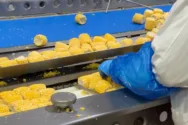
What constitutes manufacturing here? Largely adding value to crops and livestock, in other words, agricultural processing. In 2024, more than 5,200 were employed in food manufacturing and another 1,524 in beverage manufacturing. The total of these two industries amounted to 72% of all manufacturing jobs in the two counties.
These two industries, not surprisingly, have been the drivers of employment growth in manufacturing generally. Over the past decade, food processing has gained about 1,100 jobs, while beverage manufacturing has picked up 300 jobs. In percentage terms, these gains represent much higher growth rates, at 25% and 20%, respectively, than the overall employment growth of the greater Tri-Cities over the same interval, at 12%.
Future of manufacturing
Looking ahead, what might future manufacturing in the greater Tri-Cities look like? While the current administration is pushing for onshoring of all manufacturing activities, I find it unlikely that any change will happen quickly, here and elsewhere. A decade ago, food and beverage manufacturing made up 70%; in five years, its claim on the manufacturing workforce likely will be what the area has experienced – low to mid-70%.
Growth in the near future likely will depend on the success of the three largest processors: Lamb Weston, Tyson Foods and Ste. Michelle Vineyards. These three currently account for nearly 60% of all manufacturing employment in the two counties. Yet, foods and products produced by all three face stagnant per-capita consumption levels nationally. This trend implies growth likely will only come from increased domestic population increase and exports.
The current U.S. Census forecast for the U.S. population shows a gain of about 8.5 million between 2024 and 2030. That growth should help, although consumption trends for all three products – processed potatoes, beef and wine – vary by demographic. For example, as the country grows older, it remains to be seen whether these foods will be as popular with an older adult population.
Exports might be a surer path to facilitate local food and beverage manufacturing expansion. About a third of Lamb Weston’s sales are to countries outside North America. Although we don’t know the extent of exports in the sales distribution from the Wallula plant, as a corporation, exports generally make up 30% of Tyson’s sales. Those sales, however, include all types of meats. We don’t know about the share of Ste. Michelle’s sales taken by exports, but Canada is a likely important market.
With growing populations and rising incomes in so much of the world, exports should offer an opportunity for local food processors. The current chaotic state of international trade, fostered largely by the current administration, has thrown much of this opportunity into doubt. Yet, the three large food processors are very good at what they do.
If one wants to see local manufacturing flourish, two other options are worth mentioning. First, some of the smaller food and beverage manufacturers – juice processors, wineries, frozen or dried fruit product firms – could expand a bit more quickly than the large companies.
Or perhaps local manufacturers outside of food and beverage might step up. According to Washington state employment data, area manufacturing products include chemicals, electronics and furniture. The workforce of these three manufacturing industries is much smaller than food and beverage manufacturing but not trivial. Can these companies find the necessary recipe – products, workforce, marketing – to increase their piece of the manufacturing pie here?
D. Patrick Jones is the executive director for Eastern Washington University’s Institute for Public Policy & Economic Analysis. Benton-Franklin Trends, the institute’s project, uses local, state and federal data to measure the local economic, educational and civic life of Benton and Franklin counties.