K-12 education
School districts tackle growth and funding challenges
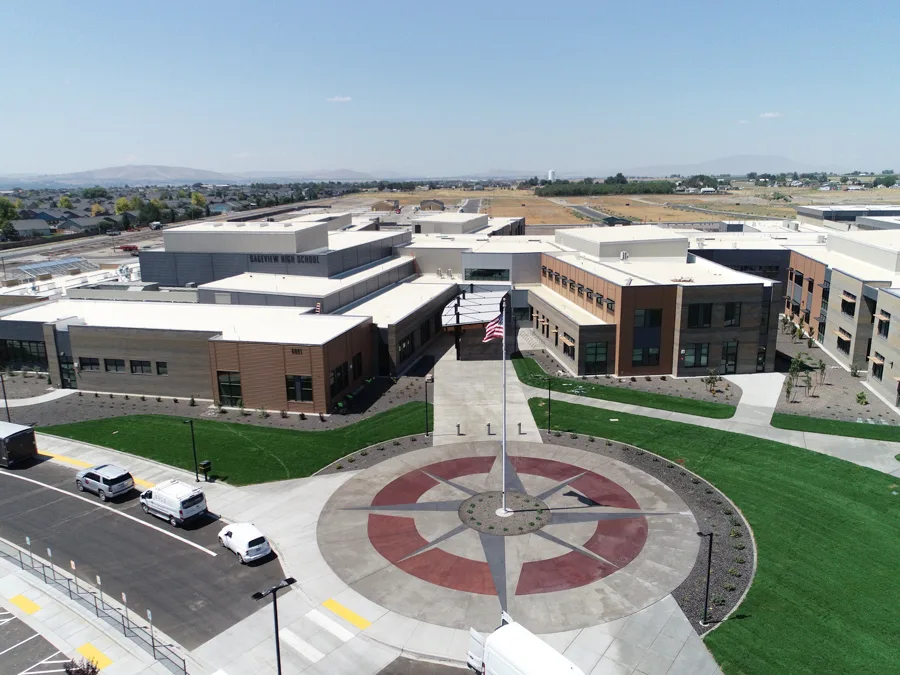
Sageview High School at 6091 Burns Road in Pasco is Pasco’s third traditional high school. It opened in August 2025.
Courtesy Pasco High SchoolAs the 2025-26 school year chugs along, the three Tri-City school districts are making major moves to address student growth, aging facilities and evolving educational needs.
Pasco School District opened two new high schools, expanding options for both college- and career-bound students.
Kennewick School District has launched a major renovation at Tri-Tech Skills Center to better serve students pursuing technical careers.
And the Richland School District is regrouping after a failed bond measure, seeking community input as it reimagines its long-term facilities plan.
The three districts, which together serve more than 50,000 Tri-City students and employ more than 6,000 workers, are navigating a rapidly changing educational landscape through expansion, upgrades and planning for the future.
Pasco School District
Pasco School District kicked off the school year with the opening of two new high schools, a new comprehensive high school and a career and college academy.
Sageview High School, the city’s third traditional high school at 6091 Burns Road, cost $185 million to build. The 300,000-square-foot building can serve 2,000 students.
The $37.9 million Orion High School, a 65,000-square-foot school built to serve 600 students, offers students the opportunity to graduate with a credential or industry certification to help kick-start their professional careers post-high school.
“(Both schools) opened on time and on budget, and students there seem to be happy and the staff are settling in,” said John Weatherby, construction project manager for the district.
He said the district is beginning the development of a 12-year long-term facility management plan to address school construction, overcrowding and modernization. A community survey was conducted in June, and the district is still sifting through responses.
“Basically, we offered them two bonding approaches to consider: a slower approach or an accelerated approach and the public overwhelmingly chose the accelerated approach,” Weatherby said, adding that the district really wants to engage the community in what it wants.
Though he said the district team is catching its breath after the major undertaking of building two new high schools, improvements continue to roll out around the district.
Pasco High will break ground on an $11 million yearlong project in June 2026: updating its career and technical education wing.
“Pasco High was built in 1953,” Weatherby said. “We want to remodel all the classrooms and shops on that wing, bring them up to date and modernize them.”
Pasco High’s girls’ softball field is also scheduled to be replaced and updated starting in spring 2026 so it will be ready in time for the 2027 fall softball season.
Career and technical education improvements are set to begin on a smaller scale in June 2026 at Chiawana High School where $1 million has been set aside for enhancements. Weatherby said the particulars of what will be updated at the 16-year-old school haven’t been set in stone yet.
Weatherby said he hopes there will be leftover funds available after all other bond projects have been completed to make improvements to Edgar Brown Stadium, home to the district’s varsity football, soccer and track teams from all three comprehensive high schools.
“The concession stands need some work, and we would like to put up a new scoreboard and new lighting,” he said.
The district is holding $7.5 million in reserve for future land purchases to support the construction of future schools as the city and district continue to grow.
The district employs 2,428 people, enrolled 18,299 students in the 2024-25 school year and manages a $343.2 million operating budget for the 2025-26 school year.
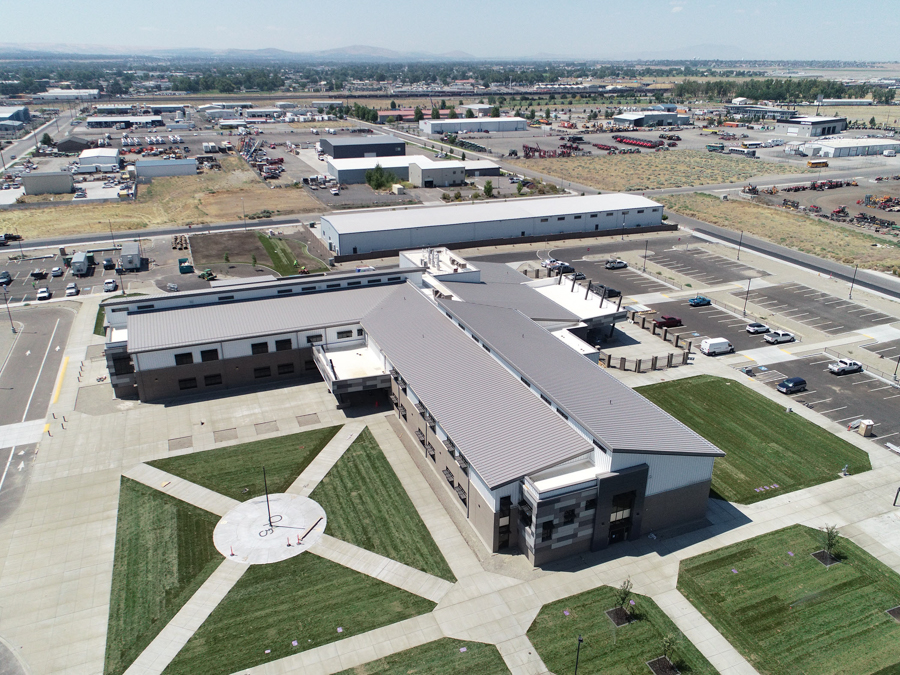
Orion High School is just west of Ochoa Middle School at 1901 E. Salt Lake Drive in Pasco. The school’s innovative approach to instruction focuses on design thinking, cross-curricular problem-based learning, career-connected learning and entrepreneurship. Students can earn college credit and industry certifications in addition to their high school diploma.
| Courtesy Pasco High SchoolKennewick School District
Kennewick School District, which welcomed new Superintendent Lance Hansen this year, manages an annual budget of nearly $340 million, enrolls more than 19,000 students and employs 2,204 staff.
The district has one major capital project in the works at Tri-Tech Skills Center. The publicly-funded career and technical education high school is seeing a new round of renovation, this time targeting the original 66,000-square-foot section built in 1981.
Tri-Tech, one of 11 skills centers in the state, is a partnership between Tri-Cities area school districts to offer advanced technical and professional training to all public, private and home-schooled students ages 16-20 in the area who have yet to receive a high school diploma.
Robyn Chastain, executive director of communications and public relations for the school district, said the $45.5 million state-funded project will modernize the original facility, including energy and safety improvements, as well as infrastructure upgrades to the electrical and mechanical systems, plumbing and roof.
The remodel also will involve “reconfiguration of spaces to better support current programs and allow for potential future career programs such as pharmacy tech and HVAC/plumbing,” she said.
Chervenell Construction began the work in July and it is expected to be completed in summer 2026. The new building additions from 2007 and 2020 won’t be impacted by the project.
During construction, seven of Tri-Tech’s programs will be temporarily moved to off-campus sites at Columbia Basin College and the district’s Fruitland Building at 201 S. Garfield St.
Richland School District
Richland School District oversees schools across the cities of Richland and West Richland, employing 1,622 and enrolling 13,352 students at the start of the 2025-26 school year. The district has a total operating budget of $239.2 million.
The district is rallying after experiencing the disappointment of a failed bond in 2024.
The rejection by voters left the district without a clear path forward for building its third comprehensive high school, as well as making critical updates to its two existing high schools, Richland High and Hanford High, and the replacement of the district’s oldest facility, River’s Edge, an alternative learning high school.
“We are pivoting and planning to renew our long-term facilities plan. Some items from the old bonds will be incorporated into the new plan, which will be presented to the school board at the end of the school year,” said Ken Gosney, assistant superintendent of human capital and operations for the district.
But changes are likely.
“Due to the current fiscal landscape, some things might not make it into the plan, and we have a lot of things to consider. We are planning to do surveys amongst community members as we’re building this plan so that we can gain an accurate understanding of what they are wanting, as well as gather input from teachers, staff and the school board,” he said.
He noted that across the state it’s a tough environment for passing bonds, so the district will be considering different funding sources, levies and other options to take care of its most pressing projects.
Richland will have a replacement levy on the February ballot that will renew a four-year levy. The levy provides short-term funding for educational programs and operations, technology, special education, extracurricular activities and sports across the district.