Former paperboy recalls early-morning routes
One of my earliest memories of enjoying a beautiful Tri-City summer sunrise was accompanying my brother on his Columbia Basin News paper route.
I was a grade-schooler at Fruitland Elementary School, now a memory in the history of Kennewick schools, as is the Columbia Basin News in the history of local publications.
My brother, Ivan, tended a neighborhood route among homes collectively known as Apple Tree Village, basically flowing off the southwest corner of Olympia Street and 19th Avenue and running west to Rainier Street. It included an area near West 23rd Avenue between Olympia and Rainier and three side streets.
Framing Apple Tree Village was the largest Concord grape vineyard in the world at the time which supplied the downtown Kennewick juice maker Welch’s in the early 1950s. Today the vineyard is gone and the rural area has given way to residential and commercial development.
But it still lingers warmly in the memories and hearts of us kids who lived there and made its neighborhood streets our playground.
The Columbia Basin News was a morning daily in the Tri-Cities from 1950-63, competing with the afternoon daily, the Tri-City Herald. Today’s Tri-City Herald is now a morning publication and largely digital.
Before my grade-school days ended, I, too, had become a paperboy. In April 1956, I took over old Route 213 from another sixth-grader who became a friend for life, Cliff Ledford. The route ran the length of South Washington Street from 10th to 19th avenues, ending at a dead-end farm on rural South Beech Street off East 19th.
A half dozen or so paperboys picked up their Columbia Basin News bundles at 5 a.m. every morning except Sunday at the old Campbell’s Market, now the Red Apple on Washington Street near 10th. We fanned out in multiple directions for our deliveries.
Later, on Route 225, I gathered my papers at the Texaco station on the southeast corner of East Fourth Avenue and Washington Street. When I took over Route 228, my deliveries began from the Nob Hill Market on Gum Street at Fifth Avenue.
It was fun and profitable – if you ran an efficient route and were wise with your money. Plus we got to befriend other carriers from all three of the Tri-Cities and even from outlying Prosser and Othello.
My five district managers throughout my time with the Columbia Basin News are warmly remembered mentors: Mr. Dunn, Mr. Sandy, Mr. Alley, Mr. Baker and Mr. Butcher, always addressed as “Mister.”
Some customers expressed appreciation with a tip when I collected the paper’s $1.25 monthly subscription cost. A few gave gifts at Christmas.
For more than a century, paperboys and papergirls tended to the conveniences of readers with street sales or with front lawn, front door or porch delivery. In-person paper delivery is now history as papers arrive via the U.S. mail.
Credited with being one of the first paperboys was Barney Flaherty, 10, who was hired Sept. 4, 1833, by publisher Benjamin Day to sell the New York Sun. He and other “newsies” who followed sold papers by hawking them from street corners. In the 1930s, home delivery through subscriptions became prominent with door-to-door delivery by paperboys with their canvas bags stuffed with the day’s publication slung over their shoulders or fixed to bicycle handlebars.
For those of us delivering the Columbia Basin News locally, delivery meant rising early. Completed route delivery was required by 6 a.m. so customers could read their newspaper before setting off to work. We routinely awakened at 4:30 a.m. to start our route during what was a more tranquil and trustworthy time in America.
The Columbia Basin News required the papers to be secured at the door and not left on the ground. In summer we found most homes with front doors open while the homeowners slept, with only the screen door a buffer to the outside. Many of those were unlatched.
For a time, I supplemented my Columbia Basin News morning route with afternoon delivery of the Spokane Daily Chronicle on a much more spread out Kennewick walking route for my district manager Bonnie Phillips. That, for a time, was complemented by assisting my mother, Mary Metcalf, on a motor route while she was a district representative in Kennewick for the Walla Walla Union-Bulletin.
The routes allowed us to experience each season with its own beauty. Fruit tree blossoms confirmed spring had arrived, while a delicate, feathery, frozen lacework of ice on twigs, branches and fences created crystalized winter mornings. You could taste the air’s freshness on an early bright summer morning, and winter’s fresh snow illuminated the predawn darkness along streets broken only by a few street lamps and an occasional lit-up porch light.
For boys from homes with modest to low incomes, the Columbia Basin News created incentives for getting out and selling subscriptions. Sell a specified number and you qualified for a trip. The bigger the trip, the more new subscribers were required. The two biggest trips were Yellowstone National Park in summer and New Year’s Eve in San Francisco – billed as “The Trip of a Lifetime.” That concluded with the East-West Shrine college football all-star game in the venerable Kezar Stadium.
Shorter escapades included the likes of the Natatorium amusement park (Nat Park) in Spokane; a hockey game featuring the Spokane Flyers or the renamed Spokane Comets – long before the Tri-City Americans existed; Jantzen Beach and the Rose Parade in Portland when Jantzen was still a large amusement park; the Bar M Dude Ranch in Oregon; Payette Lake in Idaho; and Wallowa Lake, among many others.
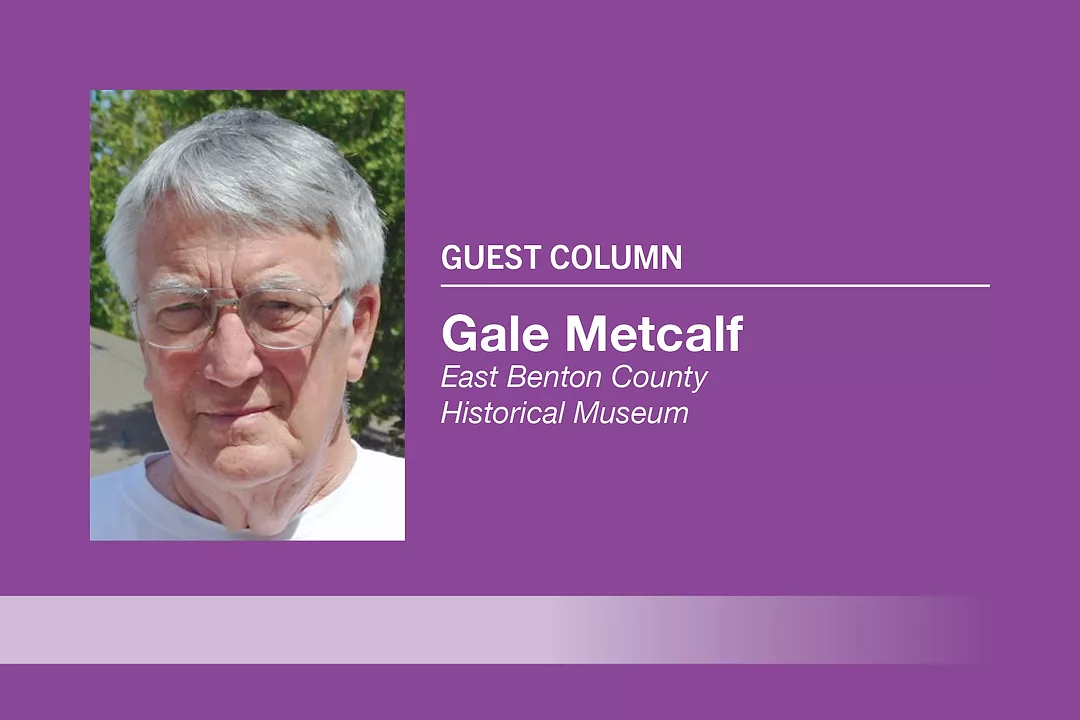
Gale Metcalf of Kennewick is a lifelong Tri-Citian, retired Tri-City Herald employee and volunteer for the East Benton County Historical Museum. He writes the monthly history column.