We must take care of Hanford’s legacy to embrace our energy future

For more than 80 years, the Tri-Cities region has been defined by the nuclear reservation in its backyard and its far-reaching impact on national security, energy leadership and scientific innovation. Today, that legacy continues at Hanford – not just through environmental cleanup, but through workforce development, economic growth and advancements in health and safety.
Last year marked a year of important milestones at the site. For the first time, low-activity tank waste was successfully vitrified, a decades-in-the-making achievement for workers, scientists and advocates. At the same time, the Waste Encapsulation and Storage Facility began transferring cesium capsules to safer dry storage, reducing a major site risk.
Yet, the work ahead remains challenging: high-level tank waste treatment, long-term storage solutions and critical decisions about grout disposal demand careful planning, robust funding and public engagement.
For this important work to continue, cleanup funding must be a budget priority.
The latest fiscal year 2027 budget proposal makes one thing clear: even after record investment and measurable headway at the Hanford site, its cleanup remains trapped in a cycle of political tug-of-war.
The Trump administration’s proposed $400 million cut – following a historic $3.3 billion funding level this year – threatens to slow momentum when delays only increase long-term costs and risks.
Each year, Hanford becomes less a question of science and safety and more a recurring budget battle. But the mission is neither optional nor temporary: It is a legal and moral obligation. If there were ever a time to move beyond stop-and-go funding and commit to finishing the job, it is now.
And it’s even more important as we look beyond cleanup with the Tri-Cities positioning itself as a hub for advanced energy and manufacturing.
TRIDEC’s economic development initiatives highlight the opportunity to leverage underutilized Hanford land for nuclear innovation, industrial development and clean energy projects. By connecting existing expertise, infrastructure and workforce capabilities, the region is creating a model where environmental stewardship and economic growth advance hand-in-hand.
Together, these perspectives illustrate the Tri-Cities’ unique combination of achievement, risk management and forward-looking vision. Hanford cleanup progress, workforce health, advisory oversight and regional economic strategy are all interdependent.
For investors, policymakers and residents, the lesson is clear: sustaining progress requires collaboration, strategic investment and the courage to make thoughtful choices for the long-term benefit of the site, its workers and the community.
Our Tri-City story is one of both caution and optimism and serves as a reminder that national-scale challenges can be met successfully when expertise, accountability and vision converge.
We hope you’ll gain better insight about all of this in our special Hanford section inserted into our April edition.
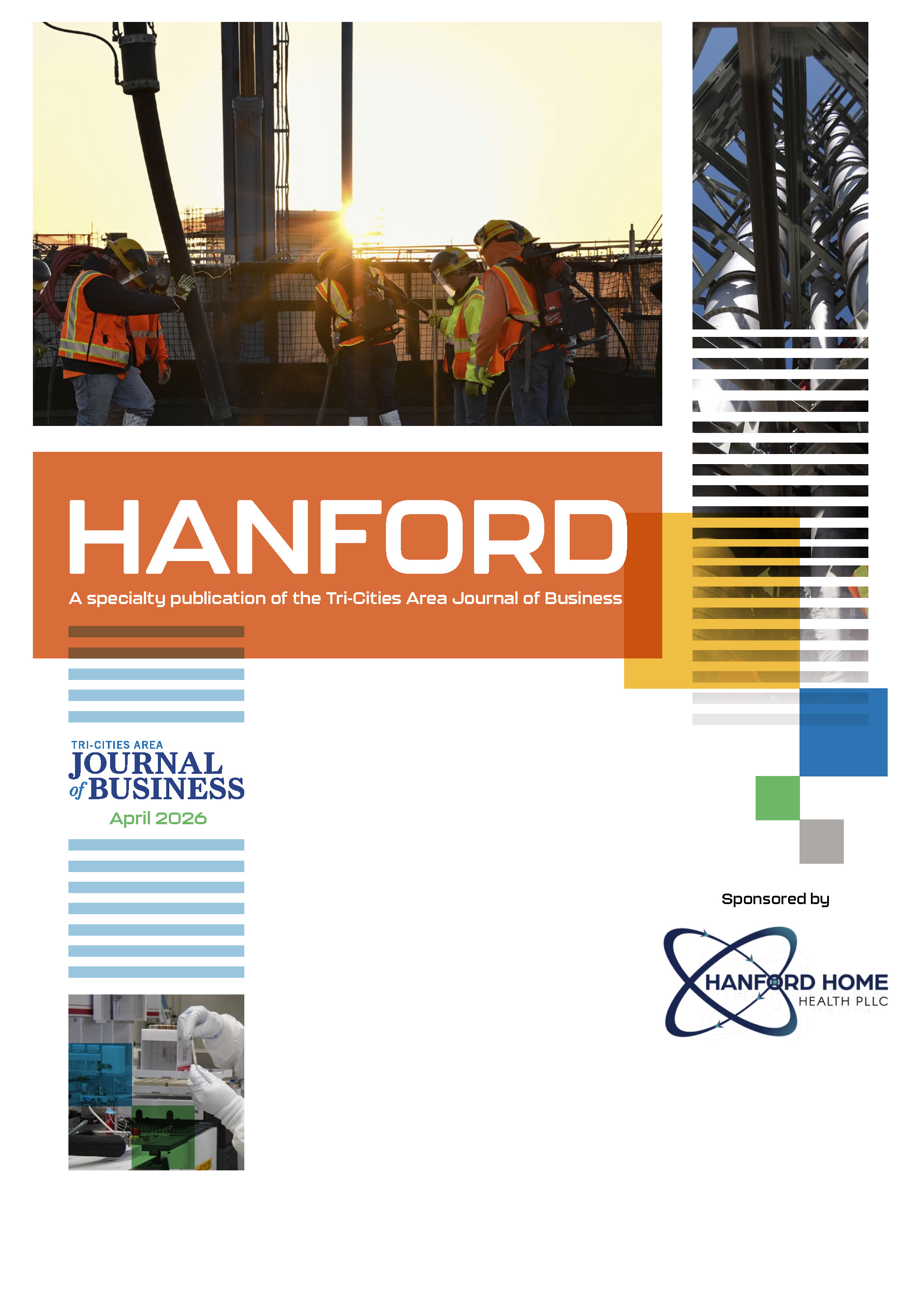
Special Hanford section is inserted into April 2026 edition.

Stay Informed. It’s Free.
Subscribe to our newsletters and get the latest news and insights delivered to your inbox.
We respect your privacy.
Unsubscribe anytime.
Thank you!
You’re subscribed. Keep an eye on your inbox for the latest updates.