
Report faults former transit CEO for impatience with public processes
Ousted CEO pushes back on investigation findings
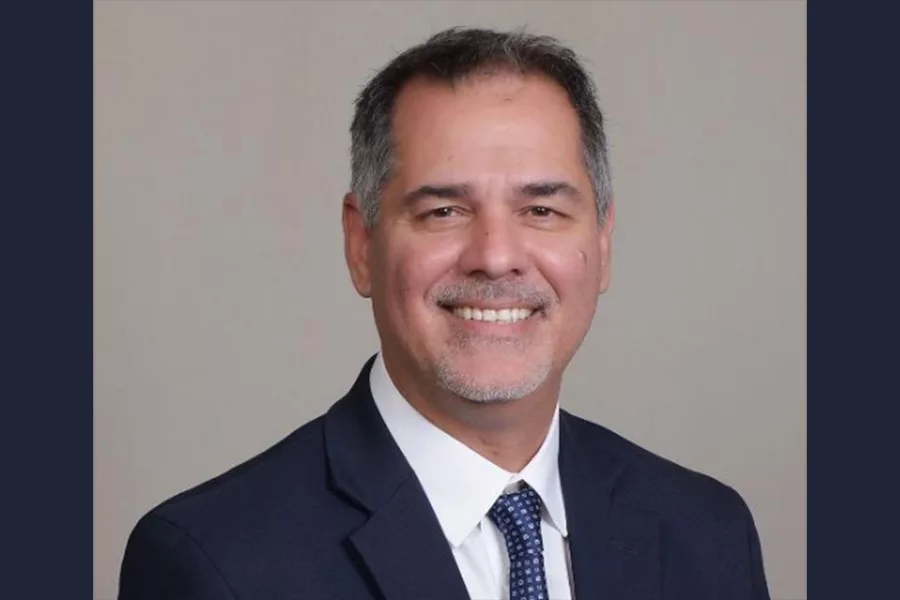
Thomas Drozt
Courtesy Ben Franklin TransitThe investigator hired by Ben Franklin Transit’s board of directors to review five allegations of malfeasance by Tom Drozt found two instances where the now-fired CEO of the regional transit agency likely violated procurement and financial policies.
But even in instances where Rebecca Dean found Drozt did not commit any violations, the Seattle-based investigator was critical of his personal judgment.
From constantly looking for ways to issue contracts without competitive bidding processes, a drive to move quickly on projects spending taxpayer dollars and personally test driving a golf cart for the agency for six weeks, “one of the common themes in this investigation: Drozt’s impatience with, and resistance to, normal public sector procurement processes,” Dean said in the report.
The transit board voted unanimously to terminate their top leader’s contract on April 9.
Drozt pushed back against the report in a public statement, as well as in conversations with the Tri-Cities Area Journal of Business. He raised issues with how the investigation was conducted, attributed any policy violations to ambiguous interpretation and disagreed with Dean’s characterization that he exercised poor judgement.
“Not once in her report does she allege or in her judgment or in her assessment say that any fraud was committed or any misconduct committed,” Drozt told the Journal.
He said the investigation was motivated by internal politics and opposition to his efforts to bring BFT’s operations up to par with similar-sized communities. And that his ousting was more about bad publicity than violating agency policies.
The allegations
The allegations came to light in late November 2025, after CFO Alex Smith, who Drozt previously worked with and brought to the Tri-Cities, sent an email to BFT’s board about “a pattern of decisions and directives” from his boss that went against standards to safeguard taxpayer dollars, ensure compliance and uphold financial transparency.
The transit board placed Drozt on paid administrative leave in early February.
Dean was charged by BFT’s board, which is made up of representatives from county and municipal governments served by the agency, to investigate all of Smith’s allegations. They included:
- A non-competitive contract worth more than $125,000 awarded to Dan Matta, an acquaintance of Drozt who also had a prior felony sexual assault conviction.
- A June 2025 payment of nearly $5,000 to CivicEdge LLC, a company formed a month prior registered to Drozt’s stepson. The invoice claimed it was for 16 hours of leadership workshops in July but staff told Smith they had no recollection of the training, there was no documentation of it occurring, and the LLC’s website and address do not exist.
- Drozt and a potential vendor discussing providing the BFT CEO with access to an unrelated piece of software described as a horse-betting or wagering analytics application if the vendor were to receive a potential artificial intelligence-related BFT contract. Drozt also allegedly directed staff to “creatively sole source” the procurement process for the contract, valued between $250,000 and $1 million, rather than use a competitive process. There allegedly were also discussions about using an AI system to reduce represented union positions without the involvement of commissioners or notification to union leadership.
- Alleged repeat discussions about diverting about $3 million of the agency’s cash reserves into a grant-like program following informal conversations with a few commissioners rather than publicly with the entire board.
The transit board also tasked Dean with investigating “improprieties regarding acquisition of golf carts.” That allegation stemmed from public comments made at BFT board meetings during the fall and winter when the agency considered service cuts and reductions in force after buying “luxury golf carts.”
Dean’s 280-page report to the BFT board redacts nearly every name of the people she interviewed with the exception of Drozt. Drozt did sit for an interview with the investigator but declined to have it recorded.
The report indicates Smith was willing to answer questions in writing, but Dean declined to pursue that.
Two other names are unredacted in one place in the report. Franklin County Commissioner Steve Bauman, chair of the BFT board, and Pasco Mayor Charles Grimm, who were the BFT board members who had discussions with Drozt regarding the grant-like program alleged by Smith, according to Dean.
Contracts questioned
Dean’s report noted that Drozt’s actions regarding the contracts with Matta’s Something Unlimited LLC and CivicEdge were inconsistent with BFT policies, particularly on sole-source non-competitive contracts.
She characterized the contract with Matta as in poor judgment, given he’d had no experience working in transit since 2017, when he was charged with sexual misconduct with a minor in Maricopa County, Arizona. He was convicted in 2018 and served five years in prison. Drozt’s failure to disclose Matta’s criminal record also lacked transparency.
“Although the nature of Matta’s crime per se may be irrelevant to Matta’s qualifications, it has created a very real reputational risk to BFT,” Dean wrote in the report. “Had Drozt disclosed Matta’s history, BFT would have had, but was not given, an opportunity to assess whether the potential value of Matta’s expertise and services outweighed the risks to BFT.”
Drozt’s efforts to provide a contract for John Kelley, a retired transit leader and mentor, also raised questions. Instead of having Kelley be paid as any other independent contractor, Drozt used his BFT credit card to route Kelley’s fee through his stepson’s CivicEdge company, which Dean said violated policy regarding financial transactions with immediate family. That company was also registered with fake credentials, which Drozt told Dean he was unaware of.
“Drozt apparently paid no attention to the details of the invoice, and, ignorant or not, is responsible for paying an invoice to a company with a fake address, fake email address, and deceptive corporate registration information,” according to the report.
Dean also said Kelley’s originally scheduled training for some staff was canceled and it wasn’t until questions about the credit card charge arose that Drozt worked to have him provide some services in December to mitigate questions about the credit card charge.
Drozt told the Journal he pursued the sole-source contracts after consulting with a BFT administrator. He claimed the staffer worked with Matta on the contract and drafted the document needed to justify it, a document Dean said in her report was never completed.
“I don’t write sole source, that’s not my job,” Drozt said. He also told the Journal BFT doesn’t “have any policy that says we have to do a background check on our vendors, but she still called it ‘poor judgement.’”
“I hired someone who has real life experience,” he said. “Do you know how many people have criminal records at BFT? Several.”
Regarding Kelley’s contract, Drozt said his staff advised him “that if it’s under $5,000 then you can select anyone you want, and that to just pay for it with his BFT-issued credit card.” Drozt also said in his public statement in response to the report that ‘immediate family’ is open to interpretation.
“CivicEdge, I wished I’d done it differently,” Drozt told the Journal. “But (I was told) I could hire anybody.”
Actions questioned
Dean wrote in her report that Drozt committed no policy violations related to the three other allegations. She found Smith’s allegation that discussions between Drozt, Bauman and Grimm regarding a grant-like program using agency funds were an attempt to circumvent the board and public without merit.
“In my assessment, considering the preliminary nature of discussions about the proposed jurisdictional grant program and the documented intent to vet the legality of the proposal and submit it for consideration to the appropriate special committee and the full Board, there was no intent – or action – that could be characterized as an impropriety,” Dean wrote.
“The Board’s decision to consider, or implement, such a program may be politically sensitive, but Board decisions about the allocation and disposition of BFT resources are outside the scope of this investigation and I have not formed and offer no opinion on those,” she added.
Dean also said it was clear from her investigation that Drozt’s comments to Seanenergy.ai, a potential vendor, about gaining access to a horse race-wagering app or similar tool were meant as a joke.
However, she still questioned Drozt’s actions in pursuing a non-competitive sole-source contract with that vendor. While it was done appropriately via a government purchasing cooperative, Seanenergy only joined that cooperative after being advised to do so by BFT officials.
Golf carts
Dean noted that the golf carts acquired under Drozt’s direction, ostensibly to be used on BFT’s campus and for special community events, was done properly, with multiple quotes and best cost justification.
But Drozt’s own actions in that effort, including driving an unlicensed golf cart on city streets from a dealer to his home in Canyon Lakes where he maintained possession of it for six weeks and his refusal to allow BFT staff to conduct the procurement process themselves, further speak to concerns about his judgment.
Drozt defended his decisions regarding Seanenergy.ai and the golf cart acquisitions, saying there was no intent on his part to circumvent policy. He contested Dean’s assertion he drove the golf cart on city streets for business purposes.
He further told the Journal it was also unfair that despite a finding of no wrongdoing, he still was put in a position where he is being put on the defensive.
“How can she say no violation but still in her assessment, you’re still a bad boy?” Drozt told the Journal.
Proud of his work
Drozt confirmed he has left the Tri-Cities and returned to Arizona, where he was living in retirement before taking the job with BFT in 2024. He is discussing his legal options with his attorney, but he is not seeking a return to the agency.
The BFT board extended the appointment of Brian Lubanski, BFT’s chief experience officer, as the agency’s interim CEO during the same April meeting when they terminated Drozt’s contract. A timeline to appoint a permanent CEO has not been announced.
Drozt said he remains proud of the work he did at BFT during his short tenure. He characterized the transit agency’s leadership and staff as being green and inexperienced outside their own operation. That’s what led him to bring in transit experts he’d worked with through the course of his career over several decades.
However, opposition to his efforts, particularly from Teamsters Local 839, the union representing most of BFT’s workforce, stalled a lot of the progress he hoped to make.
“My intent was to go there and clean it up and get it in shape,” Drozt told the Journal.


Stay Informed. It’s Free.
Subscribe to our newsletters and get the latest news and insights delivered to your inbox.
We respect your privacy.
Unsubscribe anytime.
Thank you!
You’re subscribed. Keep an eye on your inbox for the latest updates.