New layoff notice rules put Washington farms at risk
Washington state’s new requirement for farms to post public notice of routine seasonal layoffs is more than an added nuisance for farmers. It’s yet another threat to the survival of already-struggling farms.
This ill-conceived law, often called Washington’s “Mini-WARN” Act in a nod to the 1988 federal Worker Adjustment and Retraining Notification (WARN) Act, began as state Senate Bill 5525 this spring, sponsored by Sen. Annette Cleveland, D-Vancouver. The bill passed the Legislature along party lines with Democratic support, and Gov. Bob Ferguson signed it into law May 13.
The measure’s new regulations on farming, an industry the federal WARN Act exempted, highlight how out of touch many politicians and bureaucrats are when it comes to understanding agriculture. Farming is not a static, year-round, 9-to-5 operation.
Farming, since time immemorial, has been seasonal. Generations of farmers and farmworkers have structured their lives and communities around the natural ebb and flow of planting and harvest seasons. There is nothing new about seasonal farm jobs ending when harvest wraps up, or when other busy seasons come to a close.
This fall, some news outlets reported on “mass layoffs” in Washington’s agriculture sector, giving the false impression of impending doom for certain farm businesses. It was a result of this wrongheaded law.
Now, not surprisingly, attorneys are reaching out to farmworkers who have been laid off, searching for paperwork errors they can exploit to sue farms.
Why were construction employers exempted from this requirement when farms were not? Why did lawmakers ignore the farming community’s plea to be left out of this burdensome legal structure designed for entirely different types of employment?
Washington’s new Mini-WARN law doesn’t benefit workers and puts farms in the crosshairs.
Its requirements add work for family farms already suffocating under the weight of regulations. And it creates another opportunity for state fines, lawsuits from profiteering lawyers, false accusations from activists, and bad press. All over minor paperwork errors.
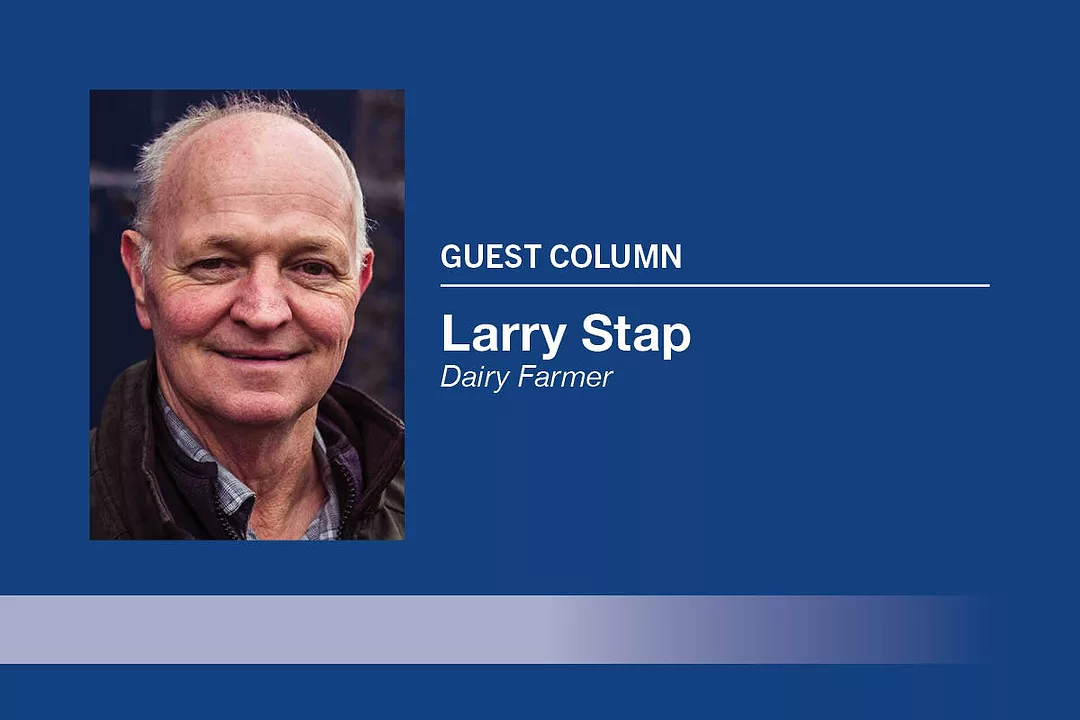
Larry Stap is a fourth-generation dairy farmer producing milk near Lynden. He serves as a member of the board of directors for the nonprofit Save Family Farming, which works to unite Washington’s family farmers and enable them to speak out publicly on critical issues threatening the future of family farms. This commentary is republished from the Washington State Standard, a nonprofit, nonpartisan news outlet that provides original reporting, analysis and commentary on state government and politics.