State AG pushes back on federal permitting reform legislation
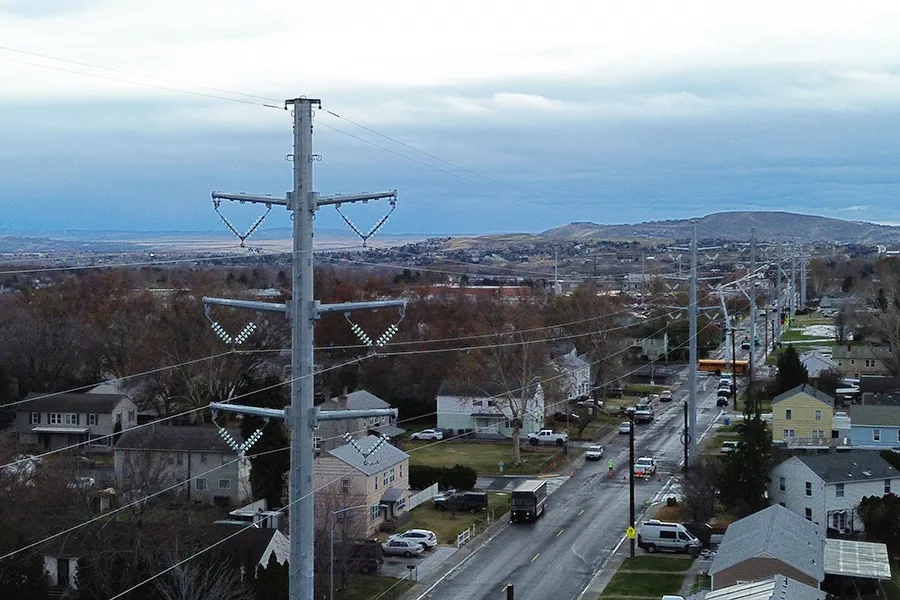
This photo of new larger transmission lines installed by Bonneville Power Administration through the heart of Richland illustrated the story "Residents bristle at new lines needed for growing energy needs," one of several pieces cited by judges in awarding the Tri-Cities Area Journal of Business four awards during the 2026 Editorial Excellence Awards of the Alliance of Area Business Publishers.
Photo by Nathan FinkeWashington State Attorney General Nick Brown and a coalition of his peers are raising concerns about federal legislation aimed at reforming the permitting process for energy projects.
The proposed Bipartisan American Affordability and Jobs Act has already cleared a procedural vote in the U.S. Senate with Republican and Democrat support.
If adopted into law, the bill would have a variety of impacts, including acceleration of permit reviews for renewable energy projects, easing expansion of the electric grid and requiring data center developers to pay the full cost of any transmission and grid updates needed for their projects.
Brown and his fellow attorneys general in 16 states argue in a letter to two Senate committees that the bill has provisions that jeopardize state and tribal sovereignty.
“Federal lawmakers are rushing through this process, jeopardizing key environmental safeguards and putting Washington’s rivers, lakes and coastline at risk,” Brown said in a statement. “We urge Congress to slow down this process to allow for more input from states, including Washington, and avoid weakening long-standing federal protections like the Clean Water Act.”
Specifically, the current draft bill would harm states’ and tribes’ abilities to protect water, historic, and cultural resources under the Clean Water Act, the National Historic Preservation Act, the National Environmental Policy Act, and the Endangered Species Act, according to the letter.
The state justice officials are calling on the Senate to postpone voting on the bill until more revisions can be made to ensure the bill achieves its stated goals and contains appropriate environmental and public health protections.

Stay Informed. It’s Free.
Subscribe to our newsletters and get the latest news and insights delivered to your inbox.
We respect your privacy.
Unsubscribe anytime.
Thank you!
You’re subscribed. Keep an eye on your inbox for the latest updates.