Tri-Cities kid returns as a head winemaker
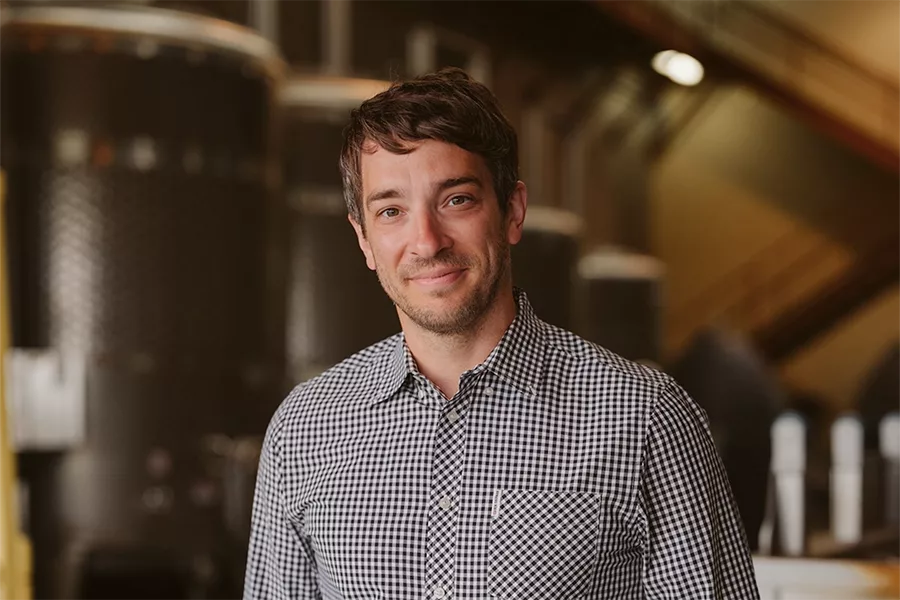
Joel Wright, red winemaker for Chateau Ste Michelle’s flagship winery, will oversee the Paterson-based winery’s red portfolio which makes up a dozen wines, including the Columbia Valley tier, Indian Wells wines, single vineyard estate wines and up to 20 limited release high-tier wines intended for the company’s retail store and wine club members.
Courtesy Chateau Ste. MichelleChateau Ste. Michelle’s top red winemaker grew up in the Tri-Cities visiting farms with his dad, so it makes sense a career in the wine industry was what he was destined for all along.
It’s been quite a career arc for Joel Wright, who once worked as a chemist for a concrete company and as an aquatic therapist at a children’s hospital before settling into winemaking.
Based in Paterson, Wright is overseeing Ste. Michelle’s red portfolio which makes up a dozen wines, including the Columbia Valley tier, Indian Wells wines, single vineyard estate wines and up to 20 limited release high-tier wines intended for the company’s retail store and wine club members.
The new job at the state’s largest winery is a promotion from his current role at Northstar Winery in Walla Walla, where he started as an enologist in 2021.
Wright first arrived in the Tri-Cities at age 7 when his family relocated for his father’s job in agriculture, which took them around the Northwest.
“The Columbia Basin was really the center of my dad’s work,” Wright said. “He worked with field and row crops and grapevines, but his real focus was fruit trees, specifically apples.”
Three of his siblings graduated as Richland High Bombers before the family moved to Wenatchee when Wright was in high school. His parents eventually settled in Pasco while Wright had stops in Seattle and Walla Walla before taking the job in Paterson and returning to live in Richland.
“I told my wife, ‘I feel like I’ve come full circle,’” he said.
A love of chemistry
Wright said he was bitten by the chemistry bug early, falling in love with the subject while still in high school, where he also earned his associate degree before attending the University of Washington.
“I took the full general chemistry series (while in high school) and still liked it in the end. I’m really glad because I know that’s a ‘weeder’ course at UW and it probably would have been much harder there,” he laughed. This allowed him to go straight into organic chemistry while considering majoring in pre-medicine.
Instead, he was hired as a chemist for a cement manufacturer. “I was analyzing and checking for quality and cement strength,” he said.
Wright worked there for just a couple years, and that was 15 years ago now. “I’ve forgotten most of it, but it was a fun time,” he said.
A 2012 internship at a wine lab in Walla Walla was where a career in the wine industry began to take root.
“When I think back, my upbringing was just about right for winemaking between all my time traveling with my dad in the Columbia Valley visiting farms; this is what I was doing,” he said, adding that he also had a family friend with a vineyard in the Horse Heaven Hills.
“I had some exposure to wine grapes along with that science background,” he said.
As Wright cut his teeth in Walla Walla, his interest in the business of wine, from project management and logistics, also grew.
“I don’t like to stay put or at a desk,” he said. “During harvest, you’re up and running, at least at smaller facilities. You’re driving forklifts and getting your hands dirty. There’s a very cerebral side with the lab and the chemistry side of it. And then there’s an art side, too, with the blending and honing. I’ve really enjoyed pretty much all aspects of winemaking.”
In his new role, Wright oversees up to 20 cellar team members and reports to the vice president of winemaking for Ste. Michelle Wine Estates, Katie Nelson.
“Joel combines technical expertise with creative vision,” Nelson said in a statement. “His promotion reinforces our commitment to quality and winemaking practices that reflect a boutique winery mindset, at a larger scale.”
Doing grape rounds
As the new red winemaker, Wright is gearing up for his first harvest in the new role.
“Good winemaking starts with good grape growing and right now we go out with our viticulturists once or twice a week and learn from them,” Wright said. “We discuss things like, ‘Last year this lot seemed a little dehydrated, maybe give it a little more shade or more water during the hot spots.’”
Once it’s time to pull the grapes from the vines, it’s all hands on deck for six to eight weeks.
“You’re constantly moving tanker trucks in and tanker trucks out and all the fruit is coming in,” he said. Wright estimated that a really busy day for Ste. Michelle brand Canoe Ridge is probably about half of what the entire harvest is for Northstar.
Today’s grapes can be harvested faster for a major producer like Chateau Ste. Michelle, thanks to automation.
“It used to be you needed a crew of six people to go and pick an acre of Cabernet, and now you can do it with one guy,” Wright said. “The machine will pick it and destem it. There’s obviously pluses and minuses to both sides, maybe being slightly rougher on the fruit or a little bit less discerning on which clusters to be grabbing, but machine picking has taken leaps and bounds since I’ve been in the industry.”
So far, Wright said machines aren’t replacing the need for a human to keep a close eye on the fermenting process of winemaking.
“The flavor-makers are still the winemakers. I’ll be out there tasting the tanks during ferments and really monitoring. It’s a full-time job, almost like the way a doctor does rounds at the hospital. The winemakers do rounds every day during harvest and check each ferment as it’s happening.”
But he’s seen the push to analyze and design a wine based off an X-ray and compounds. “I’m sure at some point AI will get there and try to make a wine strictly off an algorithm, but I don’t know if it’ll ever have the soul part,” he said.
Wright’s specialty is – and has always been – reds, beginning with his first harvest with Guardian Cellars and that winemaker’s passion for Red Mountain Bourdeaux.
“Cabernet and merlot have been really big focuses, and when I moved over to Pepper Bridge in 2018, it’s all estate fruit. Bordeaux is definitely my strong suit. I have made whites and rosés and they’re really fun because there’s a very different process. I enjoy making both. I hope at some point, maybe as a side project, they’ll let me sneak over or go in for the tasting sessions and see what they’re doing on the white side.”
When it comes to his own personal tasting preference, Wright says he chooses his glass seasonally, like many consumers, typically leaning toward whites and rosés in the summer, and Cabernets and merlots in the cooler months.
“I think right now what people want, especially in my generation is, wines with soul; wines that have a story, that are well made, not made with a whole bunch of artificial junk that’s thrown in. They want wines that seem lively in the glass,” he said.
This fall, Wright will roll out some single-barrel select wines along with “fun” blends in the artist’s series made by Ste. Michelle. He’s looking forward to the new tools he’ll have to work with, and also to settle back into the community he was once a part of.
“I remember in the summer taking walks to the park near Jason Lee Elementary and my sister was a lifeguard at (Columbia Basin Racquetball Club),” he said.
“I’m sure we’ll go back to CBRC, and my kids will take swim lessons at the same spot my older sister taught lessons.”