Renewable natural gas projects power local homes, industry

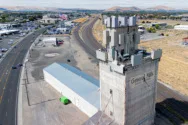
Two local renewable natural gas projects came online in 2024, helping to keep the Tri-Cities powered through a partnership between Cascade Natural Gas and Pine Creek RNG. Above is the RNG facility next to the Lamb Weston potato digester.
Courtesy Pine Creek RNGClean energy often calls to mind images of solar panels, nuclear reactors, windmills or dams, but landfills also can be a productive energy source, capable of generating renewable natural gases, or RNG.
The Tri-Cities is home to two local RNG projects, with a third one expected to come online later this summer.
Already the first two projects, which started up a little over a year ago, have generated enough power to meet the needs of thousands of homes.
Making natural gas
Located in Richland, the two projects are a first both for Cascade Natural Gas, headquartered in Kennewick, and St. Petersburg, Florida-based Pine Creek RNG.
The first project is at the Horn Rapids Landfill, and the second is next to Lamb Weston’s potato digester.
Though the two projects function slightly differently because their source material varies, they fulfill the same role: converting gases generated by the landfill and digester, and processing them into usable natural gas.
Gas moves to the RNG facility via a blower, and then methane molecules can move through freely while carbon dioxide, sulfur and volatile organic molecules are trapped.
At the landfill, a second step is needed to filter out the nitrogen from the methane, this time by trapping the methane and letting the nitrogen through. The Lamb Weston facility doesn’t need that second phase because it doesn’t produce nitrogen.
The CO2, sulfur and volatile organic molecules are burned in a process called “tailing gas,” said Mark Hooyer, Pine Creek’s director of regulatory compliance and technical services.
The pure methane is compressed, then it goes into a natural gas pipeline.
All of the RNG that goes into Cascade Natural Gas’ system is cleaned to a high standard and should be indistinguishable from geologic gas, said Devin McGreal, renewable resources manager for Cascade Natural Gas.
If the gas isn’t up to that standard, it will be instantly cut off before entering the system. The gas won’t be distributed by Cascade until it has been cleaned and reaches the appropriate standard, said Mark Snider, senior public relations representative with MDU Resources Group Inc., which owns Cascade Natural Gas.
Pine Creek put the RNG facilities together, using machinery from Guild Associates Inc. in Ohio, and the company is responsible for operating the plants. Two operators are on site in Richland, with a staff of four Network Operations Center operators monitoring the plants remotely from Florida around the clock.

Converting emissions from Lamb Weston’s potato digester into usable natural gas prevents greenhouse gases from being flared off 24/7. Now, gases are only flared off when the RNG plants power up or power down, or when the gas needs to be cleaned.
| Photo by Rachel VisickValuable resource
Both the Horn Rapids Landfill and the Lamb Weston digester were in use before RNG facilities were added. At Lamb Weston, the gases produced would be flared off continuously, burned in a bright, open flame on site.
When the Pine Creek facility was added, it merely tapped into the existing system and diverted the gases.
Since the gas is only flared off when the plant is starting up or shutting down, or when the gas doesn’t meet the standards to go into Cascade Natural Gas’ system, the RNG system’s benefits are twofold.
First, methane is captured instead of being emitted or flared off. That keeps a greenhouse gas from entering the atmosphere. Second, the methane is then put to good use, powering local homes and industry.
Project milestone
In February of this year, the Lamb Weston facility generated over 100,000 dekatherms of natural gas, a big milestone for the facility. It’s the equivalent of powering 1,500 to 2,000 homes.
Horn Rapids should be hitting that same milestone soon, McGreal said.
The gas doesn’t just go to homes, though. It’s used indiscriminately for a mix of projects, from residential to commercial to industrial.
The local RNG projects make up about 0.28% of Cascade Natural Gas’ annual Washington demand, but in the Tri-Cities area, it makes up about 8.16%.
Unlike geologic gas, McGreal said, RNG is being generated locally, so it doesn’t need to be transported from as far away as Canada.
“By having those two facilities in Richland, you’re supplanting the need to drill two or three new gas wells in Oklahoma or Texas or North Dakota or Wyoming and pipe that gas to Richland, right?” Hooyer said. “You’re actually creating that source locally, as renewable.”

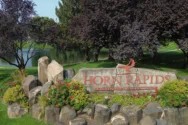
The two Richland RNG projects produce about 0.28% of Cascade Natural Gas’ annual Washington demand and about 8.16% of annual demand in the Tri-Cities. When a third project, located in Pasco, comes fully online, those numbers will increase. Above is the RNG facility at the Horn Rapids Landfill.
| Courtesy Pine Creek RNGProductive partnerships
Both projects were in the works for several years before launching in 2024.
As Washington and Oregon began working on the Climate Commitment Act and the Climate Protection Program, respectively, Cascade Natural Gas, which serves both states, realized that renewable natural gas would be a key part of complying with the programs, McGreal said.
Pine Creek RNG, which was established in 2019, saw that the Horn Rapids Landfill was a good potential site. That meant that not only was it a viable source of gas, but it had access to a pipeline, electricity, water and sewer.
It was the first RNG project for both Cascade Natural Gas and Pine Creek. So far, the partnership has been good, said Doug Senn, senior operator with Pine Creek. The two “work hand in hand.”
While working on the landfill project, the city of Richland introduced Pine Creek to Lamb Weston, and it worked out to site an RNG project by the potato digester.
Now, Pine Creek has four RNG projects up and running, with a fifth in the works. Three of the four are at landfills, making the Lamb Weston site unique.
Cascade Natural Gas has more plans for RNG, too. The next to come online is a wastewater treatment facility in Pasco, which should be kicking off soon.
When the Pasco site reaches full production, Cascade Natural Gas’ RNG projects will make up 0.58% of annual state demand and 17.11% of annual local demand.
“That’s another project that we’re really excited about, once again right in our backyard,” McGreal said. “Our headquarters for Cascade is in Kennewick, and so it’s really awesome that we’re able to be in the community, to do these projects within our own community.”
Plans are also underway for an RNG project at a landfill in Deschutes County near Bend, Oregon, projected to start up as soon as 2027.