
WA state workers head into difficult wage talks as budget outlook darkens
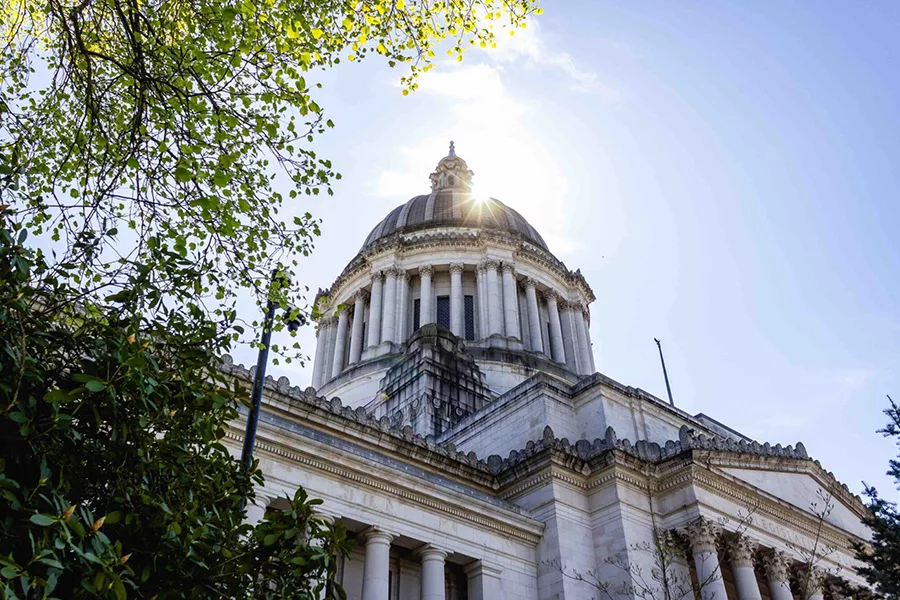
The Washington state Capitol on April 18, 2025.
Photo by Jacquelyn Jimenez Romero/Washington State StandardState worker unions expected tough salary conversations this year, even before Gov. Bob Ferguson warned of difficult spending decisions in Washington’s next budget.
Union leaders say his comments last week that “the shortfall will be significant” weren’t surprising and echo what state negotiators are conveying in contract talks.
“All of our bargaining teams have been preparing for negotiations with a clear understanding of the financial challenges,” said Ashley Fueston, vice president of the Washington Federation of State Employees, which represents 50,000 state government, higher education and public service workers. It has more than a dozen contracts funded in the current budget.
“We also know that state employees have faced years of increasing workloads, staffing shortages, and retention challenges,” Fueston said. “Those issues remain real regardless of the state’s budget outlook.”
Changes in pay and benefits in the collective bargaining agreements have the potential to be one of the pricier items in the next budget. The last round of talks resulted in agreements with general wage increases of 3% last July and 2% on July 1. The total cost of the contracts was about $1.7 billion.
Sarah Lorenzini, lead negotiator for the Professional and Technical Employees Local 17, or Protec17, said she’s certain “when we’re at the negotiating table, they will give us a long-winded explanation of why there’s no money. We hear that every year.”
The state and multiple unions are bargaining on new two-year agreements that would take effect on July 1, 2027. Talks are underway and will soon turn to wages, benefits and other economic issues. At this stage, they are focused on areas such as artificial intelligence and workloads.
Deals need to be reached in about three months. By law, public sector unions in Washington must approve any accord by Oct. 1 for the governor to consider funding it in the ensuing budget cycle.
Seamus Walsh Petrie, legislative and organizing director for the Washington Public Employees Association, said the extent to which budget concerns constrain contracts will become clearer after release of the next revenue forecast on June 26.
That’s when unions anticipate the state’s initial offer on wages and other economic issues.
Petrie declined to say what the association is seeking for its members who work at community colleges and nine state agencies, including the Department of Natural Resources, Department of Revenue, the Liquor and Cannabis Board and Department of Agriculture.
But, he noted, “across the board, state employee salaries have not kept up with inflation.”
Lorenzini didn’t share details of the union’s salary request. Members, who include Washington State Department of Transportation engineers and planners and staff at the Department of Licensing and Washington State Patrol, are aware of the budget stress, she said.
“Our members are willing to sacrifice, to an extent. I fully believe we’ll get there. Will everybody be happy about it? Absolutely not,” she said. “It’s always our position that the state cannot balance the budget on the backs of hard-working public employees.”
Mike Yestramski, president of the Washington Federation of State Employees, said discussions on compensation “will occur soon. We intend to use every opportunity available in the bargaining process to secure the best possible agreement for our members.”
Historically, collective bargaining agreements are funded. But if money is limited, governors can decide it is not feasible to do so.
That happened in 2008. Agreements for the 2009-11 biennium had been reached. But in December, amid a worsening recession, then-Gov. Christine Gregoire decided they could not afford them due to deficits.
Today is a different situation.
Revenue is growing in the state budget. It’s just not enough to keep pace with the costs of state-funded programs and services. This structural imbalance has led to multibillion-dollar gaps in the past two years.
In response, Ferguson, who is a Democrat, and Democratic majorities in the state House and Senate passed a horde of new and higher taxes. This year, they also created a statewide income tax on high earners. All over the objections of Republicans.
Ferguson said on social media last week that his goals for drafting the state’s next budget are to “preserve core services, protect our state’s most vulnerable, don’t raise taxes, and address the structural challenges in our budget to achieve long-term financial stability.” This will be the first full, two-year budget Ferguson proposes as governor.
Union leaders wouldn’t speculate on the possibility that the governor would balk at funding the forthcoming collective bargaining agreements.
Petrie noted that the Office of Financial Management, which is the governor’s budget office, conducts negotiations.
“They have the budget information. They are the ones who decide what is feasible,” he said. “Unless something dramatic happens between Oct. 1 and when the (governor’s) budget comes out, it would be weird if they agreed to something then decided it was not feasible.”
Another possibility is that Ferguson funds the agreements in his proposed budget but looks to shave worker pay in other ways.
When he entered office in 2025, he said he would honor previously agreed-upon collective bargaining agreements providing the general wage increases.
But, in February 2025, in response to a multibillion-dollar shortfall, he proposed $4 billion in cuts, including furloughing most state employees one day a month. State workers blasted the idea and it did not gain traction in the Legislature.
This story is republished from the Washington State Standard, a nonprofit, nonpartisan news outlet that provides original reporting, analysis and commentary on Washington state government and politics.