Brown joins coalition backing Hanford-linked Supreme Court brief
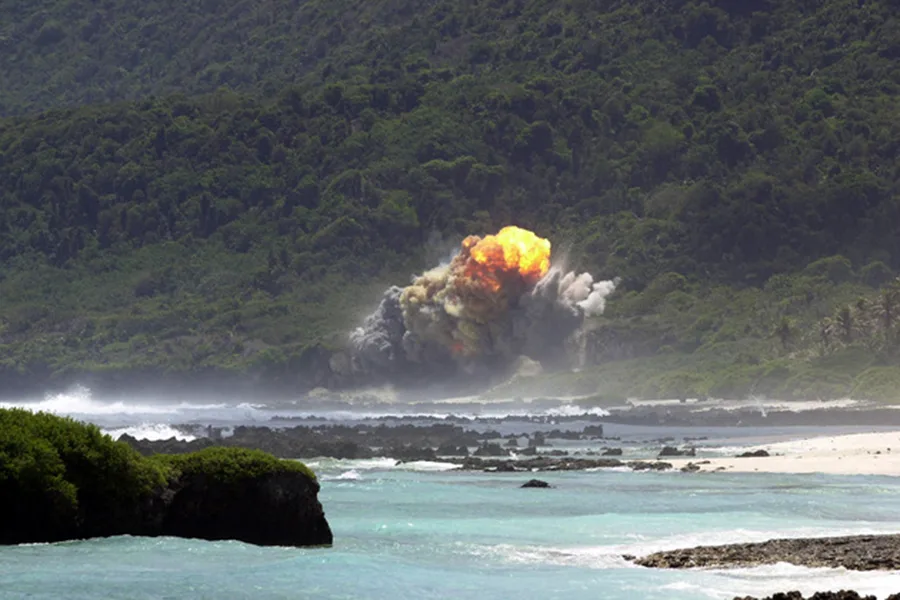
A fireball rises above the 36th Explosive Ordnance Disposal Tarague range seconds after the detonation of an M117 bomb, as a part of the flight's training, on Andersen Air Force Base in Guam in this file photo.
What does a U.S. Air Force base on the Pacific island of Guam have to do with the Hanford site? Enough that Washington's attorney general joined a Supreme Court brief over it.
Brown and 10 other state attorneys general recently filed an amicus brief with the U.S. Supreme Court in the case Department of the Air Force v. Prutehi Guåhan, saying it has notable implications for how the federal government stores, treats and disposes of hazardous waste.
The legal question at the center of the Supreme Court case is the same one that’s shaped Hanford’s cleanup for decades, argues Washington Attorney General Nick Brown.
Supreme Court justices are being asked to determine whether the Air Force can destroy munitions on a beach in Guam without doing an environmental impact review under the National Environmental Policy Act, or NEPA.
Prutehi Guåhan, a grassroots group focused on protecting natural and cultural resources on military land on the island, filed the lawsuit in 2022, arguing the Air Force violated NEPA by failing to conduct an environmental review before continuing open burn and open detonation operations at Tarague Beach, a practice that requires a separate Resource Conservation and Recovery Act (RCRA) permit from the Guam Environmental Protection Agency.
The federal government argues it does not need to do a NEPA review because it already completed a permit application under RCRA.
Brown and his colleagues argue in their brief that NEPA reviews in conjunction with hazardous waste disposal are valuable for states, according to a release. They note the NEPA process is more rigorous than RCRA, as it requires the federal government:
- To analyze environmental impacts before it takes an action requiring a permit to dispose of hazardous waste.
- To gather public input before the federal government’s decision is made.
- To study alternatives that could be less harmful to the environment.
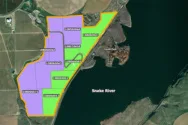
In Washington specifically, those reviews have informed the state’s own permitting decisions at Hanford, reducing environmental impacts from cleanup activities. In one case, NEPA reviews influenced where the federal government sited a landfill on the Hanford site, reducing environmental impacts.
“Hazardous waste sites like Hanford remind us of the federal government’s past failures and ongoing responsibility in addressing toxic threats to our communities,” Brown said in a statement. “We must maintain the safeguards that give Washingtonians a voice in federal decisions that impact us and our environment.”
The U.S. Supreme Court is scheduled to hear oral arguments in the case this fall, with a ruling issued tentatively in June 2027.