Historic homes wait for buyers willing to look beyond their age
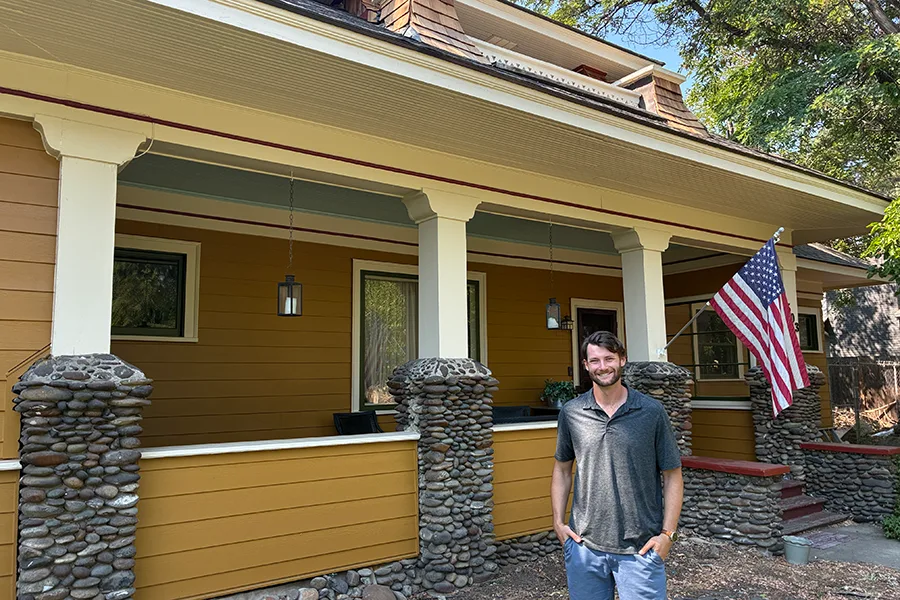
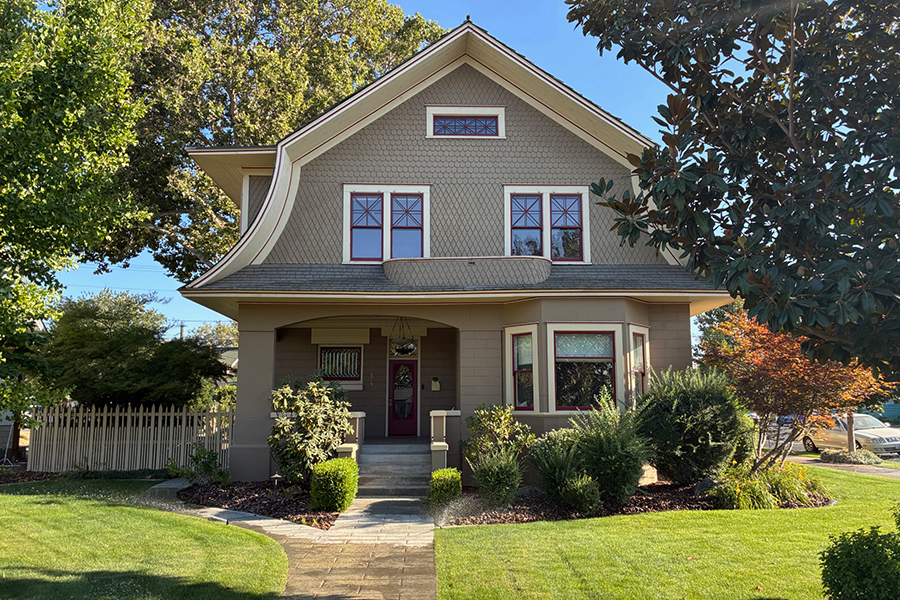
Prescott Davis has poured a lot of money as well as time and energy into renovating 1919 Craftsman home he purchased in 2020. But he’s happy that he’s been able to preserve such a historic Kennewick home while making it suitable for his growing family.
Photo by Ty BeaverWhat do the former homes of a federal judge appointed by President Dwight Eisenhower and a club for bachelors who “knew how to howl” have in common?
Both are among some of Kennewick’s oldest homes that also happen to be on the market.
The two properties, at 503 W. First Ave. and 529 W. Kennewick Ave., are among the latest in a bundle of generational homes in Kennewick’s historic downtown area to come up for sale. Others in the past year have included a 1915 Sears & Roebuck catalog Craftsman, a 1908 Queen Anne-style home, and a fixer-upper built in 1910.
Such houses and storied similar ones often garner hundreds or thousands of views on websites such as Zillow and shares on social media. But it’s not uncommon for them to sit on the market for months as buyers can feel skittish about taking on older homes.
“They wanted all the wiring, all the plumbing updated,” said downtown Kennewick resident Prescott Davis, of an offer some friends and neighbors received for their home. “If you need that, you don’t want to own a historic home.”
And while those who live in or have lived in older homes and those committed to their preservation stress the need to ensure future owners fully appreciate them, caring and preserving them is not as onerous as often perceived.
“They’re built better than most things are built now,” said Keith Silliman, Realtor with Retter & Company Sotheby’s International Realty, who is representing the house on First Avenue.
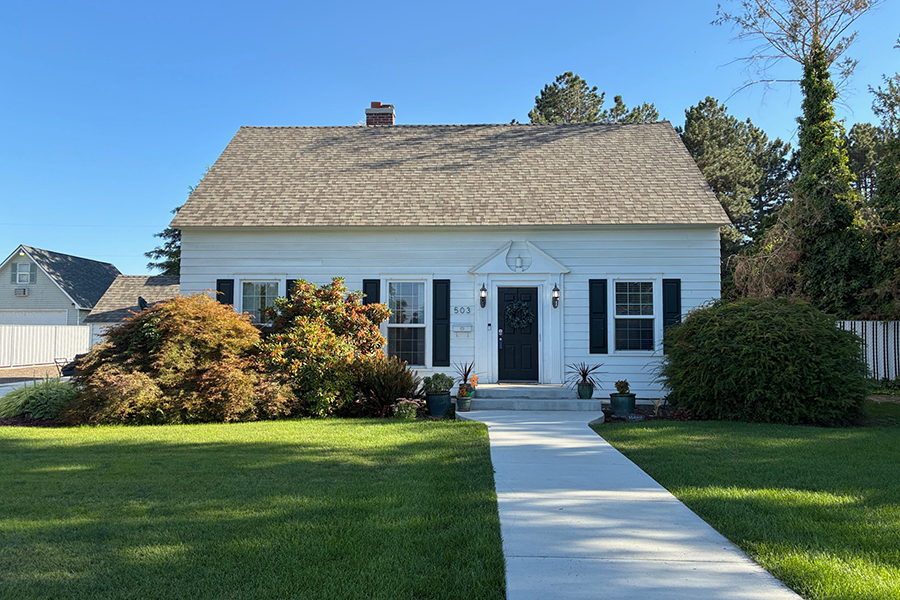
The Powell House, built in 1935, was once the home of U.S. District Court Judge Charles Powell. The Cape Cod Revival home retains its vintage charm with a more modern interior that includes new fixtures and styling following a restoration in the last several years.
| Photo by Ty BeaverKennewick classics
The bridge-to-bridge area of Kennewick – which encompasses downtown and Columbia Drive and the residential blocks around and between them – is where the majority of its oldest homes are located.
The city’s Historic Preservation Commission requires a historic home to be at least 50 years old to be registered, but many of the homes in this area are upward of 100 years old, dating back to even before Kennewick’s incorporation in 1904.
This has led to many of the homes being held by generational owners. That’s the case with the C.A. Lundy House, the 1908 Dutch Colonial at the corner of Kennewick Avenue and Fruitland Street that's for sale.
Once the home of the Coyote Club bachelors, architect Gary Hansen and his wife Johnean have worked since 1985 to restore and improve it. It boasts period divided-light windows, wallpaper and hardwood moldings throughout, alongside modern features in the kitchen and a standalone two-car garage
The First Avenue house, once the home of Judge Charles Powell, was fully restored by Silliman himself, who sold it to its current owners.
Built in 1935, the Cape Cod Revival home retains its vintage charm with a more modern interior that includes new fixtures and styling.
But a fully restored and updated historic home doesn’t necessarily sell quickly.
The Powell House has been listed for more than 6 months, nine times longer than the current median days on market for a listed home in the Tri-Cities, according to data from the Tri-City Association of Realtors.
It’s in good company. The Queen Anne, located on the corner of Albany Avenue and Fruitland Street, was also on the market for months before selling earlier this year. The fixer-upper next to the Lundy House sat on the market for more than three months before it sold.
Older home challenges
Tom Moak understands why some might be intimidated by the prospect of an older home.
The retired Port of Kennewick commissioner lives in the Tull House, also on Kennewick Avenue. He’s had the 1907 two-story home restored during his ownership and while he’s enjoyed living there, “it isn’t for the timid.”
“For a person who’s not a handyman, there are challenges, and I’m no handyman,” he said.
A block away, Davis is in the midst of rehabbing his 1919 Craftsman where he admits to finding some surprises.
There was a load-bearing wall that wasn’t secured to the floor, lead paint and early knob-and-tube electrical wiring. He recently learned there was an explosion in what was the kitchen not long after the house was built. And it cost tens of thousands of dollars to add a modern kitchen and dining area on the ground level and an upstairs master bedroom with en suite bathroom – improvements to make the home suitable for his growing family.
But the software engineer hasn’t been intimidated by the project. Davis admits he had to dedicate more time to finding contractors and subcontractors he could trust and work a little harder to find appropriate materials for some restoration work.
But his drive to keep the house as close to its original design, which includes mahogany woodwork, leaded glass windows and pocket doors, has made it all worth it.
“I didn’t need to get stained trim,” Davis said, adding, “but I needed stained trim.”
The C.A. Lundy House, a 1908 Dutch Colonial at the corner of Kennewick Avenue and Fruitland Street, was once home of a group of bachelors known as the Coyote Club. It boasts period divided-light windows, wallpaper and hardwood moldings throughout, alongside modern features in the kitchen and a standalone two-car garage.
| Photo by Ty BeaverEyes wide open
Silliman, who owned and lived in a historic home himself, said those looking at buying an older house should go in with eyes wide open. But he also advised that some aspects of modern homebuying create reticence at taking on older homes.
Specifically, some inspectors will assess all houses as if they were new construction, which will immediately create a laundry list of projects for a potential buyer.
“Buyers get these reports and ask, ‘How is this even standing?’” Silliman said.
Some buyers also have concerns about the potential red tape to improve a historic home.
Jennifer Harper, chair of the city’s Historic Preservation Commission, said there is a process for some improvements, usually windows and roofs. But those requirements don’t apply to interior renovations or the need to modernize systems.
“It can be intimidating. There’s a fear you can’t do anything without this extreme oversight,” she said. “The commission is not overly intrusive.”
Finding the right buyer
For many owners of historic homes, the goal isn’t simply to make a sale – it’s to find the right steward for the property.
“You have to find the right buyer who appreciates not living in a suburban cookie cutter house,” Silliman said. “The generational owners are very protective. They want to make sure they are sold to someone who appreciates the home’s uniqueness.”
Davis agreed that a historic home isn’t for everyone, but for those up to the challenge, it’s well worth it.
“If your goal is to own a home, don’t let it stop you,” Davis said.