
As WA open enrollment begins, far fewer than expected have lost coverage
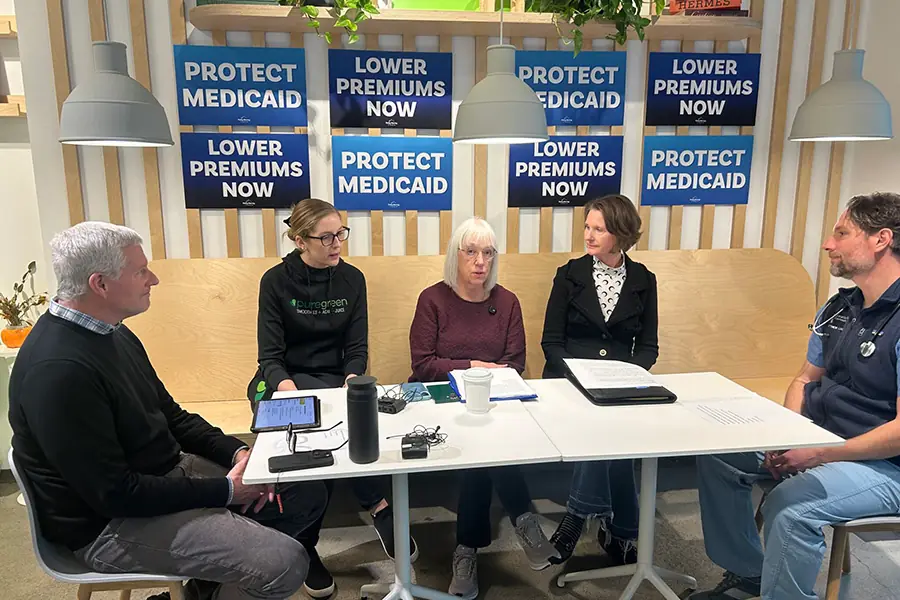
U.S. Sen. Patty Murray hosts a roundtable on rising health insurance costs alongside Insurance Commissioner Patty Kuderer, center-right, small business owners and a local physician on Thursday, Oct. 29, 2026, in Seattle, Washington.
Photo by Jake Goldstein-Street/Washington State StandardStarting Nov. 1, Washingtonians who need to buy health insurance through the state’s online marketplace can enroll in or change their plans, but they face another major cost increase to maintain coverage.
About 260,000 people are currently enrolled through the Washington Health Benefit Exchange. That number is far higher than state officials had expected amid rate hikes and the loss of some federal financial aid.
State leaders originally feared 80,000 people could lose or drop their coverage after Republicans in Congress declined to extend federal subsidies despite a push from Democrats. The debate led to a lengthy federal government shutdown last year. The subsidies helped save enrollees, most of whom qualified for them, an average of more than $1,000 annually on premiums.
Every state, except New Mexico, saw a drop in enrollment this year, according to an analysis by nonpartisan health research firm KFF.
At the end of September 2025, roughly 275,000 residents were enrolled through the individual market, with a drop of only about 15,000 a year later. That decrease is also far from what was seen earlier this year when 36,500 fewer enrollees were covered. More people, worn down with months of higher premiums, were expected to drop their coverage, but it went the other direction. People can enroll during the year if they have a qualifying life event, like changing jobs.
State Insurance Commissioner Patty Kuderer attributed the better-than-expected news to an emergency rule out of her office to maximize other premium tax credits. Washington was one of the few states to take this step, she said. The state’s own premium assistance, known as Cascade Care Savings, also helped avert some of the more dire fears of the drops in coverage.
Residents who still get their health plans through the Affordable Care Act exchange face an average 22.2% increase in rates starting Jan. 1, as the cost of care increases and people need more robust care. Rates went up 21% this year.
“People are once again making difficult decisions about whether to stay insured, and we know that the people who keep coverage despite the rising costs are the ones that need the coverage the most,” Kuderer said in a Oct. 29 roundtable in Seattle with U.S. Sen. Patty Murray.
The state exchange is meant for people not covered through their work or government programs like Medicaid or Medicare, like those who are self-employed, work seasonally or retire early. It launched in 2013 under the Affordable Care Act. Meanwhile, upward of 200,000 residents could lose their Medicaid coverage due to new federal work requirements taking effect in January, officials expect.
Small businesses with fewer than 50 employees also use the exchange for their workers. Those insurance rates are rising by 16.7%. The increases are in line with national trends.
Since opening in June 2025, premiums for workers at PureGreen, a juice bar in Seattle, have gone up about 20%, said owner Alicia Anderson Pieri.
“That impacts obviously both me and my bottom line as a business owner, but it impacts all of my employees,” Anderson Pieri said. “It means that they have to work about an extra hour every two weeks in order to cover that premium increase.”
For coverage to start Jan. 1, residents have to enroll by Dec. 31. Applying by Jan. 15 means a plan would start Feb. 1.
If Democrats retake Congress in the Nov. 3 midterms, healthcare policy is a top priority, with reinstating the expired subsidies high on the to-do list, though legislation would still be subject to President Donald Trump’s signature.
“It’s very clear to me that we have got to reinstate the ACA tax credits,” Murray said.
This story is republished from the Washington State Standard, a nonprofit, nonpartisan news outlet that provides original reporting, analysis and commentary on Washington state government and politics.

Stay Informed. It’s Free.
Subscribe to our newsletters and get the latest news and insights delivered to your inbox.
We respect your privacy.
Unsubscribe anytime.
Thank you!
You’re subscribed. Keep an eye on your inbox for the latest updates.