
BPA proposing rate hike, citing court order
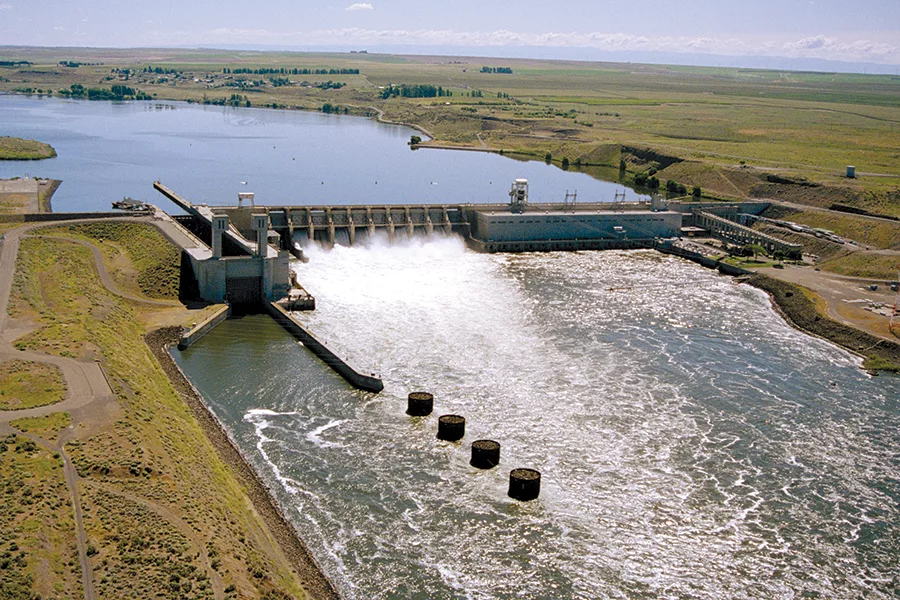
Bonneville Power Administration is seeking to collect an additional $125 million from its ratepayers over the next two years, reportedly to recover its costs in meeting a court order to spill more water from its hydroelectric dams.
The federal agency recently announced its filing the expedited rate case. It is expected to be published on Oct. 5, with a potential decision in December and the new rate, if approved, going into effect in January.
In the announcement, BPA specifically cited a March ruling from the U.S. District Court for the District of Oregon requiring it to spill more water to protect endangered fish as the basis for its need to raise rates. If allowed to go into effect, the rate change would increase power customer bills by more than 6%, according to one estimate.
“The court order increases spill and reduces hydropower generation,” BPA’s statement read. “To recover the impact of the court's order over the remaining two years of the rate period, the proposed power rate adjustment mechanism – called the Court-Ordered Operations Rate Adder – is expected to recover an additional $125 million per year for both remaining fiscal years 2027 and 2028.”
However, environmental groups say BPA is wrongly blaming the court’s ruling rather than its own poor planning as the real reason for seeking the rise in rates.
“BPA has financial tools specifically designed to address revenue shortfalls,” said Ben Otto, interim policy director at the NW Energy Coalition, in a statement. “It doesn’t need to immediately put a financial burden on ratepayers, and it shouldn’t try to scapegoat the salmon in the process.”
The ruling is related to a preliminary injunction in a lawsuit which started nearly 25 years ago and claims dam operations on the Columbia and Snake rivers contribute to the decline in 14 endangered salmon species.
The litigation and multiple others against the federal government regarding dam operations were stayed in 2023 when all the parties agreed to mediation to address dam impacts, including consideration of breaching the four dams on the lower Snake River. However, the lawsuit was restarted after the Trump administration withdrew last year from an agreement that stayed litigation as federal agencies sought to find solutions alongside those concerned about the environmental impacts of the dams.
Federal attorneys have argued the requested changes to dam operations would irreparably harm energy generation, irrigation and transportation supported by the dams. Judge Michael Simon of the U.S. District Court for Oregon, however, found those arguments unconvincing.
“The (U.S. Army Corps of Engineers) successfully operated the dams at those levels and thus all parties can be assured of the viability of the operations for power generation, transportation and irrigation,” Simon wrote in his opinion. “Additionally, the court includes flexibility for the (agencies) to deviate from these levels for transportation and power generation emergencies.”