
As river temps climb, dam helps keep salmon moving
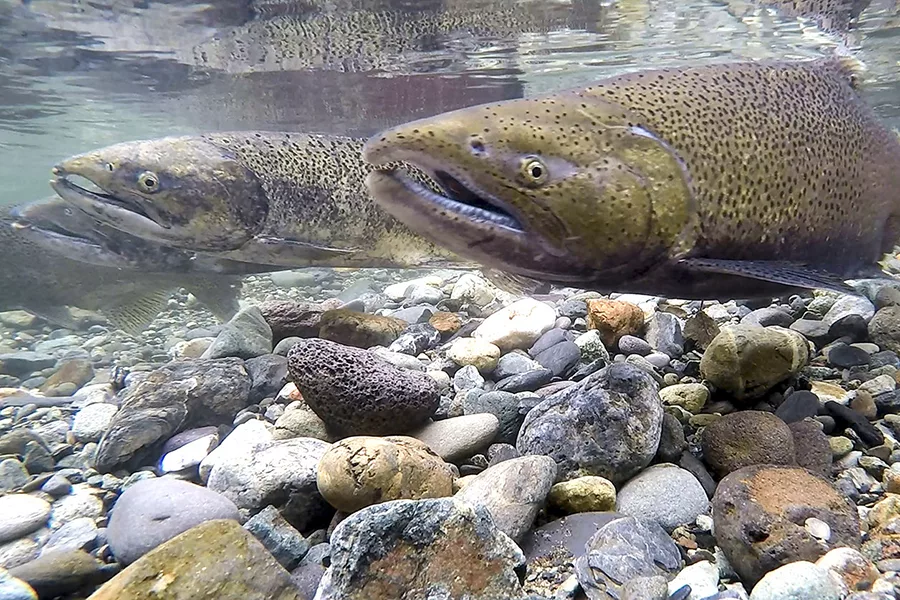
The Snake River is simmering in the summer heat as it winds across western Idaho and southeastern Washington – and that’s something salmon can’t tolerate.
“Above about 68 degrees, they start showing signs of stress, migration delay, and, if temperatures go higher, mortality can start to occur,” said Chris Peery, fish biologist for Walla Walla District of the U.S. Army Corps of Engineers, in a statement. “Water that flows into the lower Snake River and the Lower Granite Dam reservoir comes from Hells Canyon and other tributaries and is always warmer than 68 in summer.”
The Snake is well above that limit across its full stretch from the Washington-Idaho border to where it empties into the Columbia River south of the Tri-Cities.
The Clearwater River near Orofino, about 40 miles east of Lewiston, Idaho, had 79.7-degree water temperatures on July 25. The Snake River at Anatone, Washington, about 25 miles southwest of Lewiston, was also hot.
Water temperatures peaked at 74.4 degrees that same day. At Ice Harbor Dam, temperatures came in at a cooler but still warm 70.3 degrees.
As dire as this can be, there is one tool the Corps has to help cool the river and help the salmon – Dworshak Dam, also near Orofino.
The concrete dam stands 717 feet tall, which is more than 100 feet taller than the Space Needle in Seattle and the third tallest dam in the U.S. Dworshak’s spillway crest runs 3,287 feet, or more than nine football fields long. It is massive, with a storage capacity of more than 3.4 million acre-feet, or enough to cover the state of Connecticut with 1 foot of water. For comparison, 1 acre-foot of water would cover a football field with 1 foot of water.
The Corps manages water releases from Dworshak to help address temperature concerns in the Snake and Columbia rivers, in consultation with the National Marine Fisheries Service and the U.S. Fish and Wildlife Service. By releasing cold water from Dworshak on July 25, it kept river temperatures behind Lower Granite Dam at 66.1 degrees or less.
“This is where the value of Dworshak’s reservoir comes in,” Peery said. “Dworshak is 600 feet deep and water that flows out of the bottom of that reservoir is 42 degrees year-round,” he said. “If we manage it carefully, we can help cool the Snake River so it stays around 68 degrees in the tailrace of Lower Granite Dam, but there is a limited amount of water that we can release from Dworshak.”
Many factors influence river temperatures. Dams, agricultural or industrial water use, habitat quality, and climate conditions like drought, annual snowpack and precipitation all impact temperatures. In this case, upstream river temperatures can heavily influence temperatures in the lower Snake but Dworshak helps blunt this.
Because those conditions vary throughout the season, Dworshak releases cannot eliminate high temperatures throughout the river system, the Corps said. It can, however, provide operational flexibility and help improve conditions in portions of the Clearwater and lower Snake rivers during periods of elevated summer temperatures, aiding salmon and steelhead.