O Christmas tree, thy smell is so...citrusy? Piney?
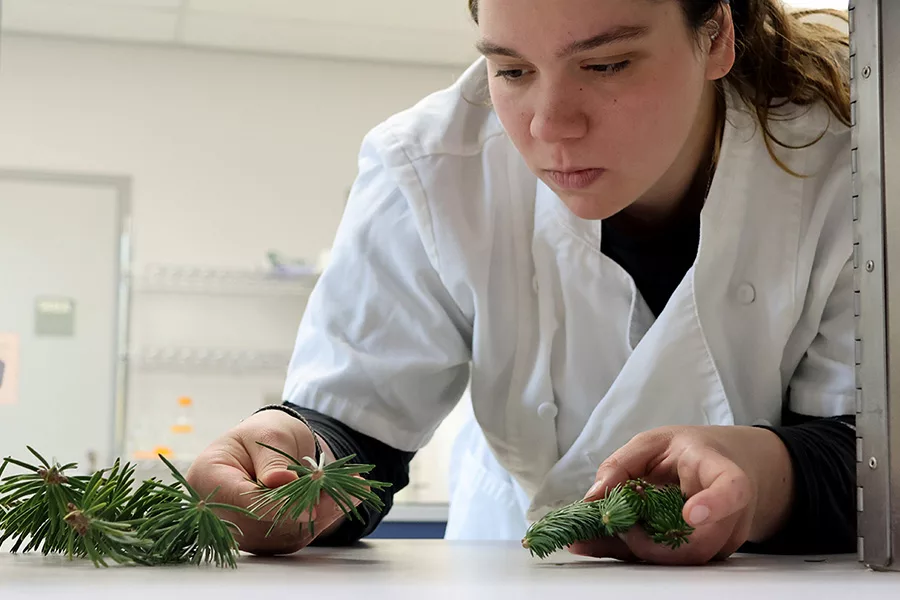
Erin Macedo, master's student in the School of Food Science, handles fir cuttings used in a panel studying consumer preferences in Christmas tree aromas at WSU's Sensory Science Center
Photo courtesy of CAHNRSAny Christmas tree’s leaves are unchanging, but for researchers at Washington State University, the smell of a Christmas tree is just as important.
Scientists in WSU’s School of Food Science conducted panels this fall where researchers from across the country provided their feedback on samples from six different coniferous tree species that are used as Christmas trees in the U.S.—Fraser, noble, balsam, concolor, Nordmann, and Trojan firs
That work, being conducted by Gary Chastagner, a WSU emeritus plant pathologist known nationally as “Dr. Christmas Tree” and WSU Regents professor Carolyn Ross, could contribute to identifying regional preferences that inform future plantings and is part of a a $7.4 million, USDA National Institute of Food and Agriculture-funded multistate research project.
“The question is, what aroma?” Chastagner said in a statement. “What’s contributing to that aroma, and is there a way to improve on it?”
The characteristic odor of Christmas trees comes from terpenes: volatile organic compounds that plants use to resist diseases, attract pollinators, and defend against browsing herbivores. The smells can range from piney to citrusy, even an odor akin to kerosene.
Smell is a critical quality considered in the Christmas tree industry, as are tree shape, growth rate and a tree's ability to withstand pathogens and pests as well as spending a month in a home bedazzled in ornaments and lights.
“I want to find ways to help growers produce high-quality trees that consumers want to display in their homes,” Chastagner said. “If you can better understand your consumer, you can make better decisions. This is a tremendous opportunity to understand those drivers.”