Federal energy bill brings mixed news for Hanford, PNNL workers
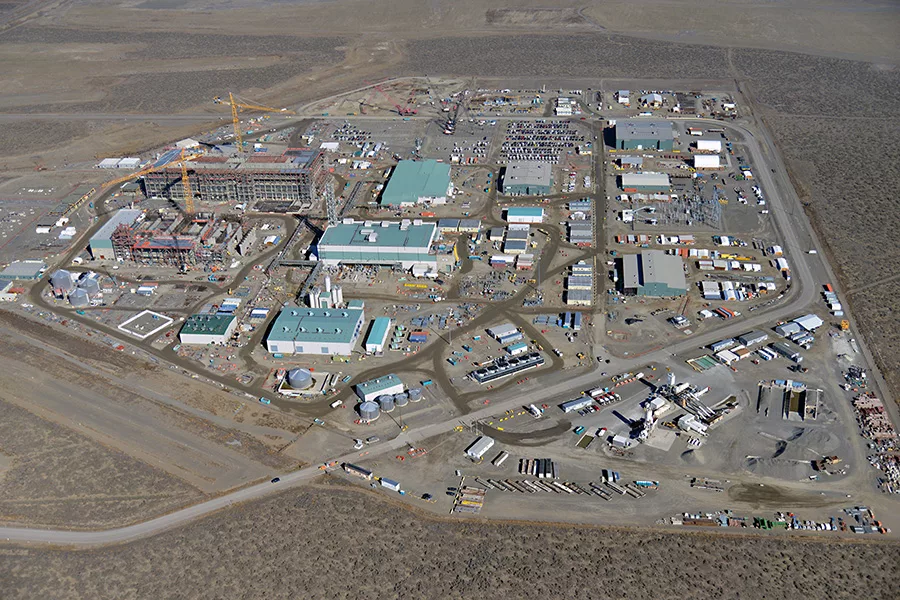
Bechtel National Inc. is designing and building the Hanford Vit Plant for the U.S. Department of Energy.
Courtesy Bechtel National Inc.Thousands of Tri-Cities workers at the Hanford nuclear site and Pacific Northwest National Laboratory are watching a federal budget process that could determine whether a second consecutive year of deep job cuts can be avoided.
A House appropriations bill advancing through Congress would deliver cuts to Hanford cleanup funding while partially reversing proposed reductions at PNNL.
The Tri-City Development Council, or TRIDEC, said it has heard questions from its members and the public about the potential for reduced spending and what it could mean for local jobs.
“While those concerns are understandable, it is important to recognize that proposed budgets are only the beginning of the federal appropriations process. Significant reductions have been proposed in prior years, yet Congress has consistently demonstrated strong bipartisan support for both Hanford and PNNL,” TRIDEC said in a statement.
Hanford
The $58.5 billion Energy and Water Appropriations bill passed out of committee May 20 with support from U.S. Rep. Dan Newhouse, R-Washington.
Under that bill, funding for the Hanford site would drop to about $2.7 billion, more than $450 million below its current record $3.2 billion budget.
Newhouse acknowledged the cuts would return Hanford to roughly its fiscal year 2023 spending level but said the bill “prioritizes the continued retrieval and immobilization of tank waste, supports cleanup milestones, and continues the momentum on vitrification.”
“The appropriations process is a negotiation, and this mark is the first step in delivering legislation that reduces spending to the President’s desk,” he said in a statement.
PNNL
The House funding proposal is more favorable to programs that fund research at PNNL. Lawmakers are proposing funding Energy’s Office of Science, the primary source of PNNL’s funding, at $8.5 billion, just above its current funding level and a complete reversal from cuts proposed by the White House.
The Office of Nuclear Energy also has the Trump cuts more than zeroed out in the draft bill at $1.8 billion, more than $100 million above current spending.
Newhouse lauded the funding proposal in comments sent after the committee vote, citing its increased funding for nuclear energy which he said will expedite development of small modular nuclear reactors, or SMRs, proposed by Energy Northwest, Amazon and X-energy north of Richland.
The Trump administration had proposed cutting the lab’s overall budget by 20%, or $157 million compared to current levels, a reduction that Friends of PNNL had estimated could force more than 1,000 job cuts on top of the roughly 400 jobs already eliminated last year.
Programs facing the deepest cuts under the White House proposal included renewable energy research, down 81%, or more than $94 million, and the Office of Science, down 39%, or nearly $88 million. Biological and environmental research would take the biggest hits within the Office of Science. Defense nuclear nonproliferation work would see a 22% increase.
Reasons for confidence
TRIDEC, which advocates annually before Congress for Hanford and PNNL funding, urged the community not to read too much into early budget proposals. The group noted that significant cuts have been proposed in prior years with Congress consistently restoring or increasing funding.
Most recently, after both the White House and House proposed reductions to Hanford’s fiscal year 2026 budget, the final appropriations bill increased funding by $277 million, nearly 9.4% above the prior year.
TRIDEC also pointed to Sen. Murray’s role as vice chair of the Senate Appropriations Committee and its Energy and Water Development subcommittee as a key factor in the region’s favor. Murray reaffirmed her commitment to Hanford and PNNL funding during a Tri-Cities visit May 6.
“While TRIDEC will continue advocating aggressively for the resources needed to support Hanford and PNNL, history provides strong reasons for confidence,” the organization said.
The bill next goes to the full House for consideration.
To view the full draft appropriations bill, go to: bit.ly/house-bill.