Plowing past headwinds
Potato growers adapt amid global pressures, local challenges
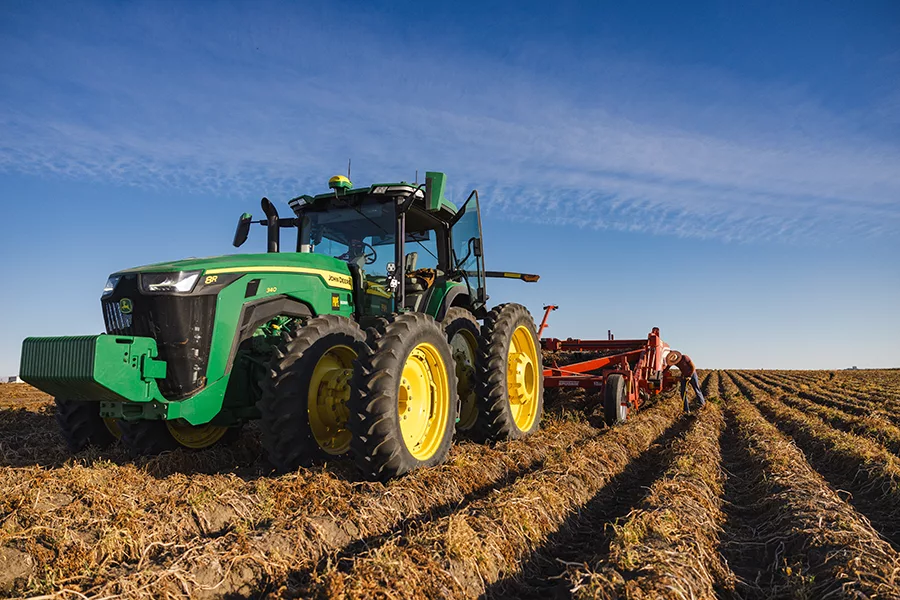
Potatoes processed into frozen french fries are Washington’s top export, valued at $1.09 billion in 2025.
Courtesy Washington State Potato CommissionA year ago, uncertainty hung over Washington’s potato industry. Looming tariffs cast a shadow over one of the state’s most important agricultural sectors.
While some of those fears have eased, a new set of challenges has emerged, reshaping not only how potatoes are grown, but how the industry competes in an increasingly complex marketplace.
It remains one of the state’s most valuable crops, although its production value dropped 20% in 2025 to $825.7 million, down from $1.03 billion the year before.
Though tariffs initially dominated the conversation, the long-term impact has been less severe than expected – at least in most markets, said Chris Voigt, executive director of the Washington State Potato Commission.
“The good news is that even though the U.S. put in tariffs or threatened tariffs, no other country retaliated except China,” he said.
For Washington potato growers, that meant continued access to most worldwide markets.
The Chinese market for Washington potatoes had been fading for years. Once worth about $125 million annually, Voigt said the yearly market is closer to $5 million. He blames a series of cascading events, with one of the most impactful being disruptions along the West Coast from port slowdowns during labor negotiations.
“We became an unreliable supplier,” Voigt said. This gave China and India incentive to invest in their own production, creating a global impact. “They’ve really burst onto the export scene. Now we’re competing with them internationally.”
Global competition
This market shift has come from new research, improved seed development and increased processing capacity. Competition is especially visible in the Pacific Rim, where Washington still leads the market in french fry exports to Japan.
Since the Philippines, Vietnam and other Southeast Asian countries started to buy from China and India on the cheap, it’s become serious threat to Washington’s top agricultural export, where fries alone were valued at $1.09 billion in 2025.
By and large, Voigt said lower labor costs, fewer environmental regulations and different operational standards allow these countries to produce and sell potatoes much cheaper than Washington.
For years, Washington’s advantage has been quality and high yields per acre – even outpacing Idaho on that marker for its 139,500 acres harvested in 2025. Major international buyers typically rely on U.S. suppliers because of strict food safety standards and dependable supply chains, but that gap is beginning to narrow.
A recent evaluation compared potatoes grown worldwide and Voigt said those from China and India performed better than expected.
“They’re not quite at the same level as Washington, but they’ve really upped their game. They’re getting close.”
Understanding the assignment
The domestic potato industry has gotten the message and understands the assignment: Don’t just rely on quality to stay ahead – innovation must also become a central strategy.
One of the most promising areas is potato breeding and genetics. Historically, breeding new potato varieties has been a slow, trial-and-error process.
Voigt described how growers would cross plants, grow thousands of seedlings and select the best based largely on what simply “looks like a potato.”
“We usually produce about 140,000 genetically different plants each year, and we’ll look at the potatoes that came up and select with our eyes which potatoes are worth it and go forward,” Voigt said. “We know nothing other than they look like something someone would pick up. We don’t know the nutritional content, if it’s resistant to disease or insects, if you can store it long enough or if it’ll break down in storage; we don’t know nothing.”
A scientific approach
Now, the industry is taking a more scientific approach.
“We’re trying to develop new varieties that give us an edge,” he said. That includes taste, texture and nutritional content – all qualities that appeal to consumers. At the same time, researchers are working toward crops that need less water, fertilizer and pesticides, aiming for both sustainability and cost-effectiveness.
This effort involves what’s known as bioinformatics, or using genetic data to identify potato variety traits. With this information, researchers can pinpoint specific genes responsible for the characteristics they prefer, like vitamin content or disease resistance, using science rather than guesswork.
“We’d be making decisions based on data instead of just our eyes,” Voigt said.
The potato commission secured congressional funding for a new position known as a bioinformatician who will focus on potatoes at a research center in Prosser. The industry hopes to use this expert to dramatically accelerate the potato breeding process and maintain its competitive edge.
Local challenges
While global competition is a concern, local challenges remain just as pressing.
The fresh potato market was hit hard in 2025 by oversupply following a near-perfect growing season nationwide. Since the fresh market typically relies on the open market, an overabundance of potatoes depressed prices.
“It’s been devastating,” Voigt said. In some cases, growers are receiving far less than what it cost to produce the crops.
Processed potatoes are the largest piece of the potato market, and they aren’t faring much better, especially since these growers rely on contracts – most of which were well in place before fuel and fertilizer prices skyrocketed in the spring of 2026.
“It is definitely a challenging year for agriculture,” said Blaine Meek, a longtime farmer and member of potato commission, who sees it firsthand. “Our contract prices have been reduced, but unfortunately our expenses are increasing. You’re working the wrong sides of the formula.”
Farming thousands of acres for decades, Meek said dramatic spikes came without warning, especially since potato growers typically buy fertilizer at the beginning of the season.
“Just as we started bringing in our potato seed, the Iran war started. What was going to be a few percentage points increase in costs is appearing more like a double digit,” he said.
Growers have no choice but to absorb it. “Margins are tight. An off crop could put you in the red,” Meek said.
A mostly warm winter added another layer of uncertainty since farmers rely on cold temperatures and freezes to help break pest and disease cycles.
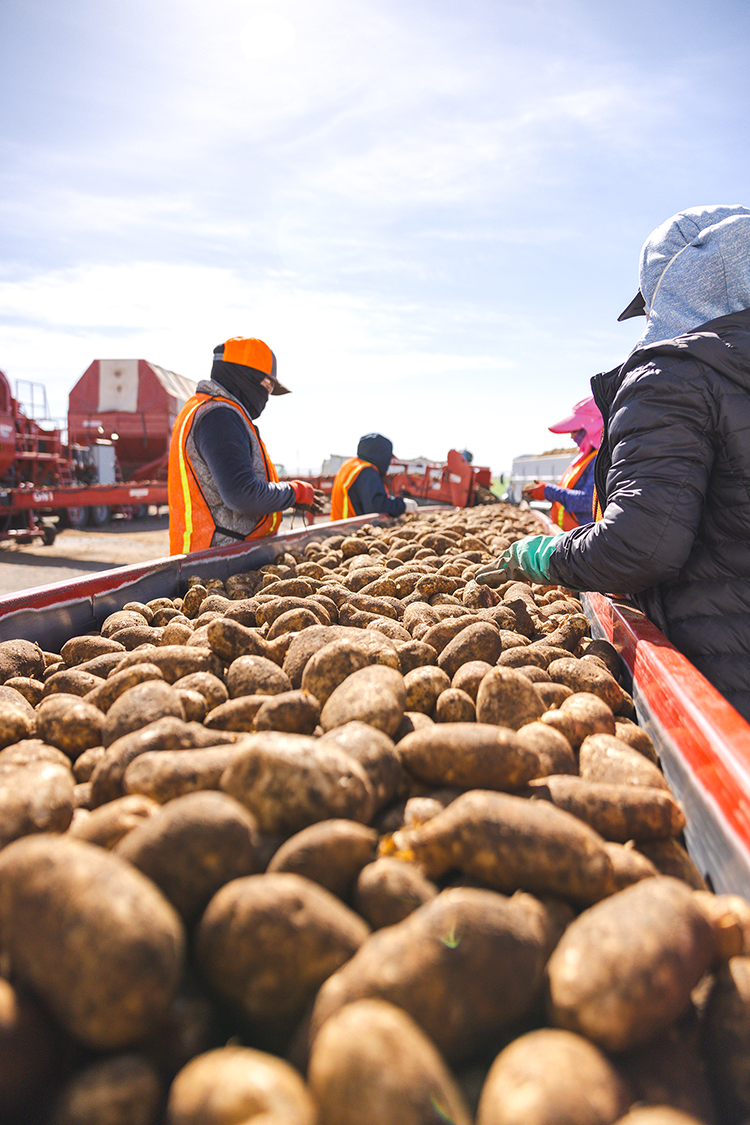
Farmworkers sort newly harvested potatoes.
| Courtesy Washington State Potato Commission“We had such a mild winter. I’m concerned our crop protection costs are likely to be higher than normal because the pests didn’t get frozen,” Meek said. While pesticide prices haven’t yet increased as dramatically as other inputs, growers may simply need more of them.
On top of these threats, there are regulatory challenges unique to Washington state that have increased the cost of doing business, including higher labor costs, additional environmental regulations, and policies that affect the price of fuel and operations.
Meek noted competitors in Idaho are not required to pay overtime for agricultural work. “When it’s harvest time, it’s not a 40-hour week. There’s just no choice, but we pay a lot of overtime,” he said.
Electricity is another growing expense. For a crop that requires a lot of water pumped from the Columbia River, rising power prices have hit operations hard.
“Bonneville Power rates went up by double digits, 13% last year,” Meek said. “Our local utilities have to push that through to us.”
“Washington ranks 50th in the country for farm financial viability,” Voigt said, noting policies aimed at social and environmental goals put Washington farmers at a competitive disadvantage.
Industry leaders are working to communicate these added financial strains to lawmakers while emphasizing the importance of supporting local agriculture for food security.
“A lot of places rely on donations of Washington farmers, and if they’re not there, the food insecurity that’s already a challenge is only going to get worse,” Voigt said.
Climate change
Beyond economics and policy, another long-term concern looms: climate change. Industry experts say climate models predict changes in the state’s precipitation patterns. Voigt said that while total rainfall may remain steady, less is expected to fall as snow, and potato farmers rely on snowpack to gradually feed reservoirs throughout a growing season.
“You can’t replace that slow release of water,” Voigt said. The impact of those changes on California alone would have a ripple effect for the rest of the nation.
Limited water there already shifted some production northward, providing new opportunities if Washington can keep up.
“We still have advantages,” Voigt said. “Now, we just have to use them.”
Innovations and optimism
Meek pointed to on-farm innovation as one possibility, including AI-driven sprayers that can distinguish weeds from crops in real time.
“It knows what’s a weed and what’s the crop, and can spray just where the weed is,” he said.
This results in dramatically lower chemical use and less stress on the plants.
“Lots of cool stuff is happening that looks like it will help us do our jobs better and more efficiently,” Meek said.
Despite the headwinds, Meek maintains the mindset needed for anyone in agriculture, and especially potatoes: “If you’re going to be a farmer, you’ve got to be an optimist. The (current) stands look good and hopefully we’re up for a good growing season.”