Prioritizing preservation
Grad student’s work supports plans for a Black history museum in Pasco
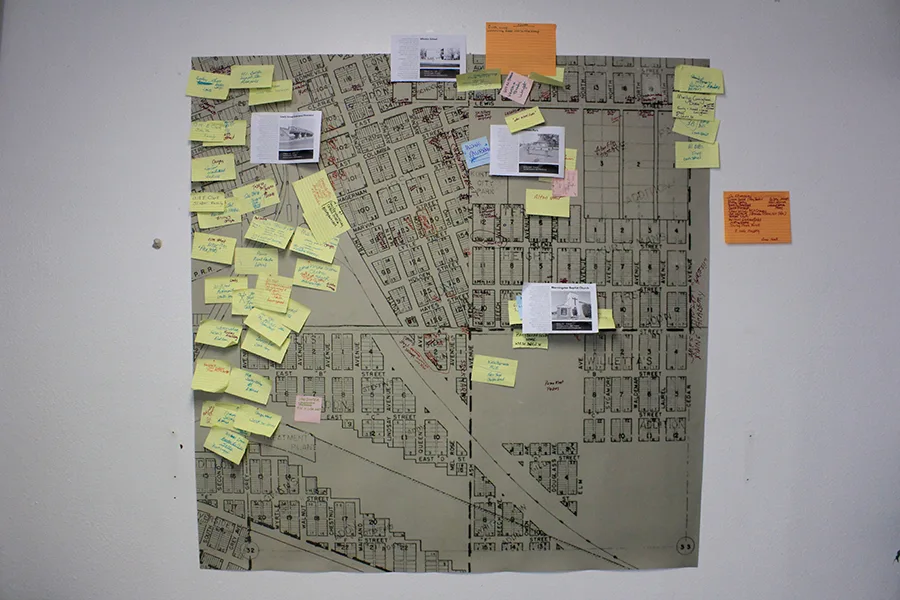
This map of east Pasco with sticky notes and other materials was part of a recent outreach effort to document the Black community that called the blocks east of the railroad in Pasco home and built a thriving community.
Courtesy Kyley Canion BrewerThe Green Book, a landmark travel guide published for Black travelers from 1936-66, once devoted a two-page spread to Pasco – describing it as the “end of the road” for safe and comfortable accommodations.
Now a Washington State University graduate student is working to document the Black-owned businesses that made east Pasco a destination and epicenter of Black culture in Eastern Washington, from the Poulet Palace nightclub and restaurant to the numerous enterprises nurtured in the Matrix building near present day Virgie Robinson Elementary and the Martin Luther King Jr. Community Center.
Damien Davis
“The community really had to come together to build their own businesses, their own third spaces,” said Kyley Canion Brewer, who is also a project coordinator with the Hanford History Project.
Canion Brewer’s work is part of a broader effort to establish a museum in Pasco that will document, store and share the history of the Black community in the region with future generations.
“There are so many great stories that nobody has heard,” said Damien Davis with the Eastern Washington Institute of Black History & Culture.
Mapping project
Canion Brewer is one of four graduate students receiving funding from the National Endowment for the Humanities to complete a project as a Publicly Engaged Fellow for WSU’s David G. Pollart Center for Arts and Humanities. The fellowship aims to provide the skills and training needed for equitable work with community partners as the graduate students complete their designated projects.
Canion Brewer’s project grew out her work supporting the community mapping project in “Eastside Temporalities,” a collaborative art installation between WSU faculty and local artist Joel Nunn-Sparks. It was displayed at Pasco’s Café Con Arte earlier this year.
Kyley Canion Brewer
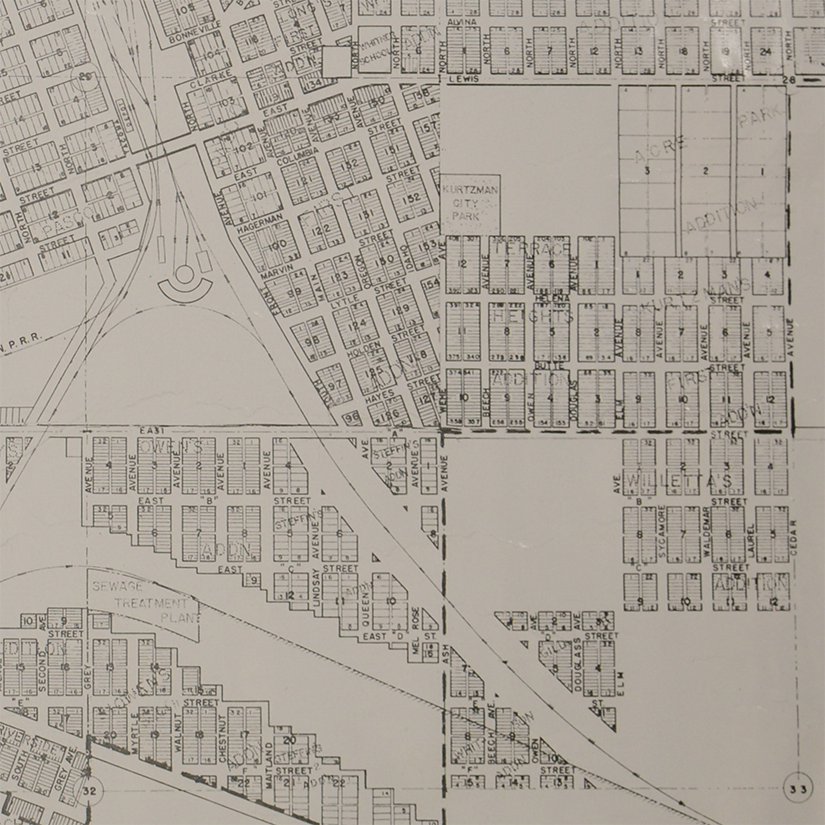
That project highlighted the roles that community spaces played as the Black community came to Pasco for jobs, such as with the railroad or the Hanford site. Many settled in east Pasco due to racial segregation.Before Spokane became home to the largest resident Black population on the east side, those who lived there traveled to east Pasco – specifically, the eight or so blocks immediately east of the railroad that crosses Lewis Street – to attend church, social functions and do business.
However, that project also showed where there are gaps in the story, particularly when it came to private businesses that community members relied on each day.
“We don’t have a textual record of the east side,” Canion Brewer said.
Her goal is to develop that record by documenting historically significant Black-owned businesses and community sites in east Pasco through oral histories and a digitized ArcGIS map.
Among the information she’s collected are stories about Tommy Moore, an east Pasco man who operated the Poulet Palace, the only Black-owned establishment in the 1950s with a liquor license, as well as a salvage yard that’s now part of Yakima-based U-Pull-It.
Later on, the Matrix building was part of an effort that incubated more than a dozen Black-owned businesses in the 1970s. It was led by a group of Black community members who applied for a U.S. Small Business Administration loan to build the commercial building still located at the corner of Columbia Street and Wehe Avenue.
Establishing a museum
It’s through the nascent Eastern Washington Institute for Black History and Culture that Canion Brewer intends to make her project available to the public. The digital map and collected histories will be available via the future museum’s website and an app as early as this fall.
Davis, who previously led the Franklin County Historical Society & Museum, said the institute formed as a nonprofit in January 2025. It has already received seed money and grants exceeding $110,000 from Seattle-based Inatai Foundation as well as the 3 Rivers Community Foundation. That money has gone toward training and the development of the museum’s future website.
More recently Davis has become focused on finding a brick-and-mortar location to provide a new community space for the Black community. A permanent location would also ensure that the history of the Black experience would always be accessible, with work from “Eastside Temporalities” and similar projects having a permanent home.
“Our goal is to not be the originator of this history, but to be a repository,” Davis said.
The nonprofit has submitted an application to the city of Pasco’s request for proposals for development of the estimated $975,000 building at 122 and 124 S. Fourth Ave., also known as the Uniwest building, which is across the street from the Pasco Farmers Market.
A mosaic story
Canion Brewer doesn’t plan on her current project being her last partnership with Davis and the museum. And Davis said the museum isn’t planning a single physical location.
There are plans for an oral history booth to travel throughout the region to collect stories and events for community members to have their family artifacts documented and digitized.
There’s even discussion of a separate facility that would incorporate the region’s Black history with that of other groups which have called the Tri-Cities home.
“It’s a mosaic and that story isn’t being told,” Davis said.
But both said it’s also important that, just like east Pasco, their effort to adapt to the needs and circumstances of the community. That’s what makes the digital aspect of Canion Brewer’s work so critical.
“We want our museum to live outside the four walls,” Davis said.