
DOE shakes up makeup of Hanford Advisory Board
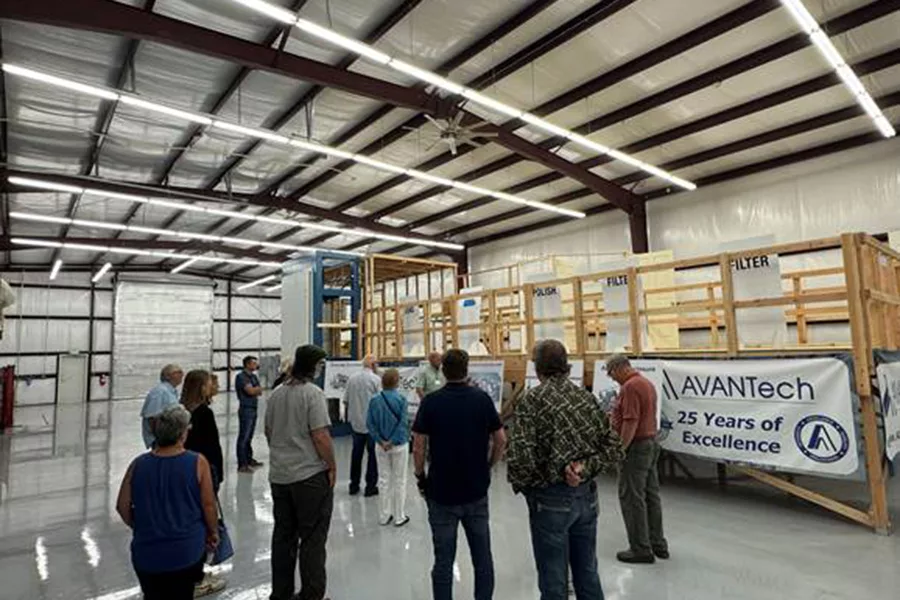
HAB members toured the Advanced Modular Pretreatment System mockup, showcasing the replacement for the existing Tank-Side Cesium Removal System on-site, and learned how the new system included various improvements based on feedback from workers.
Courtesy HABThe U.S. Department of Energy is changing how it picks members for its citizens advisory board at the Hanford site, a move critics say will diminish public knowledge and oversight of the cleanup efforts there.
DOE’s Office of Environmental Management (EM), working with the agency’s Hanford Field Office, announced the changes to the Hanford Advisory Board (HAB) in early August, saying they will “enhance engagement with those who live closest to Hanford and to align with the governance model used at sites across the country.”
Under a new membership model beginning Oct. 1, DOE will select about 20 people to serve on the board, with a focus on those living near the site. Designated groups, such as tribal governments and state agencies, will no longer have dedicated seats on the board.
“The modernized model emphasizes community representation, broadens opportunities for interested citizens to participate, and aligns Hanford with the operating framework successfully used by the nation’s seven other EM site-specific advisory boards,” DOE said in a statement.
The move was condemned by those groups who have had roles on the board for years.
“By narrowing its definition of ‘community’ and removing the very institutions that have long represented the broader public interest, DOE ignores the reality that millions of people downstream depend on a safe and accountable cleanup,” said Nikolas Peterson, executive director of watchdog group Hanford Challenge, in a statement to the Tri-Cities Area Journal of Business. “The consequences of Hanford’s contamination extend far beyond Richland; they reach every corner of the Pacific Northwest."
Board’s role
The HAB is a nonpartisan board of volunteers, chartered in 1994, with a mission to provide informed recommendations and advice to DOE, the state Department of Ecology, and the U.S. Environmental Protection Agency on major policy issues related to the Hanford cleanup mission.
Board members are expected to attend quarterly board meetings and have the option to join topic-specific committees on a quarterly basis. A majority of full board and committee meetings offer a hybrid attendance option.
Over the past year, the group issued four pieces of advice to DOE EM on specific projects at the Hanford site, as well as on cleanup priorities and public involvement. Members also toured and observed facilities and operations to see how work is proceeding.
That work was done despite federal officials not reconfirming existing members to the board.
DOE to maintain relationships
DOE is still developing the operational framework for the newly constituted board, said Cerise Peck, spokeswoman for the Hanford Field Office, in an email to the Journal.
Anyone from the community will be eligible to apply for membership. It is not expected that the community will be notified of prospective members before they are appointed.
Peck stressed that DOE will continue to maintain its relationships with the many organizations that previously held seats on HAB.
“DOE’s government-to-government relationships with Tribal Nations remain in place, as do our relationships and responsibilities with the U.S. Environmental Protection Agency and Washington State Department of Ecology as Tri-Party Agreement agencies,” Peck said in a statement.
That has not reassured representatives of those entities, however. Tom Sicilia, a current HAB member and hydrogeologist with the Oregon Department of Energy, decried DOE’s changes to the body as weakening collaboration and support for the cleanup.
“The Hanford Advisory Board has served for decades as an important body that strengthens understanding and collaboration for Hanford cleanup discussions,” Sicilia said in a statement. “Oregon’s priority is to ensure cleanup decisions are protective of the Columbia River, and we will continue to work with partners and advocate for decisions that are in the best interest of our state.”
The state Department of Ecology called the move an “intentional deviation” from agreements it has in place with DOE. The agency plans to meet with federal officials on a revised agreement but “expect any agreement would set Ecology in a diminished role.”
“This action is the culmination of several years of unilateral decide-announce-defend decision-making by Energy that disregards more than 32 years of meaningful collaboration and goodwill between the agencies and communities most impacted by cleanup,” Ecology said in a statement.