Hanford 2026
Vit plant team transitions from readiness to results with vitrification underway
The Waste Treatment and Immobilization Plant (WTP), better known as the vit plant, marked 2025 as a historic year as our team immobilized the first Hanford tank waste into a glass form that is stable and will protect the Columbia River and community.
This milestone represents a transition from readiness to results – and marks the beginning of sustained waste treatment at one of the most complex environmental cleanup facilities ever built.
Designed and commissioned by Bechtel National Inc. for the U.S. Department of Energy (DOE), the vit plant exemplifies innovation, teamwork and an unwavering dedication to safety, quality and mission.
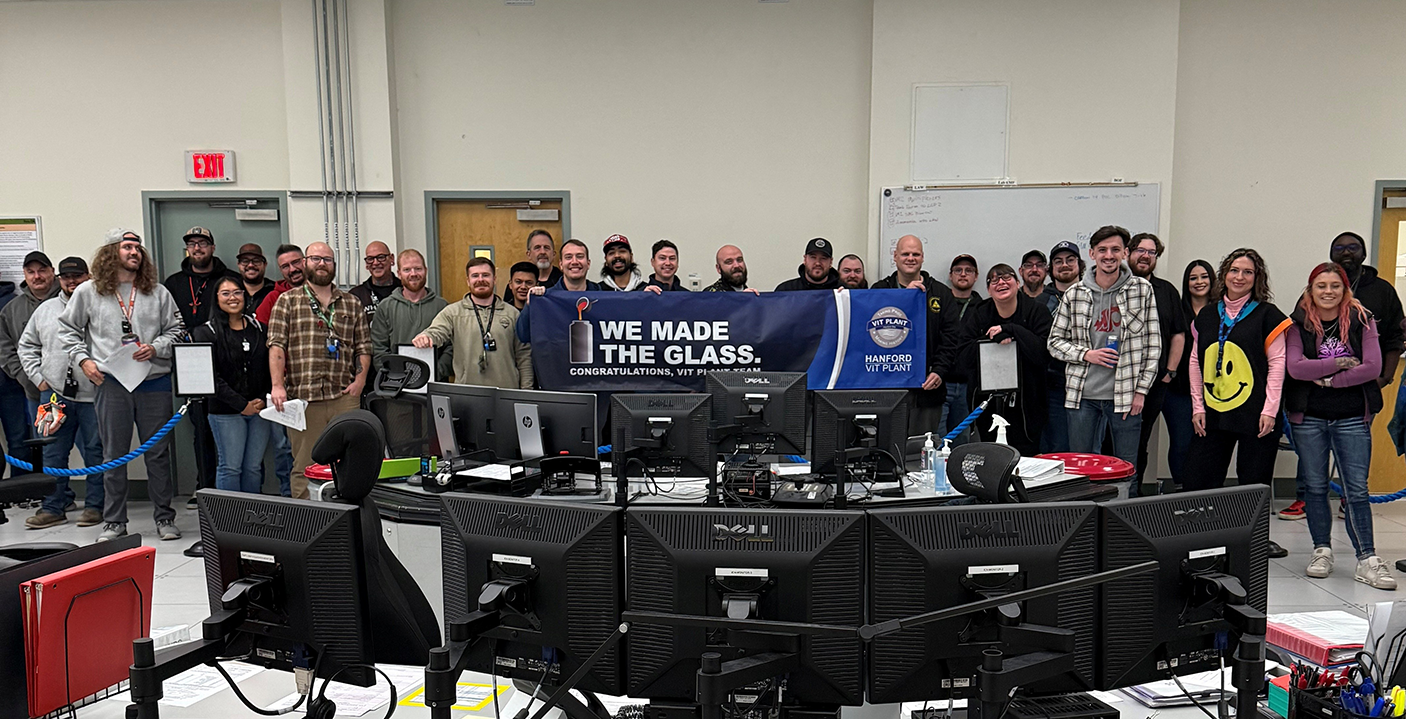
Members of the vit plant team celebrate vitrifying the first Hanford waste in the control room of the Low-Activity Waste Facility.
| Courtesy BechtelMaking history at Hanford
Transforming the first Hanford tank waste into glass was the capstone to a year defined by significant achievement and forward progress.
Last year began with continued production of “clean” test glass, allowing skilled operators to build proficiency and prepare for rigorous readiness testing. This included simulated waste treatment commissioning and pouring glass from both melters.
By July, our team had completed all required operational readiness tests, including DOE’s comprehensive Operational Readiness Review. Authorization soon followed to begin hot commissioning and receive the first transfer of tank waste.
By year’s end, our team successfully vitrified the initial tank waste, treated over 30,000 gallons, and produced more than 25 containers of glass. These operations further recovered over 50,000 gallons of double-shell tank space that supports the ongoing retrieval of tank waste from the single-shell tanks and reduction of risk to the environment. We concluded the year by transferring the first containers to the Integrated Disposal Facility, managed by Central Plateau Cleanup Company, for secure, long-term storage.
Our progress extended well beyond low-activity waste hot commissioning. The High-Level Waste (HLW) team advanced design completion and met all 2025 performance goals ahead of schedule. The HLW construction team made significant progress on weathering in the facility, installing more than 30 major pieces of equipment and shield doors through the facility’s roof, along with critical structural steel.
Each accomplishment in 2025 moved the project closer to sustained, full-scale treatment of Hanford’s legacy tank waste.
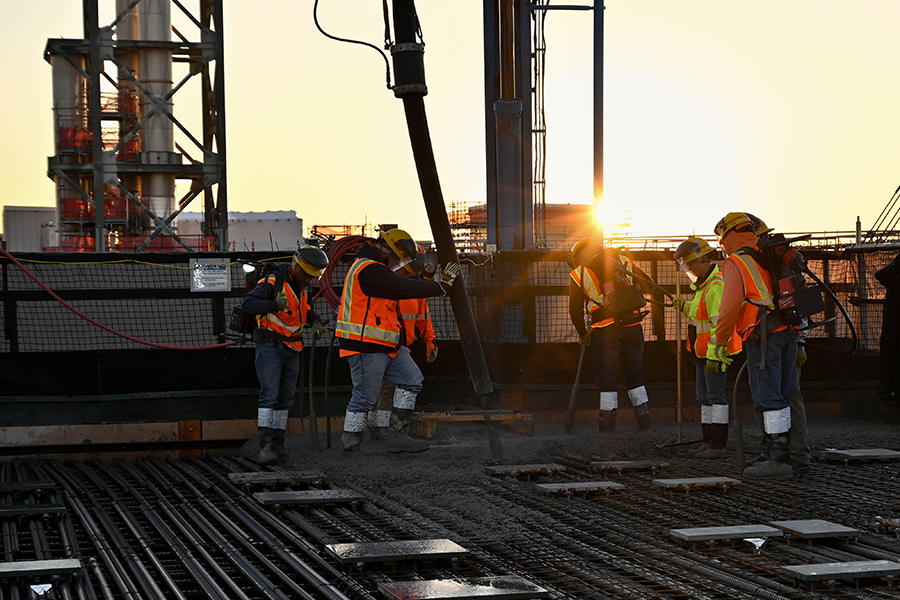
Workers pour a concrete slab on the High-Level Waste Facility’s roof.
| Courtesy BechtelCommitment to safety
Safety will always be at the core of everything we do. A key component of safety is mental health.
A standout initiative in 2025 was the launch of new mental health first aid training aligned with Bechtel’s industry support of these programs. More than 90 team members completed the program, gaining tools to identify warning signs of mental health struggles, provide immediate support in crisis situations and connect team members with professional resources and ongoing help.
Community impact
Bechtel’s impact reaches beyond our facility gates.
In 2025, Bechtel and the vit plant invested in our community’s vitality. Notable contributions include:
- Supported STEM education and women in engineering through Engineers Week, with employees mentoring and inspiring future professionals.
- Collaborated with the local chapter of the National Association of Women in Construction with their Girls Rock in the Trades camp. It provides young women hands-on experience and education about career opportunities in the construction industry. Bechtel supplied personal protective equipment for participants, and vit plant team members shared their experiences in the construction field.
- Donated more than $135,000 to United Way of Benton & Franklin Counties, supporting vital programs and services for children.
- Raised over $25,000 for Special Olympics through the annual Polar Plunge, supporting individuals with developmental disabilities.
These investments reflect a long-standing commitment to the Tri-Cities community.
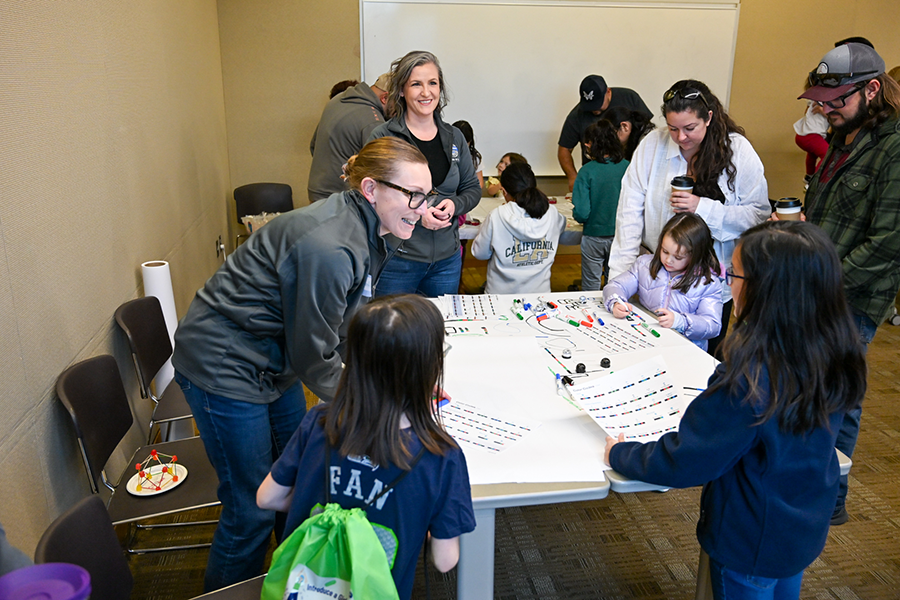
Two vit plant engineers lead an activity during Introduce a Girl to Engineering day at the Richland Public Library.
| Courtesy BechtelLooking ahead
The achievements of 2025 mark a turning point in history – not a finish line.
Our historic achievements in 2025 reflect a collaborative effort among the DOE, One Hanford contractor partners, the Central Washington Building Trades, regulators and the local community.
Bechtel’s focus in 2026 remains clear: safe, consistent vitrification of low-activity waste and continued advancement of the high-level waste mission.
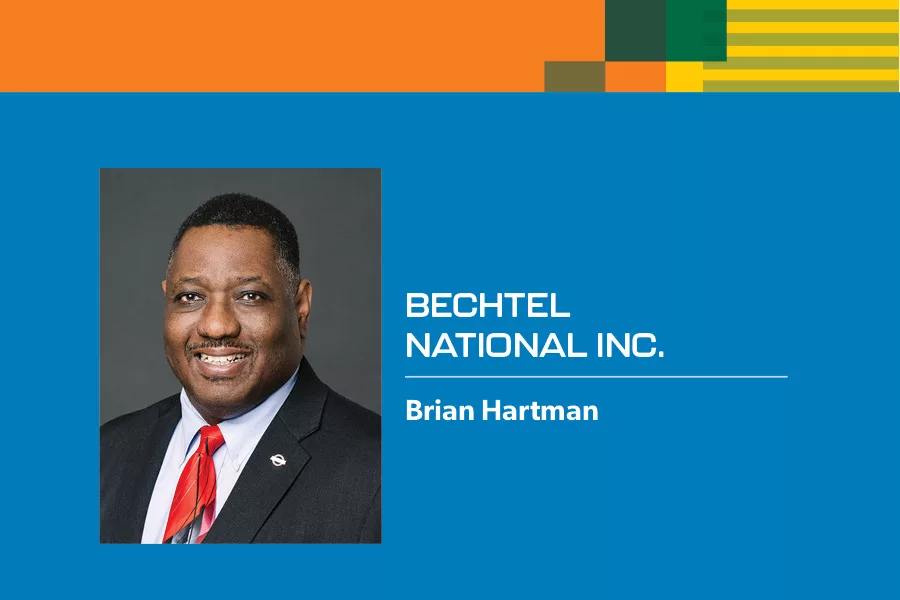
Brian Hartman is project director for Bechtel’s Waste Treatment and Immobilization Plant.