Families learn to make do during war rationing
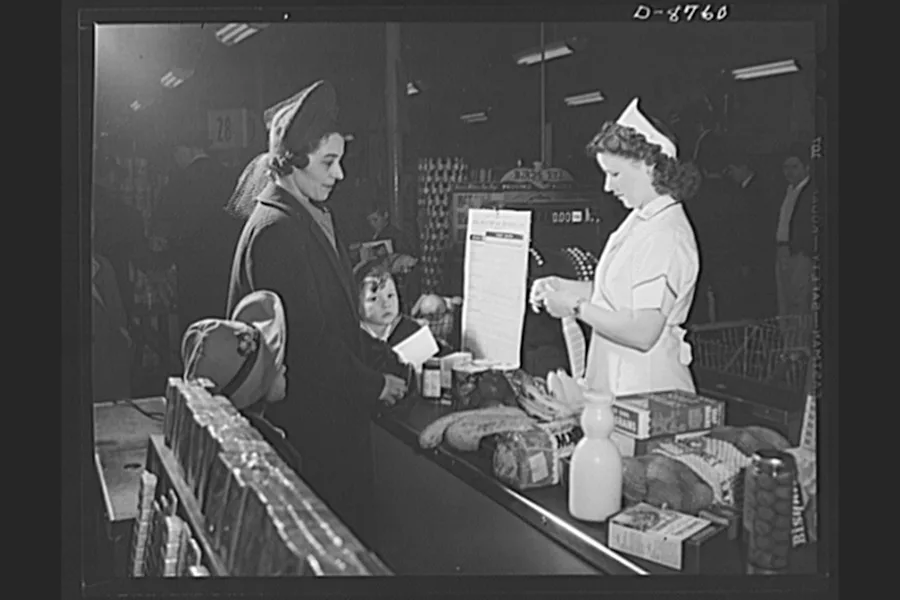
While a shopper and her children look on, a clerk tears point stamps from a war ration book to cover processed foods being purchased in this 1943 photo.
Farm Security Administration - Office of War Information Photograph Collection / Library of CongressBy the time 1945 was ending 80 years ago this month, life was becoming normal again for Americans forced to go without simple everyday goods because of World War II rationing.
When the calendar flipped to 1946, sugar was the only commodity still rationed among the many denied to Americans from 1942 through the end of the war.
Some commodities at that time were still in short supply until manufacturers caught up to demand.
Materials needed to maintain the Allied war effort and America’s role in it required the rationing system to manage the fair distribution of essential goods and to prevent hoarding.
The list of essentials being rationed as the war progressed included sugar, meat, gasoline, heating oils and other fuels, canned goods, shoes, certain clothing and fabrics.
Gas and sugar went on ration in May 1942, joined by coffee in November, and meats, fats, canned fish, canned milk and cheese in March 1943.
Rationing books
Rationing books were issued to everyone through the Office of Price Administration, or OPA, along with local rationing boards. When the war ended, there were 5,600 local rationing boards and some 100,000 citizen volunteers helping administer the program at the community level.
The ration booklets contained stamps necessary to buy rationed items, with different stamps for different essentials.
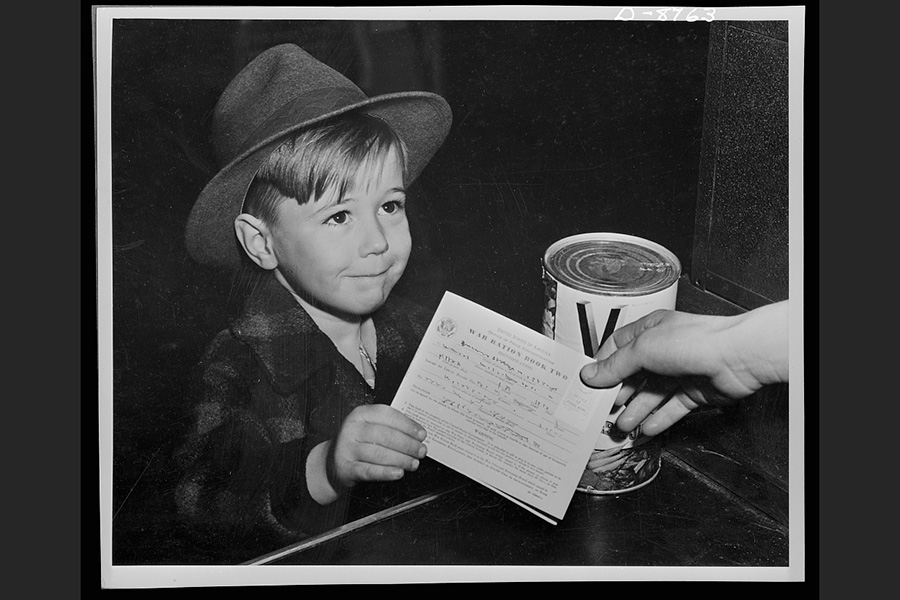
An eager schoolboy gets his first experience in using war ration book in this 1943 photo. With many parents engaged in war work, children were taught the facts of point rationing to help out with family shopping.
| Farm Security Administration - Office of War Information Photograph Collection / Library of CongressThe ebb and flow of supply and demand determined the government’s decision on the number of stamps allocated each month.
When making a purchase, the stamps, or points, were turned over with the money.
Families received educational tips from the government, home economics classes and newspapers on how to stretch their ration points and their meals. Restaurants did their part, too, offering meatless menus.
One very popular staple was macaroni and cheese because it was filling and required few ration points. According to Kraft, it sold 50 million boxes during World War II.
Victory gardens also were popular as people were encouraged to grow their own food to help the war effort.
Other rationed items
Because of Japanese takeovers in the Pacific, rubber also became one of the first scarcities Americans faced.
Prior to the war, the United States received 90% to 95% of its natural rubber supply from British Malaya, now Malaysia, and from the Dutch East Indies, now Indonesia. The Japanese quickly seized control there and cut off supplies to the U.S.
In January 1942, a month after the Japanese attack on Pearl Harbor brought the United States into the war on Dec. 7, 1941, rubber rationing began.
The product was necessary to America’s war effort as it was used for jeep tires, tank tracks, gas masks, life rafts, pontoon bridges and more. A battleship required 75 tons of rubber.
Average consumers could no longer buy new tires. They had to either patch them or replace the tread.
Even tires available to professions considered essential among civilians, such as police, firefighters, doctors, nurses, farmers, bus operators and delivery truck drivers, required applying through the local rationing board for approval.
Civilians were limited to five tires and any extras had to be surrendered. OPA and local Tire Rationing Board were involved in any trading, purchasing or recapping of tires.
Poorly inflated tires wore out faster. Companies placed air hoses in employee parking lots to ensure proper inflation, and twice-weekly inspection of tires was encouraged. Guards patrolled employee parking lots to protect against theft.
No one bought a new car from February 1942 to October 1945 because the auto manufacturing industry completely shut down during the war to meet military production needs.
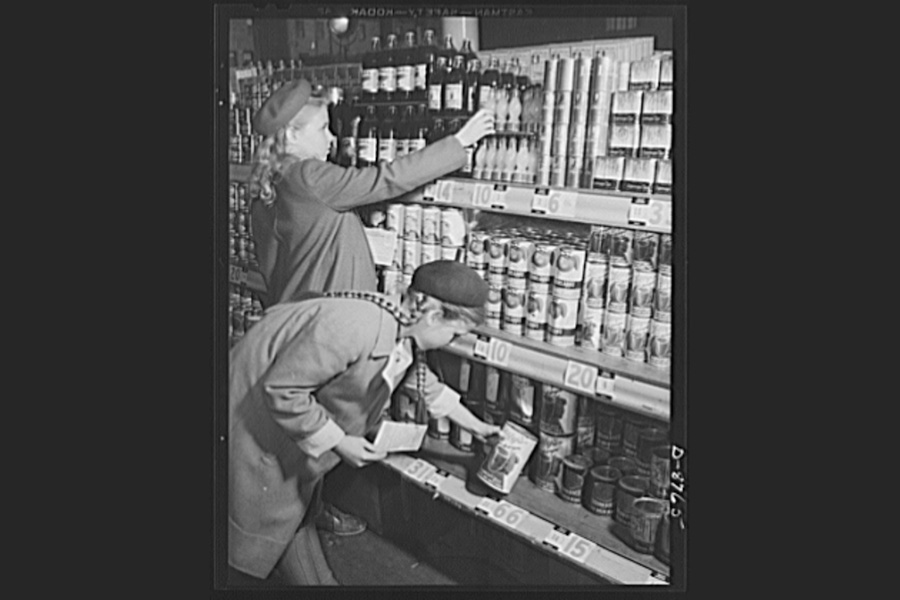
These future homemakers receive firsthand experience in looking for point values as well as prices and information on labels when buying canned and bottled foods with a war ration book in this 1943 photo.
All unsold 1942 models were acquired and rationed out, again, to those the government considered essential to the war effort. And even they had to possess an older car with more than 40,000 miles on it to qualify.
When production restarted, the options on offer were basically redesigned 1942 models.
Another wheeled transportation option also faced rationing. The Victory Bicycle program aimed to conserve metal and rubber resources by addressing who could and who could not buy a bicycle – again placing a priority on vital or critical occupations.
Those needing to travel some distance to their jobs were particularly impacted by the nationwide “Victory Speed” initiated in May 1943. It was set at 35 miles per hour to conserve fuel and to double the life of tires.
During World War II, OPA took action against 280,724 violators of the laws on price and rationing.
Gale Metcalf of Kennewick is a lifelong Tri-Citian, retired Tri-City Herald employee and volunteer for the East Benton County Historical Museum. He writes the monthly history column.