Washington ag must be treated as a statewide priority

Washington grows more than 300 commodities – many in the fields, vineyards and orchards around the Tri-Cities – and supports thousands of agriculture-related jobs. The $12.9 billion industry is one of the state’s most important. And it is continually under pressure from forces largely outside its control.
Producers face a convergence of challenges: rising labor and input costs, water uncertainty, workforce shortages, volatile trade dynamics, farm succession decisions, and increasingly unpredictable weather.
This is nothing new to farmers, but the effects are intensifying. And the consequences of continued inaction are becoming clear. When working lands are no longer farmed, they convert to industrial, commercial or residential use, straining the communities and food supply that depend on them.
Too often, agriculture gets treated as a rural issue rather than a statewide priority. Ag viability, environmental stewardship and local food production are not competing priorities. They are interconnected systems, and policy that fails to recognize this connection is policy that fails farmers.
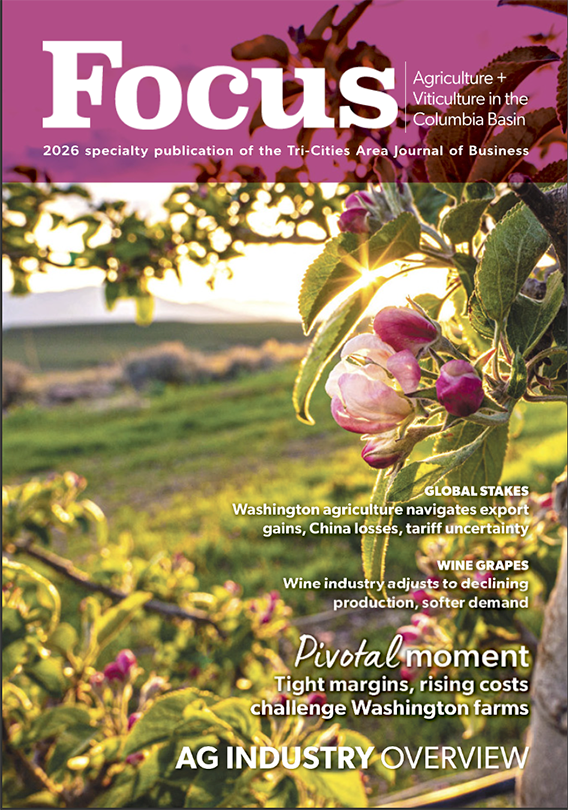
This month’s Focus magazine, inserted into our June edition, highlights our region’s agriculture – a publication that has been recognized nationally for three years in a row as a best ancillary publication in a small business journal. It brings together perspectives from growers, commodity organizations and other industry leaders working through these challenges every day. Their insights offer a candid look at where Washington agriculture stands and what is at stake.
Its future success hinges on whether state leaders, businesses and communities are willing to treat agriculture as the strategic asset it is.