Benton County breaks ground on $9M transitional housing project at recovery center
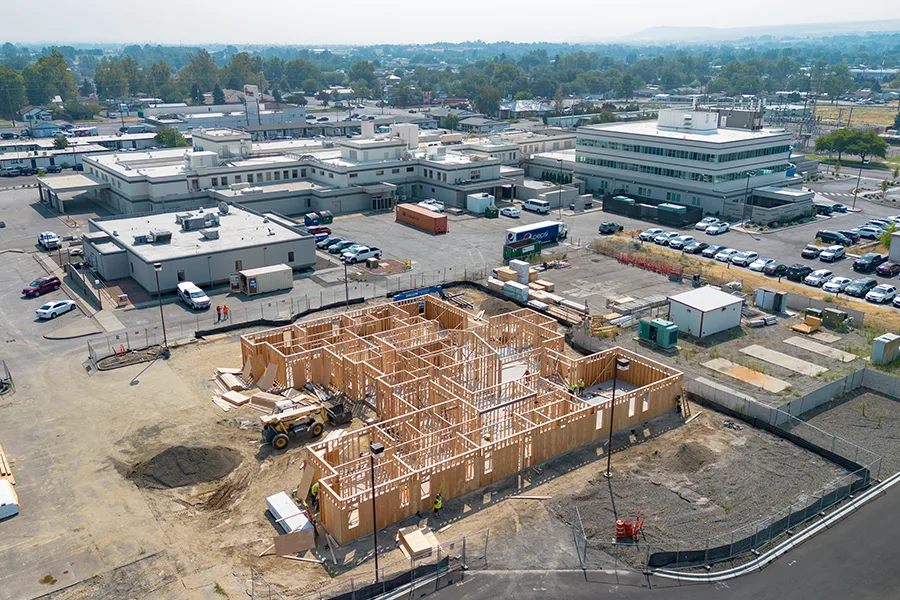
Crews have laid foundations for a $9 million dormitory-style transitional housing facility just north of the recovery center at 216 W. 10th Ave. Once open, it will have capacity for 36 residents plus two managers, providing support for those re-entering the community.
Photo by Nathan FinkeOnly months after wrapping up construction at Columbia Valley Center for Recovery, Benton County has broken ground on a related project aimed at giving those who leave the residential treatment facility the best opportunity to land on their feet.
Crews have laid foundations for a $9 million dormitory-style transitional housing facility just north of the recovery center at 216 W. 10th Ave. Once open, it will have capacity for 36 residents plus two managers, providing support for those re-entering the community.
Matt Rasmussen, the county’s deputy administrator, said discussions about providing some form of transitional housing for recovery center patients began before construction work started on transforming the former Kennewick General Hospital building into the recovery center. Housing insecurity can be one of the biggest hurdles for those struggling with substance abuse and mental health challenges. Specialty housing for such individuals often is few and far between.
“Wait times can be months and that was something we said we need to help with a little bit,” Rasmussen said.
Officials originally considered building the housing into the old hospital, which still has a lot of unused spaces. However, the cost to renovate was exorbitantly high, and Rasmussen said the county saved $3 million and was able to add two beds to the facility by going with new construction.
A federal grant and donations are paying for design and construction.
The same team that designed and built the recovery center – NAC Architecture, Bouten Construction and several other partners – also are constructing the new housing facility. However, the facility will have a different managing contractor in Washington Monitoring, which is focused on transitional and supportive housing for those in recovery.
The housing will not be a permanent home for patients, though Rasmussen said residents could stay for up to two years to stabilize their lives. They would be required to pay rent and meet requirements to move out, including holding down a job. Ultimately, the facility is expected to not cost county taxpayers any funds to operate.
“Our goal is to lease the building to (Washington Monitoring) and they will manage the operations,” Rasmussen said.
Another transitional housing facility, this one designed to house families, is also in the works. Rasmussen said the county plans to use a $3 million federal grant for that project, which would allow for apartments or townhomes for families with an adult getting back on their feet.