Wind farm faces capacity cuts over hawk nest setbacks
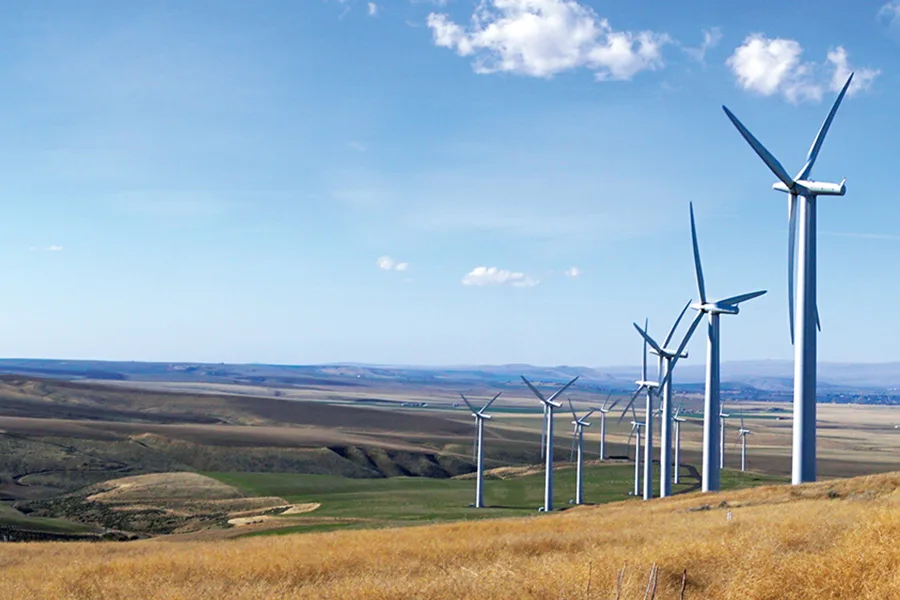
The developer of a large wind and solar farm energy project between Benton City and Prosser will not be able to build the facility to the capacity initially planned after state officials determined construction needed to be set back from some nesting sites of endangered hawks.
In an Oct. 15 hearing, the state Energy Facility Siting Evaluation Council, or EFSEC, approved a resolution allowing Horse Heaven Wind Farm LLC, a subsidiary of Scout Clean Energy, to build primary project components of the 1,150-megawatt Horse Heaven Energy Complex within two miles of all but five endangered ferruginous hawk nests on the site, closer than allowed in the original certification agreement for the project.
“I feel the recommendations made by staff are appropriate and provide the maximum protection for the designated nests,” said Stacey Brewster, EFSEC’s acting chair, immediately prior to the council’s unanimous decision to approve the resolution.
Scout told the council in response to a draft version of the final decision that not being able to build closer to those five nests would eliminate nearly 200 megawatts of power generating capacity, among other adjustments to planned infrastructure.
And there could yet be more impacts as EFSEC staff continue to review how the project could affect other species such as burrowing owls and striped whipsnakes.
EFSEC approved the project in November 2024, after former Gov. Jay Inslee rejected an initial approval which required the project to be scaled back. Company officials have said the project will generate an expected 1,000 jobs during construction and contribute more than $250 million in local tax revenues throughout its 35-year operating lifespan.
The Yakama Nation, Benton County commissioners and nonprofit Tri-Cities C.A.R.E.S. have challenged that siting decision, alleging Inslee, state agencies and the courts violated everything from state environmental protection laws to local land use planning regulations and limited access to proceedings related to the decision.
EFSEC received dozens of comments on the draft decision, which were required to be submitted by Oct. 13. Agency staff noted most were in general opposition to the project and outside the scope of the draft decision.
Benton County, the Yakama and Tri-Cities C.A.R.E.S. also filed comments in opposition, saying that a Benton County representative that had been part of prior reviews of the project should have still been involved and that meetings of the Preoperational Technical Advisory Group, or PTAG, where environmental data was reviewed should have been open to the public.
John Thompson, a state assistant attorney general and EFSEC’s legal counsel, told council members that the agency is only required to have a member appointed by leaders of the county where a project is being considered until it is either accepted or rejected.
Thompson also rejected the contention that PTAG meetings were required to be open public meetings.
“Based on interpretations and precedent of (the Open Public Meetings Act, or OPMA), these meetings did not apply,” he told council members.
“The PTAG did not take public comment, it didn’t conduct hearings and it’s also not exercising decision-making authority on behalf of the council. What it’s doing is it’s providing technical advice for the council’s consideration to make a decision on the certificate holder’s request to site primary infrastructure within these conditional buffer areas.”
The council did agree to make minor changes to the draft decision to improve readability and correct clerical errors identified in some comments. And council member Blake Nelson, who represents the state Department of Ecology, said he would like to have a week after a comment period is closed to review them before decisions.
“I do agree with having three days from the end of the comment period to the voting meeting is a pretty tight turnaround to read all those comments,” Nelson said.
EFSEC staff told the council after the vote that they are in the midst of reviewing wildlife survey plans for multiple other species as required in mitigation efforts for the project. They anticipate the PTAG submitting more findings and recommendations for the council’s consideration as the project moves forward.