Amazon works to stem data center fears at Burbank open house
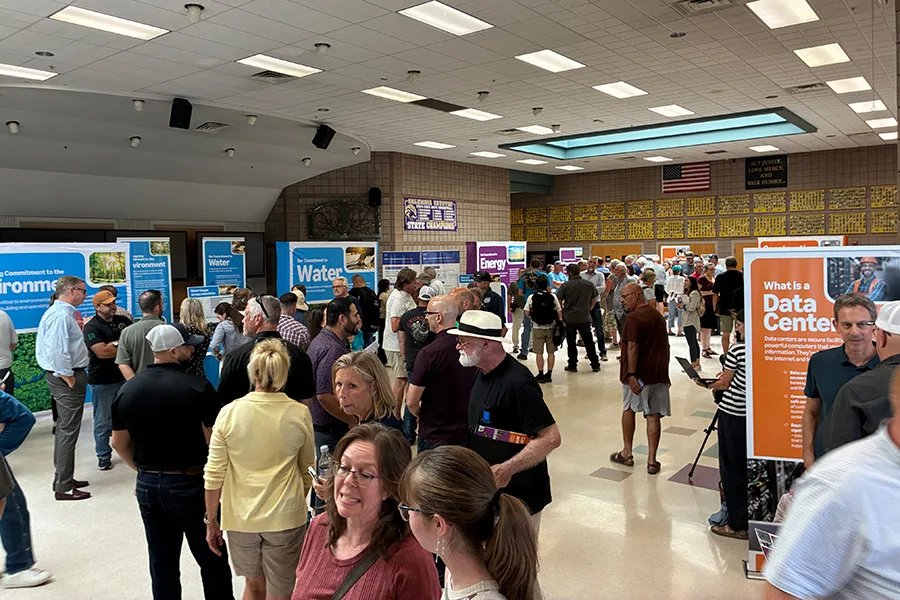
An August open house in Burbank hosted by Amazon Web Services on its proposed data center at the Wallula Gap Business Park welcomed a full house, with many attendees coming with questions and concerns about the project.
Photo by Ty BeaverRepresentatives with Amazon Web Services said they want to field questions.
That led the tech giant to pause its work toward building a massive $5 billion data center at the Port of Walla Walla’s Wallula Gap Business Park, Roger Wehner, vice president of economic development, told the Tri-Cities Area Journal of Business.
It’s also why Amazon scheduled an open house about the project at Burbank’s Columbia High School in early August, filling the school’s atrium with informational booths, flyers and staff. Walla Walla County’s Community Development Department also has shared a list of FAQs about the project.
“Any major industrial project should have questions, and we know there’s a lot out there,” Wehner said during the Aug. 11 open house.
But whether community members will believe, much less accept, the answers provided about the project is another matter.
The August open house was full of attendees wearing shirts displaying opposition to data centers. Attendees questioned Amazon staff about reported issues connected to the company’s other data center facilities. Even those not as outspoken said they had their reservations about something so big and technological but still new coming into the area.
“They went into Hanford real quickly and didn’t have all the information,” Bonnie Wescott of Kennewick told the Journal. “I feel like this is going so fast and it’s so close to the river. It’s kind of repeating history.”
Amazon’s interest
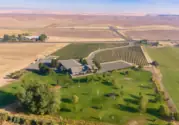
Amazon was revealed as the developer of the data center project earlier this year when the company bought an additional 50 acres to go with the 500 acres it acquired in November 2024 under a pseudonym at the business park, located along Highway 12 south of Burbank.
The tech giant already has smaller data centers peppering the land in and around Hermiston and Boardman. But building a larger one close to the Tri-Cities makes sense; Amazon has also partnered with Energy Northwest and nuclear power company X-energy to develop and build four small modular nuclear reactors, or SMRs, near the nuclear-powered Columbia Generating Station north of Richland.
The deal for that project gives Amazon first call on the energy the SMRs produce, and data centers require substantial energy to operate.
At the time of the original land purchase, port officials said the project would grow Walla Walla County’s tax base by 50% as it is built out over four phases. Each phase will reportedly involve constructing four buildings, each about 215,000 square feet.
Growing opposition
But opposition for the project has grown since Amazon was revealed as the project developer and details emerged. Some Walla Walla County residents implored the port to not sell additional land for the project. A grassroots anti-data center group has formed to fight the project, or at the very least call for greater transparency.
Daniel Brown of Walla Walla was one of the protestors standing outside Columbia High School with placards denouncing the plan. He said the open house was an example of the money and resources Amazon was putting toward making the data center a reality without fully disclosing the impacts it may have on water, energy and other community resources.
“There’s multiple sides to this story, not just what Amazon says,” Brown said, adding, “I’m not willing to give up my quality of life for another data center so Amazon can make more money.”
Some attendees questioned Wehner and other Amazon representatives about the project’s impacts. They challenged the company’s assurances that the data center would only use water during 6% of the year and would ultimately use a quarter of the water needed by agriculture on the same acreage. Same for the promise that no power customer would see any expense for the data center reflected in their bills.
Project timelines
Wehner said there’s no specific timeline for the project at this time. He added that the company has its applications ready to submit but wanted to have conversations in the community, such as the open house.
When asked if that meant Amazon would walk away from the project if there was substantial community opposition, Wehner did not affirm or deny.
“We need to have this broader conversation,” he said.


Stay Informed. It’s Free.
Subscribe to our newsletters and get the latest news and insights delivered to your inbox.
We respect your privacy.
Unsubscribe anytime.
Thank you!
You’re subscribed. Keep an eye on your inbox for the latest updates.