Hanford vitrification hits another milestone
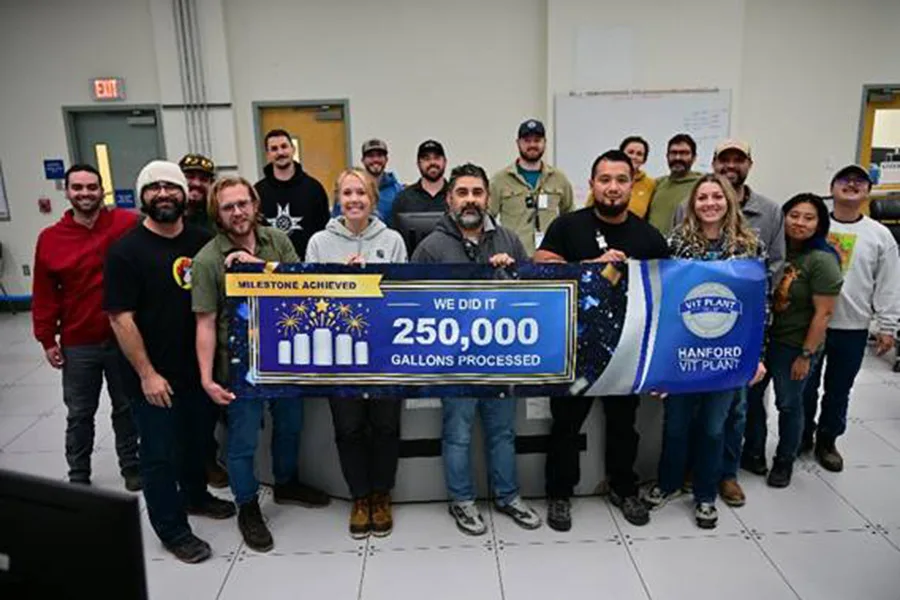
The Hanford Waste Treatment and Immobilization Plant has solidified more than 250,000 gallons of Hanford tank waste into glass, representing a commissioning milestone and demonstrating continued momentum toward steady-state Direct-Feed Low-Activity Waste operations.
Courtesy BecthelNearly a year after Hanford’s Waste Treatment and Immobilization Plant (WTP) began operating, it’s hit another milestone in turning waste into glass.
The plant has solidified more than 250,000 gallons of Hanford tank waste, with more than 39,000 gallons vitrified in September alone.
“This progress is part of dual glass-plus-grout solutions that are advancing the Hanford tank waste mission,” said Mat Irwin, the Hanford Field Office assistant manager for WTP, in a statement. “Accelerating cleanup allows (the U.S. Department of Energy) to more rapidly repurpose federal land for revitalization and reindustrialization efforts.”
The low-activity waste being treated is part of Hanford’s 56 million gallons of radioactive and chemical waste that was created by plutonium production during World War II and the Cold War. The waste has been stored in aging underground tanks.
Led by Bechtel, WTP has operated in extended hot commissioning since October 2025, a process which will continue for the next several months, establishing production consistency and safe and sustained operations.