DOE denies reports of changes made to course of Hanford cleanup
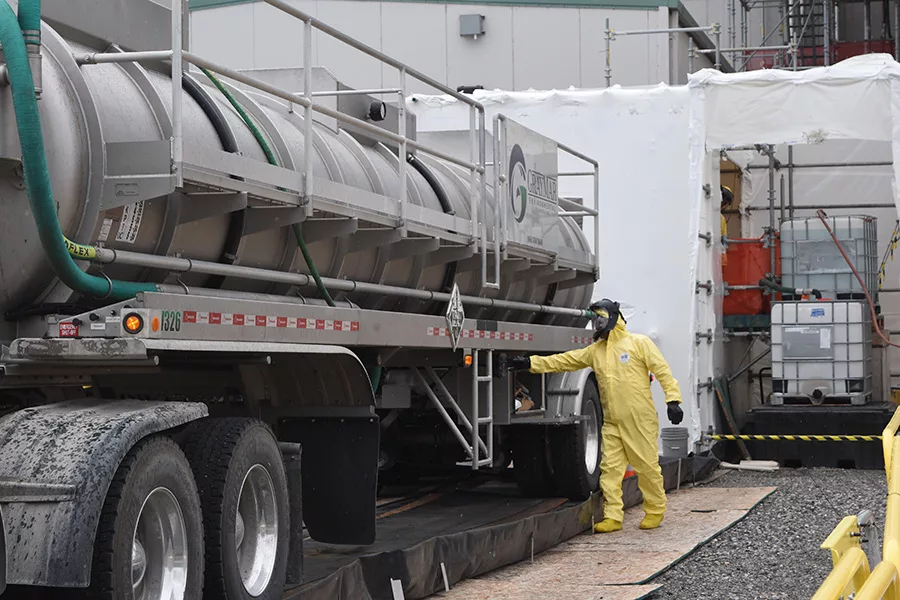
A worker assists with offloading nitrogen from a tanker truck at the Waste Treatment and Immobilization Plant, commonly known as the vit plant, at the Hanford site. The chemical was recently introduced into the plant’s melter to simulate the tank waste that it is expected to start turning into a stable glass form for long-term storage.
Courtesy Bechtel National Inc.U.S. Energy Secretary Chris Wright on Sept. 9 pushed back against media reports that he is seeking a “different direction” on environmental cleanup efforts at the Hanford site, including halting work on a treatment facility on the cusp of becoming operational.
Reports from E&E News by Politico and other media outlets said DOE is considering changes to cleanup operations, including scuttling work on the Direct-Feed Low-Activity Waste (DFLAW) facility, which includes the vitrification plant. That building is slated to start the final commissioning in the coming months before starting operations.
“DOE is continuing to examine testing and operations of the DFLAW site to ensure waste disposal options are safe, cost-effective, and environmentally sound,” Wright said in a statement asserting no changes have been made to the commitment to clean up the site. “Across the entire department, we are actively working to improve the safety and efficacy of the important work we do each and every day.”
Sen. Patty Murray, D-Washington, said in a statement on Sept. 8 that she hoped the reports were incorrect. “This is a catastrophic threat to the Hanford cleanup mission and the Tri-Cities community and would light billions of taxpayer dollars on fire. This administration has shown itself to be dangerously clueless about Hanford and clearly won’t think twice about tearing up the painstaking progress we’ve made over decades to clean up toxic nuclear waste,” she said.
It has cost $30 billion in federal appropriations and roughly three decades to make DFLAW a reality. Described in DOE materials as “one of the highest priorities in the DOE Office of Environmental Management portfolio,” the suite of buildings and systems is designed to treat and turn to glass hundreds of thousands of gallons of radioactive and toxic waste stored in underground tanks, the legacy of the site’s past role in the manufacture of nuclear weapons.
Designed and being built by contractor Bechtel National, the vit plant employed 3,000 people at the beginning of 2024. It has been decades in the making.
E&E reported that DOE changing direction on the project is related to the agency firing Roger Jarrell, principal deputy assistant secretary of DOE’s Office of Environmental Management, who has only been in the job since April.
In mid-August, Heather Dale, assistant manager for river and plateau with the DOE’s Hanford Field Office, told the Tri-Cities Hispanic Chamber of Commerce that cold commissioning of the vit plant was proceeding, with hot commissioning – when actual tank waste is fed into the plant to test its systems – starting in the coming months.
She added that workers have already prepped more than 800,000 gallons of radioactive waste from the site’s storage tanks in anticipation of the start of the next chapter of cleanup at the site.
“We are moving into the operational phase of our mission and that is very exciting for us,” Dale said.
Aspects of operations at the site have faced several disruptions or potential ones since President Donald Trump began his second term.
A push to shrink the federal workforce led to dozens at the Hanford Field Office to be laid off, take buyouts or retire early. One site contractor almost had to lay off staff as DOE withheld funding this spring for them to continue work. And Trump’s proposed budget for Hanford is tens of millions of dollars less than its current funding levels.