First transfer of radioactive capsules complete at Hanford site
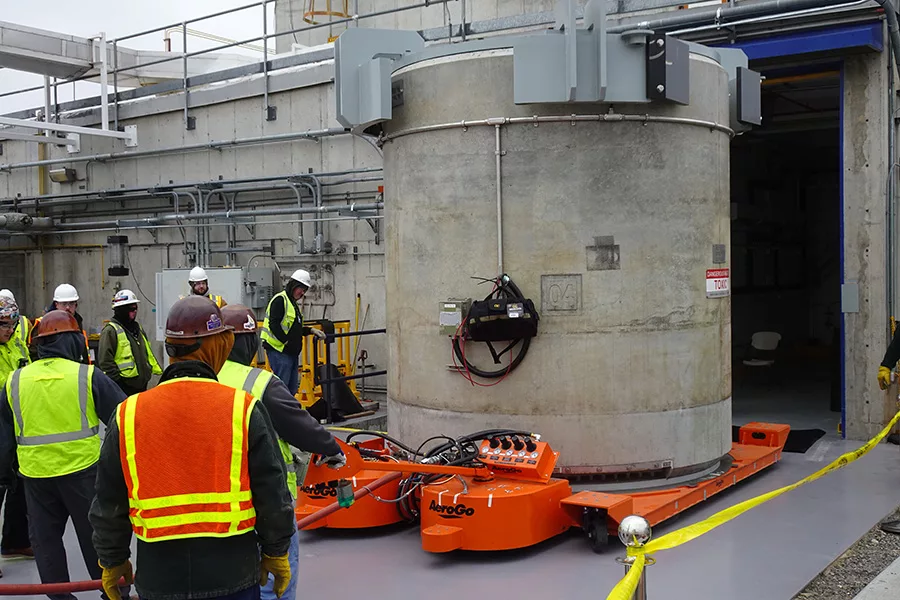
Workers pull a concrete cask filled with cesium capsules out of the Waste Encapsulation and Storage Facility at the Hanford site.
Courtesy of Department of EcologyCleanup efforts at the Hanford site reached another milestone recently when the first batch of toxic byproducts from past plutonium production were moved to safer long-term storage.
Highly radioactive capsules containing cesium and strontium were moved from underwater pools to dry storage in a concrete cask, according to a release. They were removed from Hanford’s large underground storage tanks in the 1970s to reduce the temperatures inside the tanks.
“Transferring these capsules to safe dry storage is a top priority for the state and is integral to the goal of cleaning up Hanford and protecting the environment and surrounding communities,” said Stephanie Schleif, the nuclear waste program manager for the state Department of Ecology.
Nearly 2,000 capsules of strontium and cesium were stored underwater at the water pools at Hanford’s Waste Encapsulation and Storage Facility after being removed from the underground storage tanks. The pools provide radioactive shielding and help remove heat generated by the capsules.
Moving the capsules to dry storage reduces risks posed by natural disasters, such as an earthquake, that could rupture the pools.
The U.S. Department of Energy must move all capsules to dry storage by Sept. 30, 2029, the deadline in the legally binding Tri-Party Agreement.