
PNNL, Hanford contractors earn millions in incentive pay
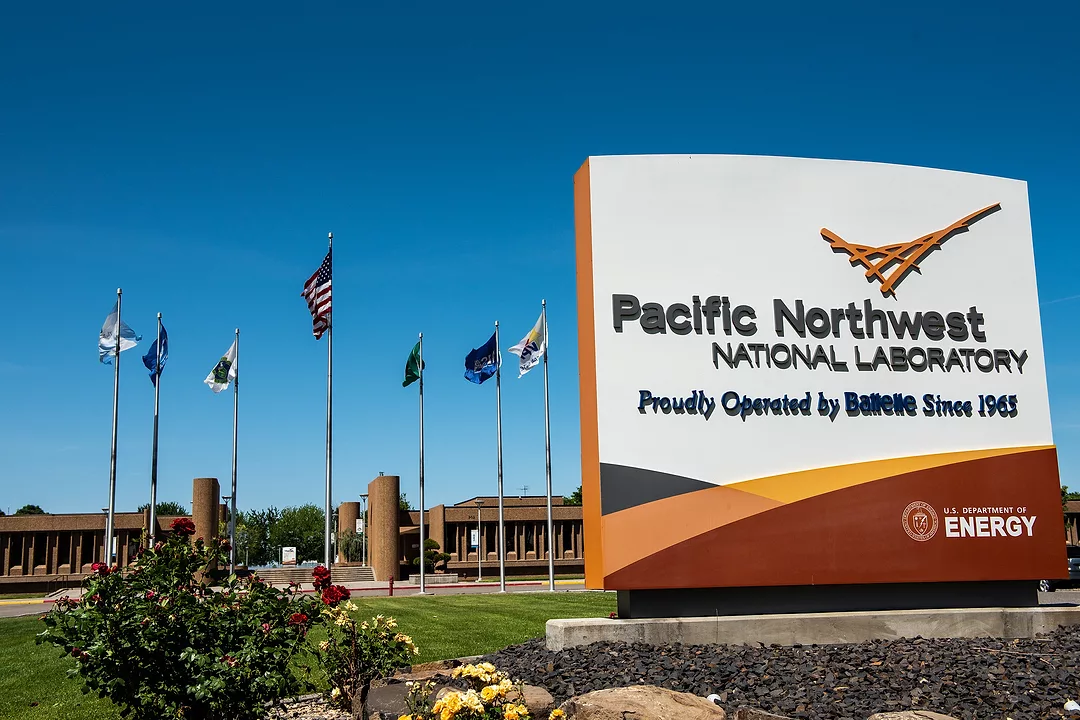
The Hanford site’s contractors and Pacific Northwest National Laboratory’s operator received much of their performance incentive payouts after facing uncertainty from a mercurial federal administration throughout 2025.
Battelle, which operates PNNL on behalf of the U.S. Department of Energy, earned 97% of its potential $13.5 million performance incentive pay, resulting in a nearly $13.1 million award, according to DOE’s Pacific Northwest Site Office (PNSO).
Five of the Hanford site contractors on fiscal year contracts – Hanford Mission Integration Solutions (HMIS), Navarro-ATL, Hanford Tank Waste Operations & Closure (H2C), Central Plateau Cleanup Company (CPCCo) and Washington River Protection Solutions (WRPS) – earned between 90% and 97% of their performance fees for a combined total of $89 million.
The performance incentive fees are a component of each company’s contract with DOE.
PNNL
PNNL is scored in eight areas on its annual performance report card from DOE. It received:
- A’s – the highest marks – in quality and productivity of research and development, as well as science and technology project and program management.
- A’s in construction and operation of research facilities; contractor leadership and stewardship; facilities maintenance and infrastructure and security and emergency management.
- B+ – the lab’s lowest scores – were in environment, safety and health, as well as business systems.
Scores are determined by PNSO as well as other DOE and federal agencies sponsoring research at the lab, with a formula weighing them to determine the final fee award.
“We are honored to receive this outstanding evaluation of our performance,” said Deb Gracio, the lab’s director, in a statement. “It reaffirms PNNL’s legacy of excellence in scientific discovery and technology innovation, as well as our commitment to efficient and effective management and operations. The contributions of our dedicated colleagues across the organization made this year’s success and impact possible.”
The fee award comes after a tumultuous few months at the lab, the region’s largest employer.
Several rounds of layoffs that began in August as a result of DOE shifting its priorities in response to the White House’s proposed federal budget which included billions of dollars in cuts to three DOE programs with a large presence at the lab.
The result was a reduction of about 400 employees at PNNL across directorates and departments compared to a year ago.
H2C
H2C, the Hanford site contractor responsible for the site’s underground waste storage tanks and the eventual processing of their contents for safer long-term storage, earned 94% of its performance award, or about $26.3 million.
The contractor received perfect marks for its tank waste operations and capital projects, with DOE noting that its workers had reduced waste volumes by 1.1 million gallons via an evaporation system, completed a first shipment of low-level waste for disposal off-site and processed 7.2 million gallons of wastewater.
However, the agency said H2C needed to improve its sitewide planning, integration and activities to support work in the 200 West Area, as well as technical safety requirement and hazardous energy control compliance.
H2C will eventually operate the Hanford Waste Treatment Plant, commonly known as the vitrification or vit plant, which will process and stabilize in glass form all the waste currently stored in the site’s underground tanks. That facility was built and is currently being brought online by Bechtel National, whose contract is based on a calendar year schedule.
The vit plant only began commissioning in October, meeting a required deadline under a court-ordered settlement with the state. However, there were doubts in the weeks prior if the facility would begin operations, as rumors that DOE was considering taking the Hanford cleanup “in a different direction” circulated in Washington, D.C.
HMIS
HMIS, which provides support services to the numerous Hanford contractors and subcontractors, earned 96%, or nearly $21.9 million of its available $22.9 million performance award.
The contractor was lauded for its service delivery across the site and construction of the 200 West Area potable water tank as well as the Central Plateau Water Treatment Plant.
DOE also found two opportunities for H2C to improve:
- Identification of innovative solutions to meet infrastructure needs.
- Better cost control and change order management to make oversight of subcontractors more effective.
CPCCo
CPCCo is in charge of operations across the site’s central plateau, which includes waste storage facilities and related infrastructure. It also received 96% of its potential fee, or about $18.6 million.
Among the contractor’s achievements were completing readiness at the Integrated Disposal Facility for waste processed through the vit plant and completing projects at other facilities such as the Capsule Storage Area, Waste Encapsulation Storage Facility and Solid Waste Operations Complex.
DOE indicated in its assessment that CPCCo needed to improve radiological controls at the Central Waste Complex, better meet software program requirements and support a mentor-protégé program.
WRPS
WRPS previously held the tank operations contract now under H2C. It provided services at the site through the end of February, or about five months in the 2025 fiscal year. The company received 90% of its performance award, or about $17.2 million.
DOE included the contractor’s accelerated efforts to manage the tank farms in support of getting tank waste treated and completion of other tasks among its achievements. The agency said WRPS needed to improve its emergency management program and drill performance; subcontract procurement planning, compliance and integration; and project management and integration.
Navarro-ATL
Navarro-ATL, which holds the 222-S Laboratory analytical services contract for the site, received 95%, or just over $5 million of its potential performance award.
The contractor exceeded timeline metrics for providing analysis of samples, renovated and improved the laboratory facility and completed accreditation of a new analytical method that is anticipated to cost less, provide more accurate results and be safer for lab staff.
However, DOE said Navarro-ATL needed to improve management of its performance measurement baseline and implementation of analytical services quality assurance requirements.