Forget the Band-Aid: this concrete from PNNL heals itself
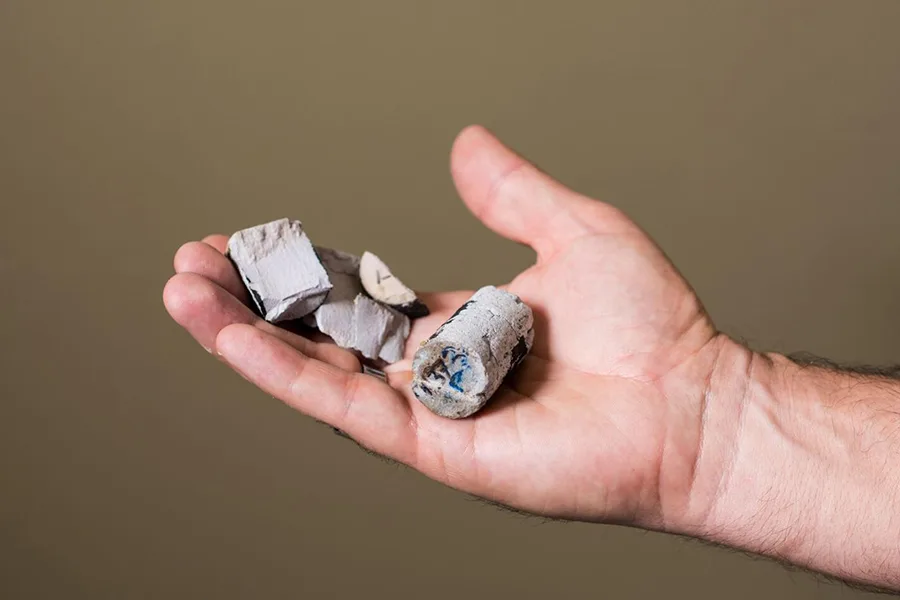
PNNL scientists are adding polymers to cement, creating self-healing and re-adhering properties that extend its lifetime and reduce the risk of failure.
Photo by Andrea Starr | Pacific Northwest National LaboratoryThe days of having to worry about a crack in a concrete wall or driveway may soon become a thing of a past, thanks to a new self-healing material developed at Pacific Northwest National Laboratory.
Researchers at PNNL have developed a self-healing cement that uses a small amount of polymer to seal cracks quickly and repeatedly. They recently shared their work in a paper published in Nature Communications.
Laboratory studies found that the material sealed a roughly 2-millimeter-deep fracture within about four hours – equivalent to a healing rate of about 10 mm per day. By comparison, human fingernails grow by about 3.5 mm per month.
“We have designed this cement so that the healing material moves exactly where it is needed when a crack forms,” said Carlos Fernandez, a materials scientist at PNNL and coauthor of the paper, in a statement. “With only a trace amount of polymer, we achieved rapid crack sealing and substantial strength recovery over repeated damage cycles, which could help concrete infrastructure last longer.”
Researchers anticipate the new material could not only save on costly maintenance and replacement of concrete infrastructure but also reduce the need for inspections, saving time and money.

Stay Informed. It’s Free.
Subscribe to our newsletters and get the latest news and insights delivered to your inbox.
We respect your privacy.
Unsubscribe anytime.
Thank you!
You’re subscribed. Keep an eye on your inbox for the latest updates.