Pasco adopts rules for short-term rentals
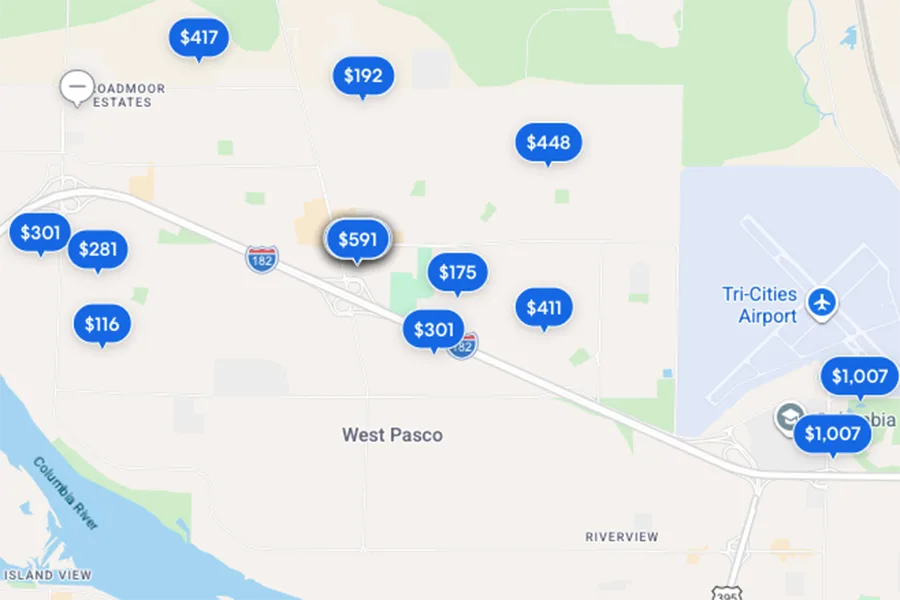
Pasco is eyeing stricter standards for short-term rentals such as those booked via Airbnb and Vrbo. Several Pasco properties are listed on the Vrbo site for the last weekend in September.
Map courtesy VrboPasco property owners offering unused guest rooms or homes as short-term rentals will face some standard operating requirements from the city starting Jan. 1.
The city council unanimously approved a new ordinance on July 6 that puts regulations in place for short-term rentals, such as those booked via Airbnb and Vrbo. City officials had previously said current codes are unclear on such uses, including whether they are even allowed in certain parts of the city.
“We need to clarify and make things explicit,” Richa Sigdel, deputy city manager, told council. “The challenge is these programs have expanded significantly.”
Among the requirements approved by council are requiring a specific short-term rental permit alongside a city business license and requirements such as self-certifying the safety of the property, prohibitions on large events such as weddings or banquets, local representatives of the landlord who can respond to complaints and liability insurance.
Some council members said during a previous meeting that they were hesitant to put more regulations on those offering short-term rentals, saying existing online platforms where they are booked already have established requirements for operators. However, not all short-term rentals are offered via mainstream platforms, and council members acknowledged a need for universal standards for all.
Community members who addressed council during the July 6 meeting were also in support, so long as regulations were reasonable.
“I think this is a win,” said Mayor Charles Grimm.
The availability of short-term rentals has skyrocketed in Pasco over the past decade. Through 2025, between 45 and 70 properties were listed as available each month, spiking to more than 80 in September 2025. That’s up from the maximum 50 per month available in 2023, according to a report provided by Visit Tri-Cities.
Estimated revenue exceeded $1 million per month in the Tri-Cities in May through September 2025.
For city officials, the issue is that short-term rental properties tend to be in residential neighborhoods, which can affect the availability of housing, generate complaints about noise and other disturbances, and generally change the character of a neighborhood.
Mayor pro tem David Milne and council members Leo Perales and Joe Cotta previously said they were hung up on requiring more than what the online short-term rental companies already have in place.
“I think the platforms do their best,” Perales said during a previous meeting. “I don’t want to see adding more regulations. These bring money into the community.”
However, Sigdel said that with a growing number of properties being listed outside of mainstream rental platforms, there’s less certainty they are meeting comparable standards for safety and service. A hybrid system where short-term rental landlords listing outside those platforms but requiring an additional city process could address that issue.
“We need to have some parameters in place,” Councilman Mark Figueroa said. “These can negatively impact housing stock.”