PNNL at forefront of nuclear rebirth
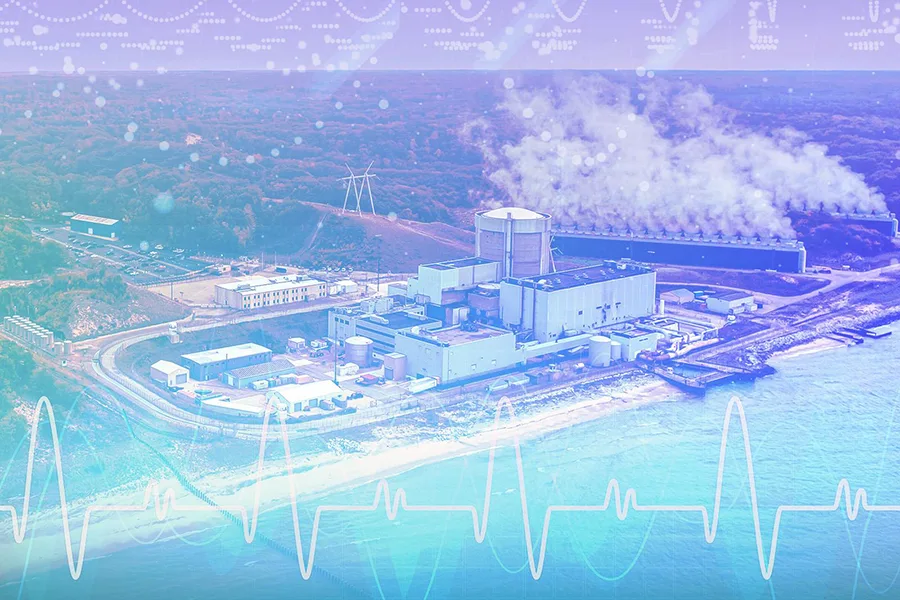
The Palisades Nuclear Plant in Michigan is the first retired nuclear power plant in the United States to seek U.S. Nuclear Regulatory Commission (NRC) licensing to restart operations. Pacific Northwest National Laboratory experts assisted the NRC in streamlining the environmental assessment process to accelerate the licensing timeline.
Composite image by Derek Munson | Pacific Northwest National LaboratoryAs nuclear energy continues its nascent rise across the country, researchers at Pacific Northwest National Laboratory find themselves entrenched in various efforts aimed at growing and advancing the power source.
The U.S. Department of Energy's AI-powered Genesis Mission has recently boosted the lab’s decades-long research into nuclear fuel recycling. Most used fuel retains more than 90 percent of its original energy-producing potential but it can’t be accessed due to the buildup of byproducts hinders today’s reactors.
"We are reimagining the entire nuclear fuel cycle,” said Amanda Lines, an expert at the lab in nuclear fuel processes and monitoring technologies, in a statement. “That means studying how fuels behave under irradiation, how used materials change over time, how best to recover valuable components and how to contain what remains.”
Lab researchers also are playing a role in the restarting of the Palisades Nuclear Plant in Michigan. The plant was shut down in 2022 as part of its decommissioning but now, in a first for the country, is on track to begin generating power again.
To help accelerate a required environmental review ahead of the plant’s return to operation, PNNL supported the U.S. Nuclear Regulatory Commission's evaluation of potential environmental impacts from the plant restart.
“Our work with PNNL on Palisades established a baseline for our environmental reviews on other proposed restart projects,” said Daniel Barnhurst, NRC senior environmental scientist, in a statement.

Stay Informed. It’s Free.
Subscribe to our newsletters and get the latest news and insights delivered to your inbox.
We respect your privacy.
Unsubscribe anytime.
Thank you!
You’re subscribed. Keep an eye on your inbox for the latest updates.