
Study: Soil moisture, not cultivar, drives drought tolerance for wine grapes
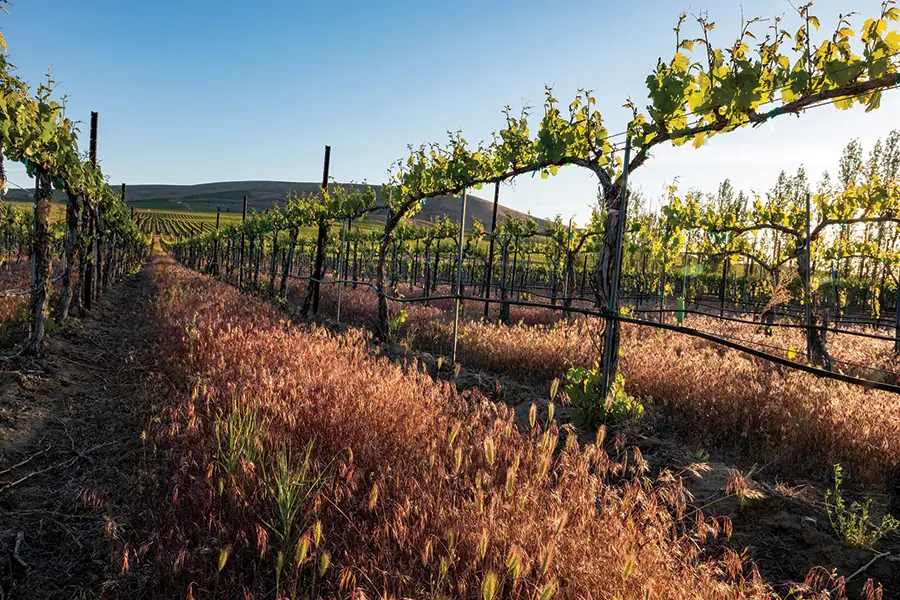
With irrigation water supplies becoming more strained each year, some wine grape growers may be wondering which grape varieties can better handle drought conditions.
But according to research out of Washington State University, variety has little to do with how well grapes can take the heat.
“Our results go against conventional scientific dogma,” said corresponding author Markus Keller, Chateau Ste. Michelle Distinguished Professor in WSU’s Department of Viticulture and Enology, in a statement. “The takeaway is that when making irrigation decisions, growers should focus more on canopy size, soil type and wine style rather than worrying about the inherent physiological differences between varieties.”
The paper, published in the journal BMC Plant Biology, was partly inspired by an older study that indicated that grape vine varieties respond differently to drought stress. However, Keller noticed that testing conditions weren’t fully consistent in the study and decided to re-investigate it.
Using funding provided by the state’s wine industry, another researcher on the project, Charles Obiero, planted a research vineyard with 30 different wine grape cultivars. He measured the vines’ water status at night and during the midday heat, along with their physiological responses to drought over two years.
That led to the discovery that vines, regardless of cultivar, respond to drought conditions based on how much water is available in the soil.
“Growers need to know what type of soils they’re dealing with,” Obiero said in a statement. “Otherwise, they could end up giving the vine water it doesn’t need. If they know the grapevines’ stress threshold and amount of water the soil can hold, that can help guide irrigation management for different varietal blocks.”

Stay Informed. It’s Free.
Subscribe to our newsletters and get the latest news and insights delivered to your inbox.
We respect your privacy.
Unsubscribe anytime.
Thank you!
You’re subscribed. Keep an eye on your inbox for the latest updates.