Framatome makes breakthrough in advanced nuclear fuel

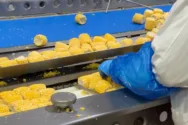
Framatome’s team of experts at the Richland fuel fabrication facility produce advanced nuclear fuel designs and related products for nuclear power plants around the world.
Courtesy FramatomeFramatome has taken another step to solidify its future as a fuel producer for the next generation of nuclear reactors.
The France-based company, through a partnership with Bellevue-based TerraPower, recently announced its Richland fuel manufacturing facility successfully created “pucks” of uranium metal.
Those pucks, made from depleted uranium through a uranium metallization process, are a component of high-assay low-enriched uranium, or HALEU, fuel, which is needed to fuel TerraPower’s Natrium reactor, the first of which is under construction in Wyoming.
Framatome officials say the completion and operation of the metallization fabrication line shows it is prepared to deploy it and receive funding from the U.S. Department of Energy as part of its efforts to establish a domestic supply of HALEU. It also could further Framatome’s plans to build a new facility on its Richland campus to produce the advanced fuel.
“This milestone underscores the critical progress being made in developing a reliable advanced reactor fuel supply chain and in propelling TerraPower's Natrium technology,” said Lionel Gaiffe, senior executive vice president, Fuel Business Unit at Framatome, in a statement. “Through this strategic collaboration, we are delivering the next generation of nuclear technology that will define the future of clean energy.”
Poised to supply
With demands for energy soaring, particularly with the advent of artificial intelligence and the power-hungry data centers it requires, the private and public sectors have pushed for the development of the next generation of nuclear reactors.
The federal government, through DOE, has committed hundreds of millions of dollars to supporting development and resources to design and launch more efficient and modular reactor designs. TerraPower’s Natrium reactor, which will produce 345 megawatts, will also use a molten salt-based energy storage system.
However, most advanced nuclear reactors require higher enriched uranium than is currently used to fuel commercial reactors.
Framatome and TerraPower began developing the production line for uranium metallization in the spring of 2024. Framatome’s experts use processes and technologies on that production line to convert uranium oxide into the HALEU metal pucks, which serve as the feedstock for the advanced fuel needed for the Natrium reactor.
“TerraPower has been committed to supporting the development of a robust, domestic HALEU fuel supply chain,” said Chris Levesque, TerraPower’s president and CEO, in a statement. “The successful production of these metallic uranium pucks proves that we can manufacture the metallization component of HALEU fuel here in Washington and support our plans to rapidly deploy Natrium plants across the United States.”
Supply chain positioning
Framatome, which has gone by several names and operated its Richland facility since 1969, already has commercial fuel contracts for the next five years and is actively hiring for about 100 roles to bolster its current workforce of 600 people. Five percent of the electricity produced in the U.S. comes from fuel manufactured in Richland.
The company has been positioning itself to be a critical player in the advanced nuclear fuel supply chain.
Last year, Framatome was one of six companies that received a 10-year contract from DOE to produce HALEU fuel. That contract – which specifically allows the companies to bid for work to deconvert HALEU as uranium hexafluoride gas to various chemical forms used to fabricate fuels required by many advanced reactor developers – will provide each producer a minimum of $2 million with up to $800 million available.
Local Framatome officials have affirmed plans to eventually build a production plant, estimated between $300 million to $400 million, that will double the Richland facility’s footprint and require up to 200 employees to operate. But the project requires more investment, either by DOE, the company’s customers or other investors, before it can move forward.
Now that the company has demonstrated it can conduct the uranium metallization process commercially, its officials say it’s ready to take the next step.
TRISO fuel
HALEU isn’t the only way Framatome intends to be part of the next generation of nuclear power projects.
In October, company officials announced a joint venture with Standard Nuclear to manufacture the Tennessee-based company’s tri-structural isotopic particle, or TRISO, fuel. Made from uranium particles wrapped in protective ceramic and carbon layers, it has enhanced safety and durability at extreme temperatures.