
Profit pressure
Oversupply and taxes batter cannabis producers
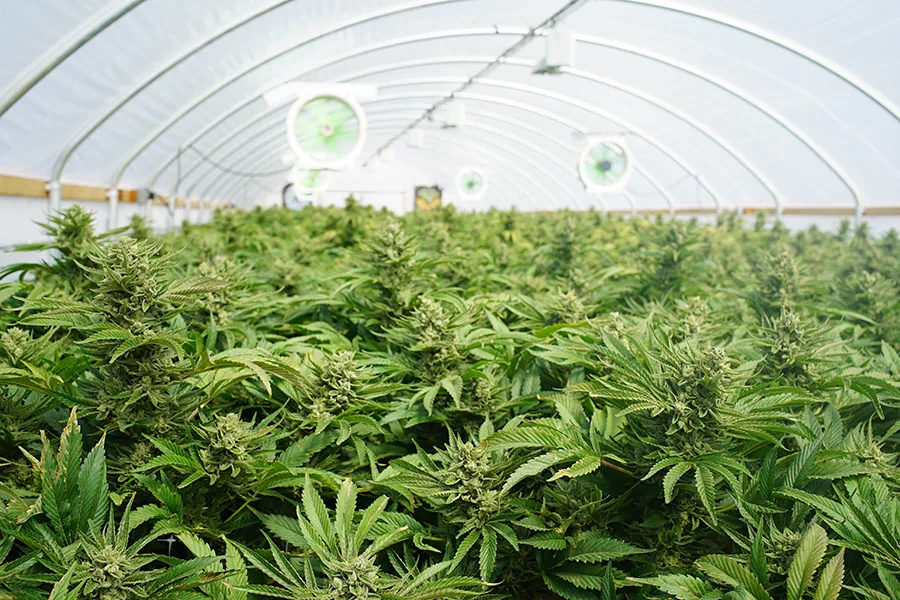
Most cannabis producers and processors in Benton County earned less than $200,000 in 2025, with nearly half earning less than $100,000 before taxes and expenses.
Benton County cannabis growers and processors saw revenues drop 22% in 2025 as falling marijuana prices, oversupply and high operating costs continued to squeeze Washington’s legal cannabis industry.
Producer and processor revenues in Benton County dropped by $2.4 million last year to $8.2 million, roughly half the level recorded in 2023, according to data compiled by cannabis analytics company Top Shelf.
“It continues to be a very challenging environment for producers, especially,” Aaron Pickus, spokesman for the Washington CannaBusiness Association, said in a statement.
Industry analysts say the problem is not a lack of cannabis production or consumer demand, but the economics of operating in the state’s legal marijuana market. Licensed cannabis businesses in Washington face steep excise taxes and federal restrictions that prevent many standard business tax deductions, while illicit sellers continue to compete outside the regulated system.
Fourteen years after Washington legalized recreational marijuana, many producers and processors say the industry remains difficult to sustain financially.
Big business
Washington state voters legalized cannabis for recreational use by those 21 and older in 2012, making the state among the first to allow such use in the country. The law ushered in a regulated marketplace for retailers, producers and processors while establishing possession limits, impaired-driving standards and a framework of taxes and regulations.
The cannabis industry generated about $1.1 billion statewide in 2025 and supported tens of thousands of jobs, ranging from retail sales and business managers to harvesters and processors.
Benton and Franklin counties, along with most of their incorporated cities in the region, later enacted moratoriums on cannabis retailers, producers and processors. However, many businesses that opened before the restrictions were allowed to continue operating.
Even with local restrictions, several cannabis operations continue to generate millions in annual revenue.
Wamsterdam Farms, which operates grow facilities outside Grandview, recorded $2.7 million in revenue in 2025, while Chief N Cannabis in Benton City generated $1.7 million.
Smaller operators struggle
Yet many smaller operators continue to struggle.
Most producers and processors in Benton County earned less than $200,000 in 2025, with nearly half earning less than $100,000 before taxes and expenses.
Washington imposes a 37% excise tax on cannabis sales and federal laws prohibits many cannabis businesses from claiming standard deductions because marijuana remains illegal at the federal level.
Those restrictions can push effective tax rates for some cannabis businesses as high as 70%, according to Whitney Economics.
At the same time, demand for cannabis in the state also may have hit a ceiling. Nearly every category of consumer cannabis product posted year-over-year declines, according to Headset, another cannabis industry market analyst company.
Industry turnover also remains high. A July 2025 report from the state’s Joint Legislative Audit and Review Committee found annual attrition among producers and processors reached 20% in 2022, compared to 7% among retailers.
Nearly 40 license holders have operated within Benton County since 2023 but only 25 reported any revenues in 2025.
Part of the challenge is continued oversupply in the legal market. In 2017, licensed Washington growers produced 121,254 pounds of THC, nearly double the amount sold that year. By 2023, production tripled to more than 363,000 pounds while sales only doubled.
“A lot of our colleagues are closing,” Jordan Zager, co-founder of Pullman-based Dewey Scientific, previously told the Tri-Cities Area Journal of Business. “The volume of product moving from producer to retailer has severely declined, down 60% in just a year.”
Signs of improvement
Some industry leaders say there are signs conditions may be improving.
In the first quarter of 2026, 20 Benton County operations reported revenues of $2.1 million, compared to $1.7 million generated by 19 operations during that same period in 2025.
Industry advocates also point to potential federal changes that could ease financial pressures. The federal government earlier this year moved to reschedule medical marijuana to a lower federal classification, a change supporters say could expand research opportunities and reduce tax burdens for state-legal cannabis businesses.
However, questions remain about how those federal changes would apply to businesses involved in both medical and recreational cannabis production and sales.
Industry groups say reducing tax burdens and curbing illicit cannabis sales remain critical to stabilizing the state’s legal marijuana market.