Report: Grouting Hanford tank waste could cost more than $1 billion

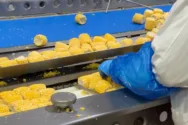
A worker with EnergySolutions collects a sample to confirm the Hanford Site tank waste meets requirements before it is grouted.
Courtesy U.S. Department of EnergyU.S. Department of Energy officials have said plans to treat a portion of the 55 million gallons of underground tank waste at Hanford via a process different than stabilizing it in a glass form will cost between $480 million and $1.1 billion – and that does not include related costs.
DOE officials provided the cost estimate for grouting waste from 22 of the site’s 177 tanks in response to questions from the U.S. Government Accountability Office. The report goes on to say that DOE is currently evaluating proposals to grout and dispose of about 24 million gallons of low-activity waste and expects to award a contract for that work later this year.
GAO’s study indicates that DOE still has unanswered questions about grouting, such as where the waste will be treated and how it will be transported for disposal. But auditors “previously reported that grouting, rather than vitrifying, portions of Hanford’s tank waste that are low in radioactivity – referred to as low-activity waste (LAW) – could accelerate DOE’s cleanup mission and save billions of dollars,” according to the report.
Grout vs. vitrification
Current efforts to clean up Hanford’s tank waste are focused on vitrification, a process where materials are added to the waste to turn it into glass for safe long-term storage.
The Waste Treatment Plant, also known as the vit plant, which cost billions of dollars and took 20 years to design and build, began hot commissioning in October and has so far vitrified 100,000 gallons of waste.
Grouting involves immobilizing waste in a concrete-like mixture before it is stored, a method that federal officials said is far cheaper and more efficient than vitrification.
A January 2025 agreement reached between DOE, Washington State Department of Ecology and the Environmental Protection Agency allows the federal agency to remove waste from 22 single-shell tanks in Hanford’s 200 West Area by a 2040 cleanup milestone. The agreement specifies that waste will be grouted and disposed of off-site.
And earlier this year DOE filed a proposal with the state to allow waste created from the vitrification process to be converted to grout rather than vitrified as well. That grout would also be stored elsewhere and not on the Hanford site. State officials approved that proposal on May 26.
Cost savings
DOE told GAO that grouting will cost an estimated $20 to $45 per gallon of waste, leading to a price tag between $480 million and $1.1 billion. That doesn’t include related costs, such as transportation and disposal of the waste following grouting.
By comparison, DOE officials have previously estimated that vitrifying waste costs $1,400 per gallon, according to past GAO studies.
There is no facility at Hanford that could currently grout waste, so waste would either have to be shipped off-site for grouting or a new grouting facility would have to be built on the site.
Transportation and disposal costs vary depending on whether liquid or solid waste is being shipped. Pretreated liquid waste being sent to a grouting facility would cost 50 cents to $1.50 per gallon, or $12 million to $36 million. Those costs would double if the waste is treated and shipped in a solid form for disposal at a designated facility either in Utah or Texas.
More questions
GAO said there are additional questions DOE needs to answer in addition to those about how to grout tank waste and where it is shipped to for disposal. That includes clarification of DOE’s authority to identify and manage waste as having low-level radioactivity. There is also disagreement about whether Washington state law will allow DOE to grout that waste rather than vitrify it.
Grouting also has been largely rejected by the tribes, environmental groups and state agencies such as in Oregon due to safety concerns. Those groups in particular “have expressed safety concerns about the transport of liquid low-level waste through their jurisdictions.”
Despite those challenges, GAO said DOE officials are exploring even more opportunities to grout tank waste.
“They added that pursuing additional grouting opportunities could help the agency to address existing gaps in Hanford’s treatment capability and accelerate cleanup operations at the site,” read the report.
6/15/2026 2 p.m.: Updated story to reflect the Washington State Department of Ecology approving a proposal to allow waste created from the vitrification process to be converted to grout rather than vitrified.