
Sen. Murray: DOE claims ‘safety issue’ is holding up vit plant progress
DOE office says it is committed to beginning operations by Oct. 15
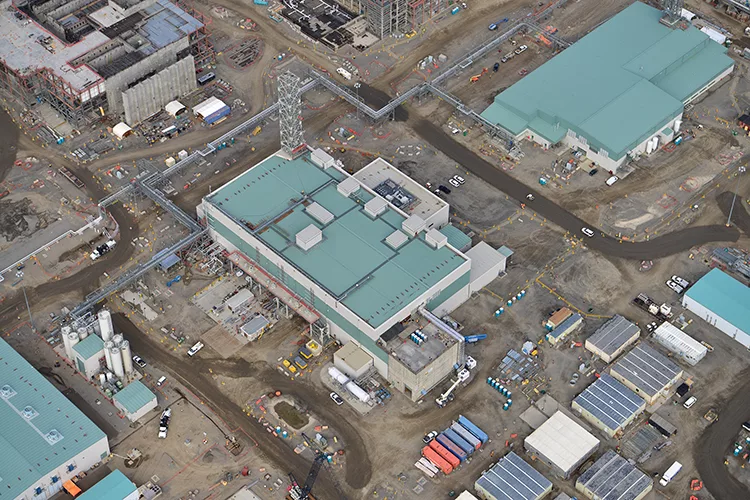
The Trump administration’s top official at the U.S. Department of Energy has reportedly told a Washington senator that he is stalling operations at a critical Hanford site facility that is weeks away from beginning operations – though his office says otherwise.
The change in stance comes less than 48 hours after previously asserting the cleanup plan at the Hanford site would not change.
U.S. Sen. Patty Murray, D-Washington, said in a Sept. 10 news release that Energy Secretary Chris Wright told her in a call that same day that he is planning to curb hot commissioning of the Waste Treatment Plant, better known as the vitrification or vit plant. Hot commissioning is the final stage of testing before the facility can become fully operational.
Wright reportedly told the senator that the delay is due to a safety concern, though there is no indication there have been any.
“Whether Secretary Wright was given bad information or is simply confused about how the vitrification facility works, I can’t say, but I am not satisfied by his explanation for why DOE has suddenly decided to stall progress on the Waste Treatment Plant,” Murray said in a statement.
Wright on Sept. 9 denied media reports of changes made to the course of Hanford cleanup, which has included working toward operation of the vit plant for more than 20 years. Two days later, on Sept. 11, he maintained that position, according to a statement provided to the Tri-Cities Area Journal of Business that was shared with the state’s federal delegation.
“Despite reports to the contrary, the U.S. Department of Energy has made no changes to our plans or strategy for the Hanford DFLAW waste treatment facility,” said the statement. “Although there are challenges, we are committed to beginning operations by October 15, 2025. As always, we are prioritizing the health and safety of both the workforce and the community as we work to meet our nation’s need to safely and efficiently dispose of nuclear waste.”
Sparking alarm
Wright’s reported efforts to halt hot commissioning have sparked alarm from other federal and state lawmakers and officials as well as watchdog organizations.
U.S. Rep. Dan Newhouse, R-Washington, whose district includes the entirety of the Hanford site and Tri-Cities, said in a statement to the Journal that delaying the startup of the facility was concerning, noting he had spoken with Wright in recent days to express his support for waste to begin being treated by Oct. 15.
“I unequivocally oppose any effort to prevent the start of the vitrification process at Hanford, a project the federal government has invested over $20 billion and over two decades of hard work to accomplish,” he stated. “I remain in active conversations with the Secretary to ensure DOE does not delay this important milestone.”
Casey Sixkiller, director of the state Department of Ecology, said in a statement to the Tri-Cities Area Journal of Business: “If these reports are accurate, it would violate legally binding agreements. We are now just days away from beginning to treat low-activity radioactive waste at Hanford, and any delay or change in plans would threaten years of work and billions of dollars in investments.”
Nikolas Peterson, executive director of the watchdog organization Hanford Challenge, called the current administration’s approach to Hanford cleanup chaotic and deeply troubling in a statement emailed to the Journal. “If there’s a legitimate safety concern at the site, DOE must be transparent immediately. Silence breeds uncertainty, and uncertainty undermines the very foundation that keeps Hanford cleanup on track. The public deserves answers, not ambiguity,” he said.
Gov. Bob Ferguson, Sixkiller, Nick Bumpaous of UA Local Union 598 Plumbers & Steamfitters and Dave Reeploeg, vice president of federal programs for the Tri-City Development Council, or TRIDEC, are scheduled to speak out against the threat of DOE abandoning its efforts to commission Hanford’s Waste Treatment Plant during a press conference in the Tri-Cities on Sept. 12.
It has cost roughly $30 billion to bring the Direct-Feed Low-Activity Waste, or DFLAW, program, which includes the vit plant, to being on the cusp of operation. Described in DOE materials as “one of the highest priorities in the DOE Office of Environmental Management portfolio,” the suite of buildings and systems is designed to treat and turn to glass hundreds of thousands of gallons of radioactive and toxic waste stored in underground tanks.
Roughly 3,000 people are employed in the project.
The waste is the legacy of the site’s past role in manufacturing nuclear weapons.
Reports from E&E News by Politico and other media outlets said DOE is considering changes to cleanup operations, including scuttling work on DFLAW, saying that Wright was seeking a “different direction” on cleanup efforts at the Hanford site. E&E reported that DOE changing direction on the project is related to the agency firing Roger Jarrell, principal deputy assistant secretary of DOE’s Office of Environmental Management, who had only been in the job since April.
Wright denied those reports on Sept. 9: “DOE is continuing to examine testing and operations of the DFLAW site to ensure waste disposal options are safe, cost-effective and environmentally sound. Across the entire department, we are actively working to improve the safety and efficacy of the important work we do each and every day.”
Safety concerns?
It is not clear what safety incident Wright reportedly referred to in his recent call with Murray. Her office has no information about any outstanding safety concerns at the vit plant.
An undated letter from Bechtel, the contractor who designed and built the vit plant, to DOE’s Hanford Field Office said other preparations are on schedule so that the first vitrification of waste can occur by Oct. 15. Murray’s office received the letter Sept. 10.
And along with Bechtel’s letter assuring the facility was on schedule to begin operations in October, one of DOE’s own Hanford site officials in mid-August affirmed that progress at the facility was continuing.
Heather Dale, assistant manager for river and plateau with DOE’s Hanford Field Office, told the Tri-Cities Hispanic Chamber of Commerce in late August that cold commissioning of the vit plant was proceeding, with hot commissioning starting in the coming months.
She said that workers have already prepped more than 800,000 gallons of radioactive waste from the site’s storage tanks in anticipation of the start of the next chapter of cleanup at the site.
“We are moving into the operational phase of our mission and that is very exciting for us,” she said.
Project 2025
Word that Energy may delay or cancel operations at the vit plant generated a strong rebuke from the governor.
“This decision is a stunning waste of resources, a violation of multiple legal agreements and a slap in the face to the workers who have brought us to this point,” Ferguson said in a statement provided to the Tri-Cities Area Journal of Business. “It’s also right out of Project 2025. We will be challenging this decision. There’s too much at stake for the people of Washington and our environment.”
Project 2025 is a document developed by conservative think tank The Heritage Foundation offering policy recommendations for President Donald Trump for his second term. The document specifically cites the cleanup effort at the Hanford site and calls for its low-level waste to be to be treated with cement, or grouted, rather than vitrified.
“This move should come as no surprise as it appears to be just one of many steps that align with the objectives laid out in Project 2025,” Hanford Challenge’s Peterson said. “Curbing the commissioning of the Waste Treatment Plant signals a troubling shift – away from vitrification, away from accountability, and toward a reimagined cleanup strategy that weakens legal safeguards and risks long-term harm to the Columbia River and surrounding communities.”
Energy’s Hanford Field Office has lost roughly 30 of its staff since Trump took office, a combined result of buyouts, retirements and layoffs. One site subcontractor nearly had to lay off staff when Energy withheld funding for its next phase of work until pressure from Murray led the agency to release the funds. And the White House’s proposed budget reduces spending at the site by $34 million compared to current appropriations.