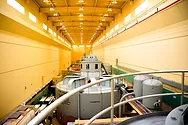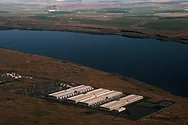
Supporters of a Goldendale pumped-hydro energy storage project have said it will help meet growing regional energy demand, and the project developers tout its potential to one day power up to half a million homes without sending harmful greenhouse gases into the atmosphere. But mounting evidence shows a large data center campus could be among the main beneficiaries of that power.
Bonneville Power Administration’s financial performance is a mixed bag at the halfway point of its fiscal year but its leaders say the agency is still on track to meet most of its end-of-year targets.
Framatome is one of a handful of companies that will receive federal funding to build out fuel production for the next generation of nuclear power reactors, and that money is coming directly to its Richland plant.
The Trump administration’s proposed cuts to Hanford cleanup funding is drawing backlash from Washington officials, unions and watchdog groups, despite DOE assurances that critical work will continue uninterrupted.
The debate over salmon recovery and hydropower in the Northwest has shifted into a broader fight over grid reliability and cost, with critics arguing that reducing hydropower without reliable replacements risks worsening already strained electricity supply and sharply increasing prices for customers.
A new jobs website aggregates job postings from every prime Hanford site contractor and other energy-adjacent employers such as Pacific Northwest National Laboratory, Energy Northwest and Framatome.
The U.S. Department of Energy’s Office of Nuclear Energy recently awarded a $1.4 million grant to WSU to develop a Reactor Ready Training Program to address workforce gaps in the nuclear industry.
More than a decade after a Hanford-focused trade school closed, Atomic Technical Institute is helping to fill a gap in training for environmental and nuclear safety jobs, creating a new pathway for workers to enter and advance in a field critical to the region’s workforce.
Richland’s city council has agreed to buy a long vacant seven-story building off Jadwin Avenue to replace its current police station, and is banking on money from the sale of land for a data center to help fund the project.
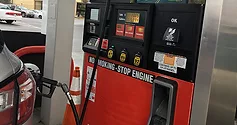
Even though the U.S. now imports far less oil from the Persian Gulf than it once did, disruptions in the Strait of Hormuz still drive up gasoline prices because oil is traded on a global market. When supply tightens anywhere, prices rise everywhere – including at American gas pumps.