A recycler of everything from construction and demolition materials to organic and electronic waste will avoid millions of dollars in penalties by improving tracking of its operations and taking efforts to avoid collecting non-recyclable trash via its collection sites.
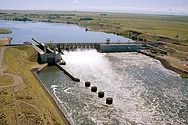
The federal government may have pulled out of an agreement that could have led to removal of the four Lower Snake River dams, but the state continues to evaluate how their removal in the future could impact transportation networks.
The Washington State Public Works Board will provide the city of Richland $500,000 to pay for a portion of the cost of essential upgrades at the city’s wastewater treatment plant.
Federal energy regulators on Jan. 29 greenlit a roughly $2 billion renewable energy megaproject on a Yakama Nation sacred site overlooking the Columbia River in Klickitat County.
Residents in the Lower Yakima Valley whose wells may have been polluted by nitrates have access to free testing and water filters, thanks to a Washington nonprofit.
Cleanup efforts at the Hanford site reached another milestone recently when the first batch of toxic byproducts from past plutonium production were moved to safer long-term storage.
President Donald Trump is reportedly planning to unveil a new initiative to send the country’s nuclear waste from future power plants to states that sign up for it in exchange for extensive economic investment.
A recent federal report found the U.S. Department of Energy’s (DOE) Environmental Management (EM) office can’t easily identify how much it will cost or how long it will take to clean up contaminated soil and landfills at 12 of the 15 sites it manages, even though data that could support those efforts is available.
A plan to embed a high-voltage cable 10 to 15 feet beneath the Columbia River to better transfer the renewable energy generated east of the Cascades to the west side is now open to public comment.